When a stainless steel panel is bolted to an aluminum or carbon steel bracket, the bracket is usually the part at greater risk of galvanic attack if the stainless steel stays passive and a conductive film of water reaches both metals. On an aluminum bracket, check the bolt hole and overlap edge. On a painted carbon steel bracket, check where drilling, tightening or handling exposes bare steel.
Start with the assembled joint. Find where rain, condensation or wash water can linger, then trace every metal connection between the panel and bracket. These two checks tell you whether to specify electrical isolation, change the drainage detail or reconsider the bracket material.
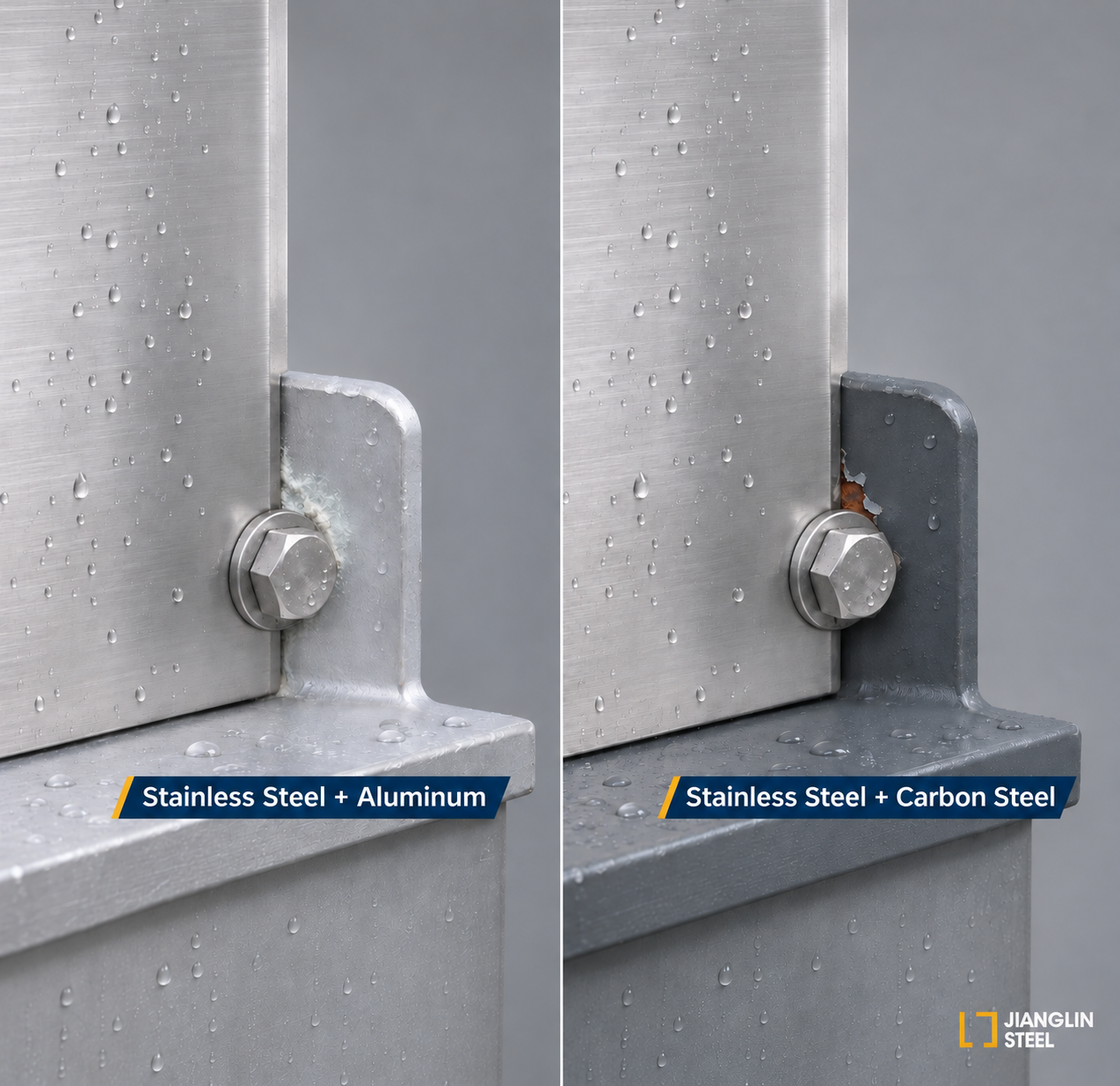
- Galvanic attack requires an electrical path, a shared electrolyte and a difference in corrosion potential.
- A small exposed bracket area coupled to a large wetted stainless panel can suffer concentrated attack.
- A face gasket separates the mating surfaces. The bolt hole, hardware and any other conducting paths need their own checks.
- Choose the bracket and the drainage detail together, especially where salt, condensation or washdown keeps the joint wet.
When does stainless steel galvanic corrosion occur?
The Australian Stainless Steel Development Association’s galvanic corrosion guide identifies three conditions that must coincide. The metals must have different corrosion potentials in the service environment, an electrical connection must link them, and a conductive liquid must wet both. The electrical connection can run through the overlap, a bolt or another connection in the assembly. Rainwater, condensation and wash water can provide the electrolyte. Dissolved salts generally make that water more conductive.
In these two joints, passive stainless steel typically acts as the cathode. The aluminum or exposed carbon steel acts as the anode and can lose metal faster than it would on its own. Pitting or crevice corrosion can still affect the stainless steel in its own right, particularly where chloride-bearing water stagnates.
Compare wetted areas as the joint dries
The mechanical overlap tells you where the metals can touch. To assess the area effect, look at the exposed metal surfaces connected by the same water film. A wet stainless panel feeding current to a narrow exposed rim at a bracket hole creates a large cathode and a small anode. As the water drains or evaporates, the connected wet areas change. Panel size alone cannot tell you how much metal will be lost.
Joint 1. Stainless steel panel on an aluminum bracket
Check the hole wall, cut edges and the underside of the overlap first. On a weather-exposed enclosure, runoff from the panel can collect at the bracket lip. If a bolt connects the metals and the film reaches both, attack can concentrate at the exposed aluminum around the hole. Pale deposits or pits on the aluminum flag an area to inspect. Appearance alone cannot establish the mechanism.
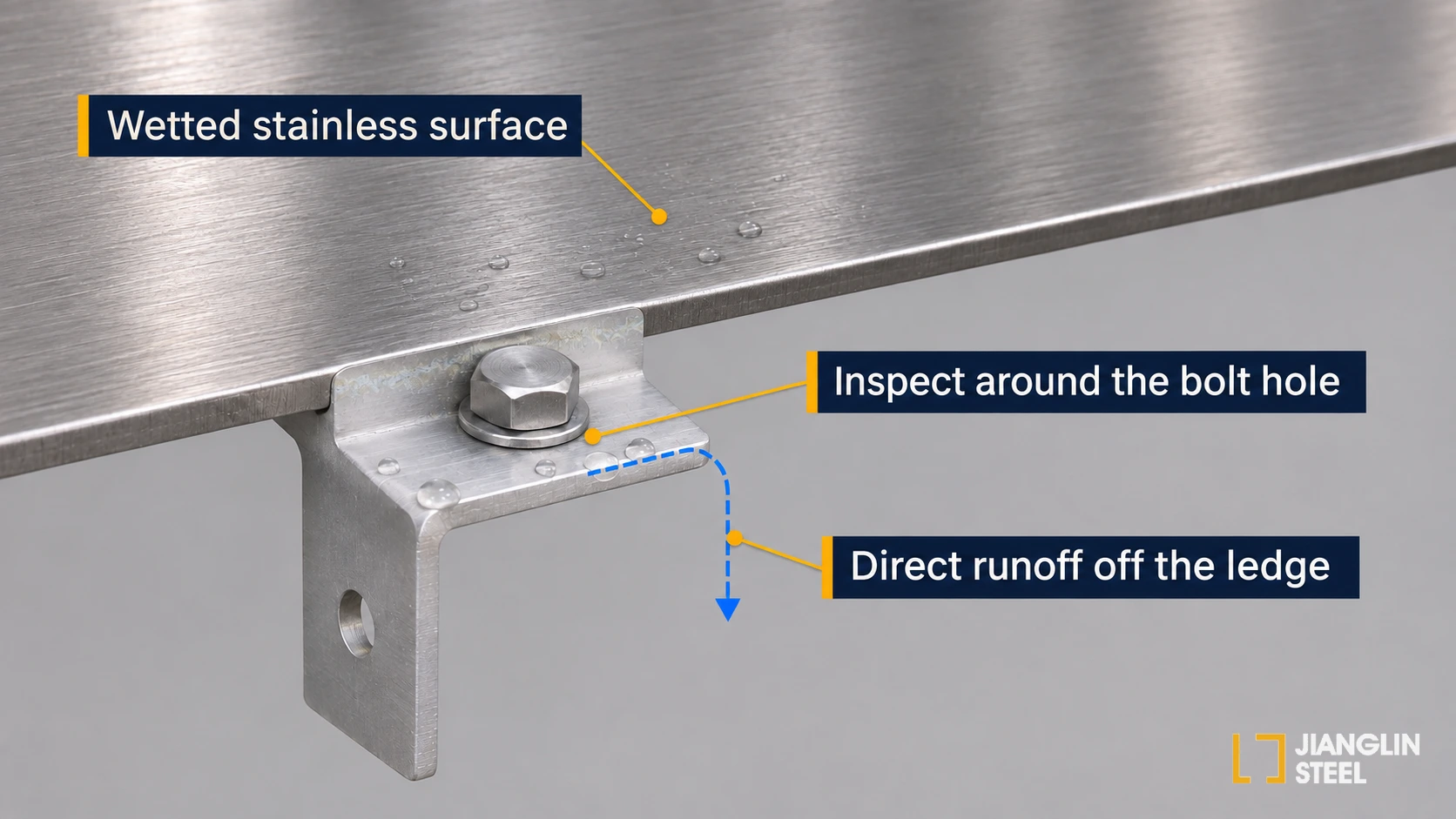
For a bracket that gets wet repeatedly, specify the aluminum alloy and finish on the drawing, then detail how the panel and the fastener assembly will be isolated from the bracket. Check exposed hole walls after machining or installation. Give runoff a clear path off the bracket lip.
Joint 2. Stainless steel panel on a carbon steel bracket
Check the exposed steel at drilled holes, cut edges and installation scratches. Carbon steel can rust on its own when wet. If a coating defect also creates a small exposed anode connected to the wet stainless panel, galvanic coupling can accelerate attack at that spot. Rust runoff may stain the panel below, so trace the stain back to its source before diagnosing the stainless.
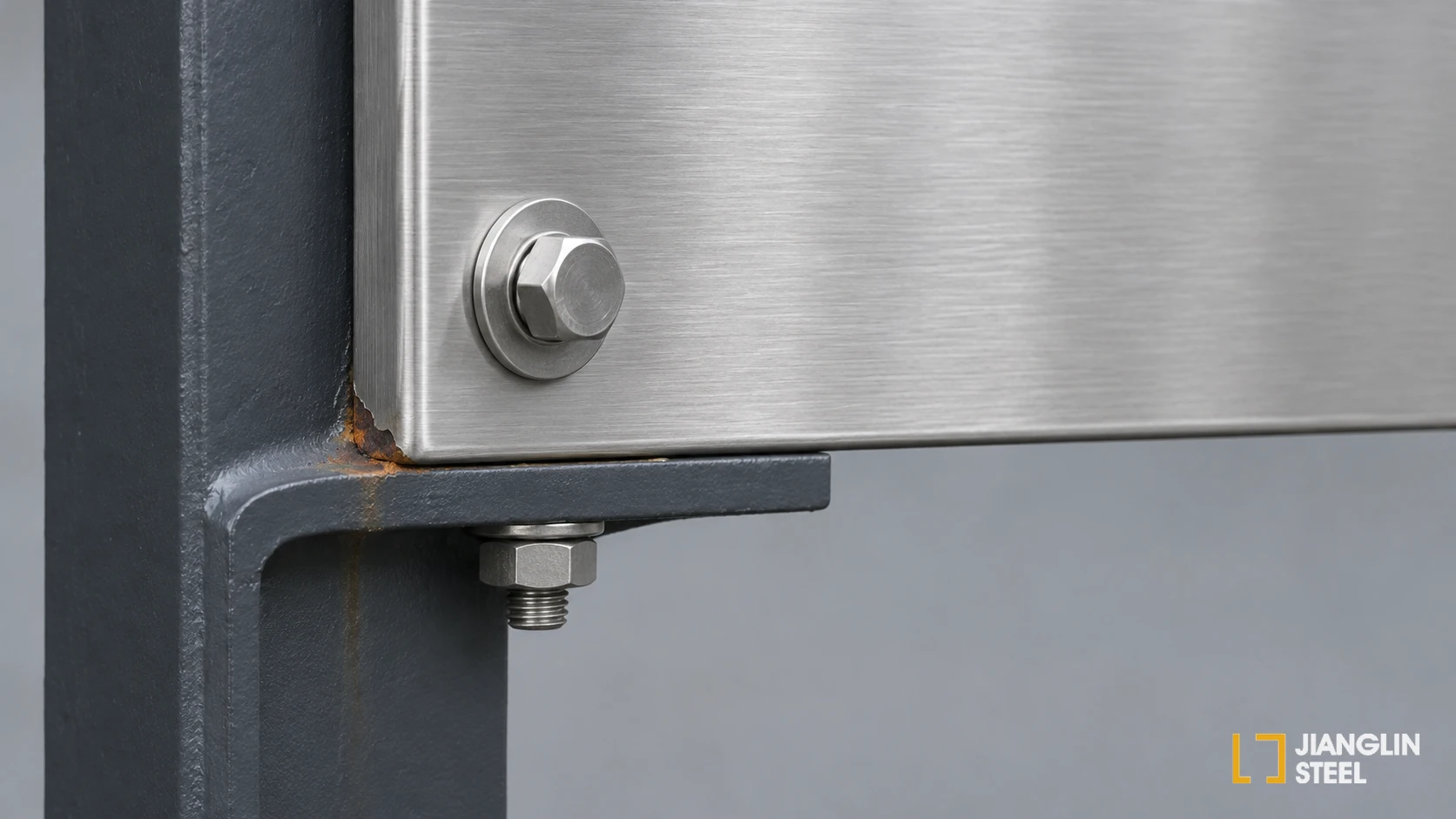
Specify the coating system and how to repair damaged edges and holes after fabrication. Treat electrical isolation as a separate drawing requirement because paint can break down under clamping or movement. If the bracket is galvanized, record that separately. Where exposed zinc is galvanically coupled to passive stainless in a shared electrolyte, the zinc can be consumed faster, reducing the coating available to protect the steel.
How should you specify isolation and drainage?
Show the complete joint stack on a section drawing. If the design calls for electrical isolation, specify a nonconductive pad between the panel and bracket, a sleeve where the bolt shank could touch the bore, and insulating washers where the head, nut or metal washer could bridge the parts. The hardware stack depends on the fastening arrangement. A bolt threaded directly into the bracket can still connect to the panel unless it is isolated from the panel at every contact point.
Check that the isolating materials can carry the specified clamping load and tolerate creep, service temperature, UV or cleaning chemicals as applicable. Have the project engineer review required bonding or grounding before finalizing the joint. A separate conductive path elsewhere in the assembly can defeat local isolation.
Follow water down the installed assembly. Slope exposed ledges, provide an open drain path where water can enter, and keep gaskets or sealant from blocking that path. If the design relies on sealing the overlap, detail how the seal stays continuous through assembly and service. A partially sealed pocket can hold water against the joint.
Bracket selection by service environment
Dry interior
Dry interior with little chance of condensation
- Aluminum bracket
- Consider direct contact if the joint stays dry under actual operation.
- Carbon steel bracket
- Assess direct contact and specify the finish for the indoor exposure.
Intermittent wetting
Rain, condensation or intermittent washdown
- Aluminum bracket
- Detail isolation at the overlap and through the hole. Drain the ledge.
- Carbon steel bracket
- Specify coating, edge repair and isolation. Keep runoff away from the lap.
Persistent moisture or salt
Salt spray, frequent washdown or trapped water
- Aluminum bracket
- Review the alloy, finish and joint detail together. Consider a compatible bracket if separation cannot be maintained.
- Carbon steel bracket
- Review coating damage, access for inspection and loss of isolation. Consider a compatible bracket where the joint cannot be kept drained and maintained.
Choose the stainless panel grade for its own environment and specify its finish separately. See Jianglin’s stainless steel sheet finish guide when comparing surface requirements.
What should the RFQ and inspection checklist include?
Send the panel specification with a joint section and the expected exposure. If the order covers stainless steel sheet only, identify the bracket and fastener as mating parts so the supplier can see which surfaces, holes and edges matter.
| RFQ field | What to specify |
|---|---|
| Stainless panel | Grade, product standard where required, thickness, finish, quantity and drawing revision. |
| Mating parts | Bracket alloy or grade, coating or finish, fastener material and joint section showing the overlap and hole details. |
| Exposure | Installed orientation, rain or condensation, salt exposure, washdown chemicals and where water can collect. |
| Assembly and acceptance | Approved pad, sleeve and washer arrangement, tightening requirements, coating repair, drainage and any specified verification of electrical isolation. |
At receiving, confirm the panel grade and finish against the order and check holes, cut edges and mating surfaces. After assembly, check that sleeves stayed in position, the hardware does not bridge the isolators, coating damage has been repaired and drain paths remain open. Agree on the method and acceptance criteria in advance if the project requires an electrical check.
Frequently asked questions
Can stainless steel touch aluminum outdoors?
Yes, if the joint is designed for its exposure. Where rain or saltwater can bridge both metals, review isolation through the overlap and fasteners, then make sure the joint can drain.
Does switching from 304 to 316 protect the bracket?
Changing the panel grade can improve the panel’s resistance in some chloride environments. Passive 316 can still form a galvanic couple with aluminum or carbon steel. The bracket still needs its own joint detail.
Is a nylon washer enough to isolate the joint?
Only if the complete assembly breaks every electrical path between the two metals. Check the bolt shank, threads, bearing surfaces and contact between the panel and bracket.
Can you rank aluminum and carbon steel by galvanic risk?
Evaluate the actual bracket alloy and finish, the water chemistry, the time the joint stays wet and the connected wetted areas. A coating defect on carbon steel and an exposed aluminum hole can each create a small anodic area.
Send your panel grade, dimensions, finish and quantity. Include the bracket detail if hole locations or edge conditions are critical to the assembly.
Request a QuoteRelated Jianglin Steel Resources
- Does stainless steel rust? Causes, grades and prevention
- 2B, BA and No. 4 stainless steel sheet finishes
- ASTM A240 for stainless steel sheet and plate
- Jianglin stainless steel sheet range
About The Author
The Jianglin Steel editorial team writes purchasing guides for buyers and fabricators sourcing stainless steel. Its Knowledge Base covers material selection, ordering specifications and incoming inspection.