B2B procurement guide for coil and roofing sheet manufacturing.
For coil and panel procurement teams comparing Galvalume vs galvanized steel, the material should not be selected by name alone. The correct choice depends on the service environment, the downstream forming process, the coating or paint system, and the requirements written into the order. This guide explains the comparison in procurement terms and gives an RFQ checklist that helps prevent material substitutions and avoidable clarification cycles.
Quick Comparison
The Galvalume vs galvanized steel table below is a starting point for discussion. It does not replace the order specification, material test certificate, coating designation, or project-specific performance requirements.
| Decision point | Galvalume | Galvanized | What to confirm |
|---|---|---|---|
| Metallic coating | An aluminium-zinc coated sheet or coil. Jianglin’s supplied catalogue describes its Galvalume product as 55% aluminium, 43.4% zinc, and 1.6% silicon by weight. | A zinc-coated steel sheet or coil. | State the required coating type, designation, applicable standard, and verification document. |
| Corrosion decision | Evaluate against the actual exposure, cut edges, formed areas, drainage, and any paint system. | Evaluate against the same exposure and design conditions. | Do not rely on a general claim that one coating is always better in every environment. |
| Prepainted use | Can be considered as a substrate where the selected paint system and forming requirements are confirmed. | Can also be considered as a substrate where the selected paint system and forming requirements are confirmed. | Specify colour, finish, paint system, film thickness, and any test or inspection requirements separately. |
| Downstream processing | The intended roll forming, bending, stamping, joining, and edge treatment influence the selection. | The same fabrication review is needed. | Confirm grade, thickness tolerance, width tolerance, surface condition, and forming route before release. |
Galvalume vs Galvanized Steel: The Short Answer
Choose the substrate only after defining the job it must do. Galvalume is an aluminium-zinc coated material and galvanized steel is zinc coated. That difference can matter in corrosion planning, heat exposure, paint compatibility, forming, and long-term maintenance assumptions. It does not create a universal winner. A coil that performs well on one roof, wall panel, appliance component, or fabricated part may be the wrong choice for another if the coating mass, paint system, geometry, or exposure conditions differ.
For a procurement professional, the practical Galvalume vs galvanized comparison is not simply which material has a better reputation. The practical question is which combination of substrate, metallic coating, thickness, finish, and inspection requirements fits this project. If those inputs are not on the purchase order, a comparison article cannot close the risk gap for you.
Coating Systems Are Not Interchangeable
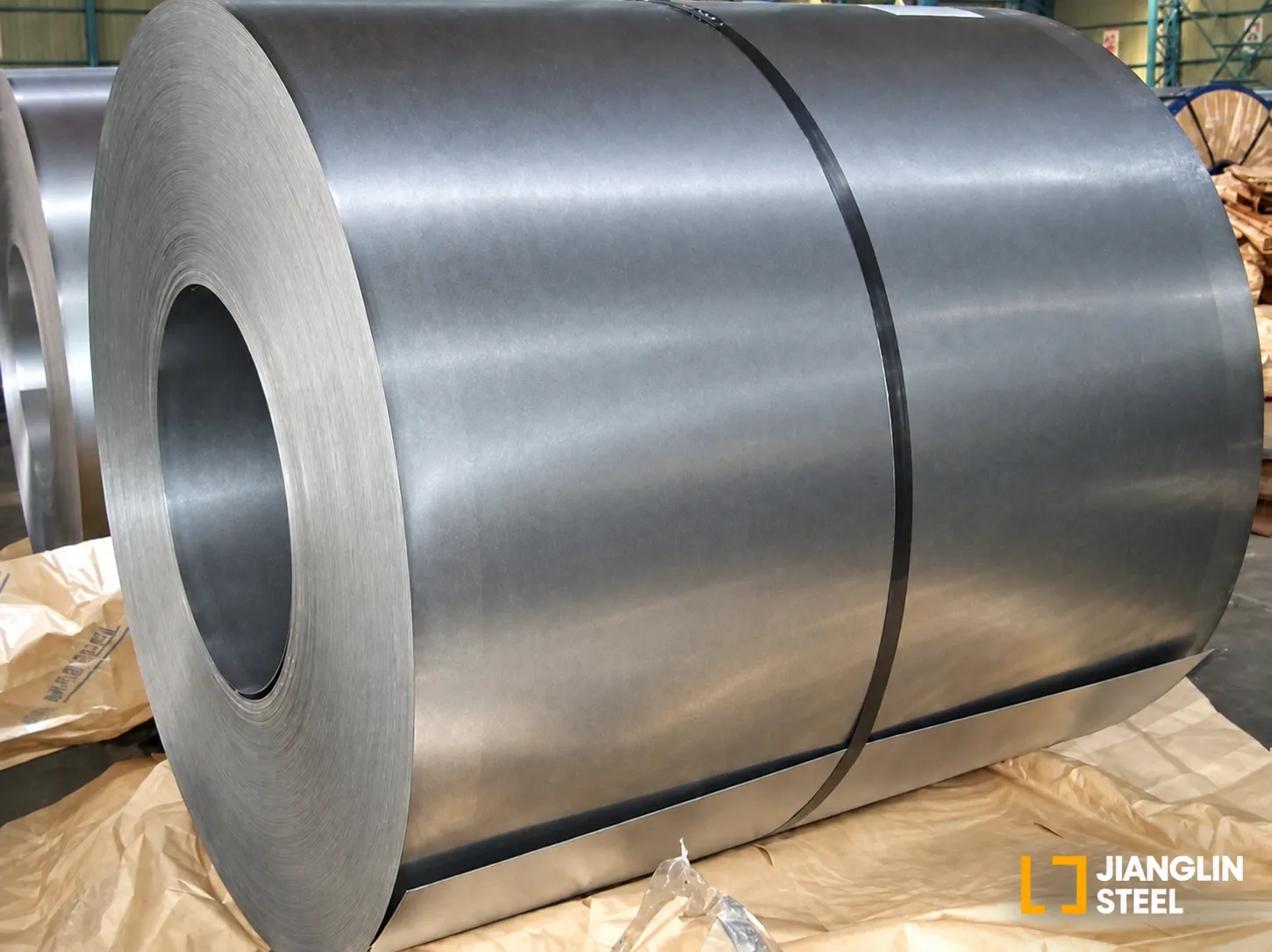
Galvalume is often used as a purchasing term for aluminium-zinc coated steel. The supplied Jianglin Steel product catalogue describes a Galvalume steel coil or sheet with 55% aluminium, 43.4% zinc, and 1.6% silicon. Treat that composition as a catalogue description rather than a substitute for an order-specific requirement. The actual product still needs a confirmed coating designation, applicable standard, and material test certificate where the project requires one.
Galvanized steel uses a zinc coating. Procurement teams sometimes group both materials under broad terms such as coated steel, roofing sheet, or colour-coated coil. Those labels are useful for a category conversation, but they are not sufficiently precise for an RFQ. They do not tell the supplier what coating designation, coil thickness, finish, or forming performance the finished part needs.
Jianglin has also presented prepainted steel coils and sheets. A prepainted product adds another decision layer: the metallic coating and the paint system need to be selected together. Colour, gloss, texture, film build, curing, protection film, and the intended fabrication route can all affect the suitability of a prepainted coil. Do not assume that a named substrate automatically defines those features.

Choose Against the Service Environment
A sound Galvalume vs galvanized steel comparison begins with the actual exposure of the finished component. Ask whether the part will be external or internal, whether it will retain standing water or debris, whether cut edges will be exposed, and whether it will face industrial, coastal, humid, chemical, or high-temperature conditions. The design details matter as much as the coil name. Drainage, overlap design, fasteners, edge treatment, scratches during installation, and maintenance access can all change the result.
For painted panels, also consider whether the performance target is set by the metallic coating, the paint system, the final geometry, or all three. A procurement professional who asks only for a colour and a base metal leaves important assumptions open. A better RFQ identifies the end use and asks the supplier to confirm what product description and evidence can be supplied against the stated requirement.
Avoid absolute durability statements unless they are supported by the exact product specification and a relevant test or warranty basis. There is no responsible shortcut from a general material label to a fixed service life. This is especially important when material will be installed near salt, pollutants, trapped moisture, or unprotected cut edges. The GalvInfo technical-note library provides background on coating mass, prepainted sheet, and cut-edge corrosion, but the project specification remains controlling.
When Each Material Is Commonly Considered
The following prompts help a procurement team narrow a Galvalume vs galvanized steel decision. They are not material approvals, and they should be checked against the product standard and the project documentation.
- Consider Galvalume when the specification calls for an aluminium-zinc coated substrate, or when the project team wants to evaluate that coating system for the stated exposure and panel design.
- Consider galvanized steel when the project specification calls for a zinc-coated substrate, or when the downstream process and required coating designation are already defined around galvanized material.
- For painted roof or wall panels, compare complete systems rather than bare-metal labels: substrate, metallic coating, pretreatment, paint system, film thickness, profile geometry, cut-edge treatment, and installation details.
- For appliance, automotive, or fabricated components, verify the forming route and surface requirements before selecting a coil. Appearance, adhesion, weldability, stamping, bend performance, and joining conditions may be relevant depending on the part.
Common Specification Mistakes
- Writing only Galvalume or galvanized without a coating designation, standard, or inspection basis.
- Treating a colour name as a full prepainted-coil specification while omitting the required finish and paint performance requirements.
- Comparing nominal thickness while ignoring tolerance, width, coil dimensions, and the final forming process.
- Using a generic corrosion claim without describing exposure, cut edges, drainage, installation design, and maintenance conditions.
- Approving a quote before confirming what certificate, test record, or sample will demonstrate conformity.
Frequently Asked Questions
Is Galvalume always better than galvanized steel?
No. The right choice depends on the required coating system, project environment, component geometry, downstream processing, and the evidence required by the specification. Select against the project conditions rather than a blanket ranking.
Can Galvalume and galvanized steel use the same paint system?
Do not assume so. Paint selection and pretreatment must be confirmed for the selected substrate and forming route. Put the required finish, paint system, and performance criteria into the RFQ or project specification.
What should a procurement team request before placing an order?
Request the product description, coating designation, dimensions and tolerances, finish, coil details, quantity and packing requirements, plus the material test certificate or inspection evidence required for the project.
Does a colour-coated coil specification replace the need to state the substrate?
No. A colour-coated order should state both the underlying substrate and the finish requirements. The coating system, paint, dimensions, and fabrication expectations need to be clear together.
Requesting a Quote
When requesting a quote from Jianglin Steel, provide the finished-product application, preferred substrate, metallic coating requirement, thickness, width, colour or finish, coil dimensions, quantity, delivery destination, and any standard, test, or certification documents required by the project. If you are comparing Galvalume vs galvanized steel, ask for the quotation to state every assumption that changes the offer so the options can be evaluated on the same basis.