Skip to content
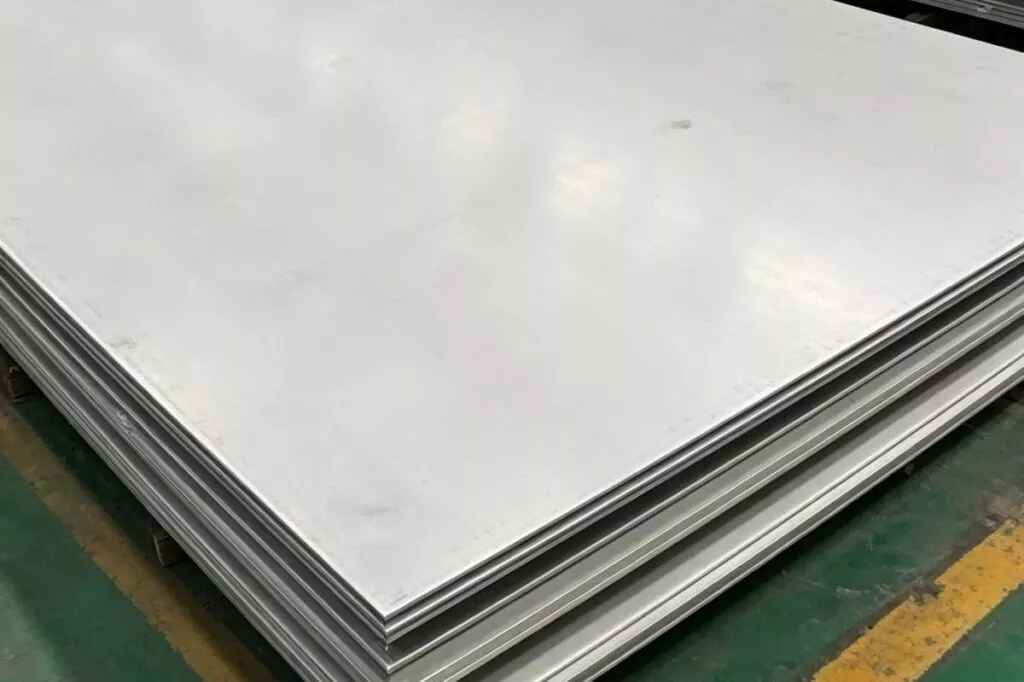
ASTM A480 defines the general requirements for flat-rolled stainless steel products. It covers material supplied in the form of plate, sheet, and strip. It defines the rules that apply across multiple stainless steel grades. The specification focuses on dimensions, tolerances, finishes, testing, and inspection criteria. It ensures consistency in quality and performance.
This standard helps manufacturers to maintain uniform production practices. It also supports buyers in verifying product compliance with clear technical benchmarks. As a result, ASTM A480 plays a key role in ensuring the quality and long-term performance of flat-rolled stainless steel products.
What Is ASTM A480?
ASTM A480 is the standard specification for the general requirements of flat-rolled stainless steel. Unlike other standards, it does not focus on one product. It defines general requirements that apply to multiple product standards.
Why this standard exists
The key purpose of ASTM A480 is to ensure consistency across the global stainless steel supply chain. This standard exists to create a common baseline. It avoids confusion between different product specifications. It also helps buyers to verify quality with clear requirements.
How it works with ASTM A240
ASTM A240 defines the requirements of chemical composition and the mechanical properties. While the ASTM A480 provides the tolerances and finishing requirements. In simple terms, the A480 controls overall conditions. On the other hand, the A240 controls material details.
What Does ASTM A480 Cover?
ASTM A480 standard generally defines dimensional limits and finishing. It ensures consistency in manufacturing and supply. The key points that ASTM A480 covers are given following:
Thickness tolerances
The thickness tolerances define the allowed variation in material thickness. They ensure the product meets design and performance needs.
Width and length tolerances
Width and length tolerances control the final dimensions of the product. By ensuring tight tolerances, the proper fitting can be ensured during assembly.
Flatness requirements
This is important for structural stability and ensures easier processing. It also improves the final product quality.
Surface condition and edge condition
Surface condition generally defines the defects, scale, and surface appearance. Table 01 explains the different finishing type, their roughness and applications. While the edge condition refers to how the edges are finished. It may include sheared, trimmed, or rolled edges.

How ASTM A480 Affects Sheet and Plate Orders
ASTM A480 sets the baseline requirements for sheet and plate orders. It defines dimensions, tolerances, and inspection rules before grade-specific details. This ensures both buyer and supplier follow the same expectations.
Why buyers should not ignore “general requirements.”
Ignoring the general requirements, such as tolerances, causes delays and additional costs. Ignoring them can lead to mismatched expectations. Buyers may receive material that meets grade standards but fails dimensional or finish needs.
How A480 changes quoting and inspection
The A480 affects how suppliers prepare quotations. Tighter tolerances or special finish requirements may increase cost and lead time. ASTM A480 also defines inspection standards. This ensures consistent quality control of the material.
Tolerances Buyers Should Understand
ASTM A480 defines key tolerances that affect product performance. These tolerances control dimensional accuracy. Buyers must mention the tight tolerances if needed. Table 02 presents the tolerances for thickness, length, and width according to the ASTM A480. These tolerances can be selected based on the specific application requirements.
Thickness tolerance
ASTM A480 specifies that material can be slightly thicker or thinner than the ordered gauge. Cold-rolled sheets generally have much tighter thickness tolerances than hot-rolled plates.
Flatness tolerance
Flatness tolerance controls how much the material can deviate from a flat surface. If your application requires extreme precision, such as laser cutting and automated fabrication. Then, you may need to specify “Stretcher Leveled Standard” flatness defined in ASTM A480.
Permitted variation in length and width
This defines the acceptable limits for length and width dimensions. The variation depends on product form and manufacturing method.
Table 02: Permissible tolerances for thickness, flatness, length, and width for sheet and plate products
Parameter | Product Type | Thickness Range | Permissible Variation |
Thickness Tolerance | Sheet | ≤ 3.0 mm | ±0.10 to ±0.25 mm |
Plate | 3.0 – 12 mm | ±0.25 to ±0.50 mm | |
Plate | > 12 mm | ±0.50 to ±1.20 mm | |
Flatness Tolerance | Sheet | All thickness | Max 0.5% of length |
Plate | ≤ 12 mm | Max 0.4% of length | |
Plate | > 12 mm | Max 0.25% of length | |
Length Tolerance | Sheet | All sizes | −0 / +6 mm |
Plate | ≤ 6 m | −0 / +10 mm | |
Plate | > 6 m | −0 / +15 mm | |
Width Tolerance | Sheet | All sizes | −0 / +5 mm |
Plate | ≤ 2 m width | −0 / +10 mm | |
Plate | > 2 m width | −0 / +15 mm |
ASTM A480 vs Mill Practice
ASTM A480 defines standard tolerance ranges for flat-rolled products. These are acceptable limits for general applications. On the other hand, the mill practice may vary based on equipment and capability. Some mills can offer tighter tolerances than standard requirements.
Standard tolerance vs tighter custom tolerance
The standard tolerance follows the tolerance limits mentioned in the ASTM A480. On the other hand, the tighter tolerance is a custom requirement according to the requirements of the application. Custom tolerances reduce variation and improve precision. It may increase cost and lead time.
When a tighter tolerance should be requested
A tighter tolerance is needed for precision parts. It is important in CNC machining and automated production lines. It should also be requested for critical assemblies.
How to Use ASTM A480 in Purchasing Documents
ASTM A480 should be clearly referenced in purchasing documents. The details mentioned of the general requirements of the standard lead to support product specifications. The addition of it in purchasing documents ensures clarity. It reduces the risk of misunderstanding between buyer and supplier.
Matching A480 with A240
A480 describes the general conditions, such as tolerances and finish. On the other hand, the A240 defines different grades, chemical composition, and mechanical properties. Both standards must be specified together to ensure complete technical detail of the order.
Writing a clearer RFQ
The request for quotation should consist of clear details to help suppliers quote accurately. RFQ should include product type, size, and quantity. It should also mention applicable standards like A480 and A240. If tighter tolerances are required than standard, then specify them in the RFQ.
Avoiding dimensional disputes
It is necessary to define the tolerances in the purchase order. Do not rely on assumptions or verbal agreements. Referencing ASTM A480 creates a common benchmark. This helps resolve disputes during inspection and delivery.
Common Problems in Flat-Rolled Orders
There are many problems arises during the ordering of flat rolled orders. Most problems come from unclear specifications or misinterpretation of requirements. These gaps lead to disputes during inspection. So, the clear information at the order stage is critical.
Nominal thickness misunderstandings
The problem arises when buyers may expect an exact thickness. This creates rejection issues when the material is within standard limits. The thickness should always be within defined tolerance limits.
Flatness complaints
Flatness is often judged visually instead of being tested according to the standard methods. This leads to inconsistent acceptance decisions. The supplied material may meet A480 tolerance limits but still appear uneven. Proper measurement criteria must be agreed upon in advance.
Surface acceptance disagreements
The surface finish acceptance often arises due to not clearly defined. Terms like “good finish” create confusion. Minor defects may be acceptable under the standard. Without a clear agreement, this leads to disputes between buyer and supplier.
Conclusion
ASTM A480 defines the rules to control the quality of flat-rolled stainless steel products. It defines essential requirements such as tolerances, dimensions, and inspection practices. It works alongside ASTM A240 to form a complete specification framework. This combination covered both material properties and general conditions. It is critical for buyers to understand ASTM A480. It improves procurement accuracy, reduces disputes, and ensures consistent product performance. For expert guidance on navigating these specifications or to request a quote based on ASTM A480 standards, contact the technical team at Jianglin Steel.
FAQ About ASTM A480
1) Does ASTM A480 define material grades?
No. ASTM A480 does not define grades. It only covers general requirements like tolerances, surface finish, and inspection. Material grades are defined in standards such as ASTM A240.
2) Can ASTM A480 tolerances be modified?
Yes, tolerances can be tightened if clearly specified in the order. The tight tolerance may affect cost and delivery time. This must be agreed upon before the order with the supplier.
3) Is ASTM A480 mandatory for all stainless steel orders?
It is not mandatory, but widely used in the industry. Referring to this standard in orders ensures clarity. It also reduces the risk of disputes during supply and inspection.