Skip to content
In stainless steel procurement, documentation is as critical as the material itself. Test certificates define traceability, confirm compliance, and reduce the risk of disputes during inspection. The standard EN 10204 specifies different types of inspection documents used across Europe and in global trade.
Among them, the 3.1 and 3.2 certificates are the most commonly requested by buyers. These two document types may appear similar, but they differ in verification level and acceptance in critical applications. A clear understanding of these differences helps buyers to select the right certification. This leads to meeting project requirements and avoiding costly delays.

What Is EN 10204?
The following section explains the purpose of the EN 10204 standard. It also explains why it is important in the international stainless steel trade.
Purpose of the document standard
EN 10204 is a European standard that defines the different types of inspection documents. It specifies how manufacturers declare that materials meet the required specifications. These documents include details such as chemical composition, mechanical properties, and test results. The standard ensures that all parties use a consistent format for quality assurance.
Why it matters in export procurement
In export procurement, clear and reliable documentation is essential for trust between buyers and suppliers. EN 10204 helps to confirm that the supplied stainless steel matches the agreed grade. It supports traceability, which means the material can be linked back to its production batch and test records. This reduces the risk of receiving incorrect or non-compliant material. It also helps meet project and third-party inspection requirements in international trade.
What Is a 3.1 Certificate?
A 3.1 certificate is an inspection document issued under the EN 10204 standard. It ensures product quality and traceability.
Who issues it
It is prepared by the manufacturer’s authorized inspection department. The document should be signed by an independent quality representative from the manufacturer.
What it proves
A 3.1 certificate proves that the supplied material meets the required specification and declared standard. It includes test results for chemical composition and mechanical properties taken from the actual production batch. It also confirms traceability back to the heat number or melt batch. However, the results are verified internally by the manufacturer, not by a third-party inspector.
What Is a 3.2 Certificate?
A 3.2 certificate is a material inspection document that is verified by both the manufacturer and an independent third party.
Independent validation
A 3.2 certificate under EN 10204 is not only issued by the manufacturer. It should also be checked and signed by an external inspector or the buyer’s representative. This means the test results will be confirmed from outside the production company. It adds an extra level of trust because the data is independently verified, not only internally approved.
Why it is used for more critical orders
This certificate is required when the material is used for high-risk applications. It is common in industries like oil and gas, pressure equipment, and power plants. The third-party verification reduces the chance of wrong material supply or incorrect test results. It ensures higher reliability, safety, and compliance with strict project or regulatory standards.
3.1 vs 3.2: Key Differences
Table 01 highlights the main practical differences between 3.1 and 3.2 inspection certificates under EN 10204. It explains the differences in terms of authority, verification, and project impact.
Issuing party
A 3.1 certificate is issued only by the manufacturer’s internal quality department. In contrast, a 3.2 certificate is issued by the manufacturer but also jointly approved by an independent third-party inspector or the buyer’s representative. This makes 3.2 more authoritative and reliable. For a clear understanding, Figure 01 shows a simple flow of how the 3.1 and 3.2 certification processes differ in terms of inspection and approval.
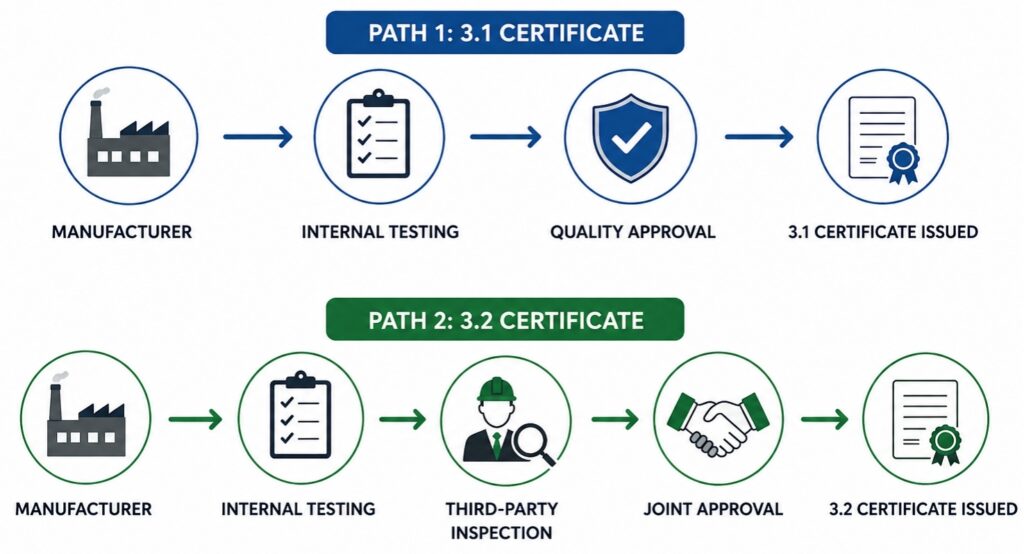
Figure 01: Inspection and certification flow for 3.1 and 3.2 type certificate
Inspection responsibility
For a 3.1 certificate, the manufacturer is fully responsible for testing and reporting the results internally. For a 3.2 certificate, the inspection responsibility is shared. An external party verifies and signs off on the results. This adds an extra layer of validation and reduces the risk of incorrect data.
Cost and lead-time impact
A 3.1 certificate is faster and less expensive because it involves only internal inspection. A 3.2 certificate increases both cost and lead time. It is due to third-party involvement, coordination, and additional verification steps.
Table 1: Key Differences Between EN 10204 3.1 and 3.2 Certificates
Criteria | 3.1 Certificate | 3.2 Certificate |
Standard | EN 10204 | EN 10204 |
Issued by | Manufacturer | Manufacturer + Third Party |
Verification | Internal | Internal + Independent |
Inspection witness | Not required | Required (third-party/buyer) |
Level of trust | Moderate | High |
Typical applications | General industrial use | Critical/safety-related projects |
Cost impact | Low | Higher |
Lead time | Short | Longer |
When Should Buyers Ask for 3.1?
A 3.1 certificate under EN 10204 is suitable when internal manufacturer testing is enough to confirm material quality. It is widely used in standard engineering applications.
Standard industrial procurement
Buyers should request a 3.1 certificate for normal industrial procurement. It is not used for highly critical or safety-sensitive applications. It is commonly accepted in fabrication, construction, and machining work. This certificate provides basic traceability and test confirmation for standard needs.
Routine export orders
For routine export orders, a 3.1 certificate is usually sufficient when the buyer has confidence on the supplier. It helps to reduce cost and documentation time. It still provides basic compliance with material specifications and test results.
When Should Buyers Ask for 3.2?
A 3.2 certificate under EN 10204 is required when independent verification is necessary. This certificate ensures maximum reliability and compliance.
Critical projects
Buyers should request a 3.2 certificate for projects where material failure can lead to serious safety or financial risks. This includes applications in oil and gas, power plants, and structural components. The third-party validation ensures higher confidence in material quality.
Higher compliance demands
A 3.2 certificate is needed when there are strict regulations that must be met. Some international standards and end users require external inspection to ensure full compliance. This is common in projects with tight quality control and certification requirements.
Third-party inspection situations
When the contract specifies inspection by an external agency or the buyer appoints a third-party inspector, a 3.2 certificate becomes necessary. The inspector reviews test results, may witness testing, and signs the document. This ensures transparency and aligns with project inspection plans.
How to Write EN 10204 Requirements Into an RFQ
This section explains how buyers can clearly define certification requirements. This leads to avoiding confusion and ensuring correct material supply under EN 10204.
Matching the document to the project
The required certificate type should match the project’s risk level. For standard use, specify a 3.1 certificate. For critical or regulated projects, clearly state 3.2 certification with third-party involvement. It is also important to mention the applicable material grade, standard, and testing requirements. Clear alignment between project needs and certification avoids delays.
Avoiding vague certificate requests
Buyers should avoid unclear terms like “test certificate required” without specifying the type. Always mention the exact requirement, such as “EN 10204 3.1” or “EN 10204 3.2 with third-party inspection.” If needed, define the inspection authority or agency in advance. This ensures that suppliers understand the requirement correctly and provide the proper documentation.
Defining inspection scope clearly
Buyers should briefly define what needs to be inspected or verified. This may include specific tests, documents, or witness points. A clear scope helps avoid confusion during inspection stages.
Conclusion
It is important to understand the difference between 3.1 and 3.2 certificates under EN 10204 for making the right purchasing decisions. Both certificates confirm material compliance, but they differ in the level of verification. A 3.1 certificate is used for standard applications where manufacturer testing is enough. A 3.2 certificate is needed when independent validation is required for critical or regulated projects. Choosing the right certificate helps to ensure quality, avoid disputes, and meet project needs without extra cost or delay.
FAQ About EN 10204 Documents
1) What is the main difference between 3.1 and 3.2?
The main difference between these two certificates is verification. A 3.1 certificate is issued and signed by the manufacturer. A 3.2 certificate includes additional approval from an independent third party.
2) Is a 3.2 certificate always required?
No, a 3.2 certificate is only required for critical applications or when specified by the client, project, or regulatory standard. For normal use, 3.1 is usually sufficient.
3) Can a 3.1 certificate be upgraded to 3.2 later?
No, a 3.2 certificate requires third-party involvement during inspection. It cannot be converted after production without prior arrangement.
4) Does EN 10204 apply outside Europe?
Yes, although it is a European standard. But it is widely used in global trade, especially in stainless steel and metal procurement.