Skip to content
A large number of businesses worldwide import stainless steel from China to leverage its unique combination of high quality and competitive pricing. As the world’s largest producer, China offers an unparalleled supply chain and manufacturing diversity. However, navigating the international procurement process requires a clear understanding of regulations, logistics, and quality control.
This comprehensive guide covers the essential details you need to master the process of importing stainless steel from China.
Why Import Stainless Steel from China?
According to the World Stainless Association, global stainless steel melt shop production reached 64.2 million tonnes in 2025, a year-on-year increase of 2.1%. China continues to lead this growth, maintaining its position as the world’s largest producer and significantly exceeding the output of other major nations like India and the United States.
As shown in the market forecast, the Chinese stainless steel market is projected to maintain a strong upward trajectory through 2030, driven by continuous technological integration and expanding industrial applications.

What Stainless Steel Products Can You Import?
Beyond raw material processing, Jianglin Steel offers a comprehensive range of finished and semi-finished products. We specialize in two primary series tailored for diverse industrial needs:
1. Austenitic Stainless Steel (300 Series)
-
Properties: Highly valued for its superior corrosion resistance and non-magnetic nature.
-
Common Grades: 304, 304L, 316, 316L, 310S.
-
Available Products:
-
Stainless Steel Pipes & Tubes: Seamless and welded pipes for chemical processing and medical equipment.
-
Stainless Steel Sheets & Coils: Including polished, decorative, and colored finishes for high-end architecture.
-
Alloy Steel Products: Specialized solutions like Inconel, Monel, and Duplex for extreme environments.
-
2. Ferritic & Martensitic Stainless Steel (400 Series)
-
Properties: A more affordable, magnetic alternative with excellent machining capabilities.
-
Common Grades: 410, 430, 444.
-
Available Products:
-
Stainless Steel Bars: Round, hexagonal, square, and angle bars for automotive and mechanical parts.
-
Stainless Steel Metal Strips: Precision-cut strips for home appliances and electronic components.
-
Specialty Shapes: Stainless steel channels and perforated sheets for construction and filtration.
-
Industrial Applications
This massive manufacturing output allows us to serve diverse downstream sectors, ranging from large-scale construction (channels and plates) and automotive manufacturing (exhaust bars) to the mass production of consumer goods (kitchenware sheets).
Key Documents & Compliance for Stainless Steel Import
Importing stainless steel requires navigating a complex landscape of trade regulations. Accurate documentation is not just a formality; it is the foundation of a compliant supply chain and smooth customs clearance.
Essential Documentation Checklist
To avoid costly delays at the port, ensure your shipment is accompanied by these six core documents:
-
Commercial Invoice: Provides a detailed transaction record, used by customs for valuation and tax assessment.
-
Packing List: Specifies the quantity, weight, and dimensions of each bundle or coil, essential for logistics handling.
-
Bill of Lading (B/L): The primary contract of carriage and proof of ownership.
-
Certificate of Origin (CO): Vital for determining eligibility for preferential tariffs or identifying if trade defense measures (like AD/CVD) apply.
-
Mill Test Certificate (MTC): The most critical document for quality. It verifies the chemical composition (Nickel, Chromium content) and mechanical properties (tensile strength) against international standards like ASTM or EN.
-
HS Code Classification: Stainless steel must be accurately classified under Chapter 72 of the Harmonized System. Incorrect coding can lead to miscalculation of duties or legal penalties.
Product Certifications & Technical Standards
To ensure the material is fit for its intended purpose, it must adhere to recognized technical specifications:
-
International Standards: Products must meet rigorous certifications such as ASTM (US), EN (Europe), JIS (Japan), or ISO.
-
Technical Parameters: These standards define precise chemical tolerances and surface finishes (e.g., 2B, NO.4, BA), ensuring the steel performs as expected in corrosive environments.
Regional Import Mandates
United States (US) Requirements
US regulations focus on protecting domestic industry and ensuring structural safety:
-
Import Duties: Tariffs depend heavily on the HS code and product form. Many Chinese stainless steel products are subject to Section 301 duties.
-
Trade Defense: Be aware of Anti-Dumping (AD) and Countervailing Duties (CVD), which can significantly impact the final landed cost.
-
Quality Specs: Materials typically must meet ASTM or SAE standards.
European Union (EU) Requirements
EU mandates emphasize safety and environmental sustainability:
-
CE Marking: Mandatory for stainless steel used in permanent construction works (EN 10088).
-
REACH Compliance: Ensures the product is free from restricted hazardous substances.
-
CBAM (Carbon Border Adjustment Mechanism): Importers must now account for the carbon emissions embedded in steel production.
Import Duties and Tariffs by Market
When importing stainless steel from China, tariffs are not a flat rate—they are a “stack” of charges. The final landed cost depends heavily on your specific HS Code, the product form (e.g., cold-rolled vs. hot-rolled), and current trade agreements.
The “Stackable” Nature of Steel Duties
Before checking regional rates, be aware that your final tax bill often includes:
-
MFN (Most-Favored-Nation) Duty: The baseline rate for all WTO members.
-
Trade Defense Duties: Anti-Dumping (ADD) or Countervailing Duties (CVD) targeting specific manufacturers.
-
Policy Surcharges: Climate-related taxes (like CBAM) or national security tariffs (Section 232/301).
Market-Specific Insights (2026 Updates)
1. United States: The Multi-Layered Tariff
The U.S. market remains one of the most complex.
-
Section 301: Many Chinese stainless steel products face significant surcharges. As of 2026, these are subject to ongoing USTR reviews.
-
Section 232: National security tariffs on steel may also apply.
-
Actionable Tip: You must check the 10-digit HTS code in Chapter 99 of the Harmonized Tariff Schedule to see if your product triggers these additional “China-specific” duties.
2. European Union: The Green Transition (CBAM)
The EU is shifting focus toward carbon footprint and fair competition.
-
CBAM (Carbon Border Adjustment Mechanism): Starting in 2026, importers must account for the carbon emissions of imported steel. You will need to purchase CBAM certificates to cover “embedded emissions.”
-
Safeguard Measures: The EU maintains quotas on certain stainless steel categories to prevent import surges.
-
Actionable Tip: Verify if your HS Code falls under the latest anti-dumping regulations (e.g., cold-rolled stainless steel sheets often face definitive ADD).
3. Middle East: GCC Unified Tariffs
The Gulf Cooperation Council (GCC) countries (Saudi Arabia, UAE, etc.) often act as a unified bloc.
-
Common Customs Tariff: Generally a 5% baseline, but specific steel products can be raised to 12-15% to protect local mills.
-
AD/CVD: The GCC recently concluded investigations into several Chinese steel products, leading to new anti-dumping duties on specific categories.
-
Actionable Tip: Ensure your Certificate of Origin is accurate, as duty exemptions are strictly tied to HS Code compliance.
4. Southeast Asia: Leveraging RCEP & ACFTA
This region offers the most competitive duty structures through Free Trade Agreements.
-
ACFTA 3.0 & RCEP: Most stainless steel products enjoy Zero or significantly reduced tariffs when imported from China, provided you have a valid “Form E” or RCEP Certificate of Origin.
-
Localized Safeguards: Despite FTAs, countries like Vietnam and Thailand may impose temporary anti-dumping duties on specific grades of stainless steel coils or pipes.
-
Actionable Tip: Always cross-reference your 6-digit HS Code against the specific FTA tariff reduction schedule of your country.
Professional Recommendation
The HS Code is your “Trade Passport.” A difference in just one digit can mean the difference between a 0% tariff and a 50% anti-dumping duty.
Always verify your final landed cost with a licensed customs broker or the local customs authority using your specific HS Code before finalizing any purchase order.
How to Choose a Reliable Stainless Steel Supplier in China
Selecting the right partner is the most critical step in your procurement strategy. While B2B marketplaces can provide a list of names, a truly reliable supplier is defined by their manufacturing depth, compliance certifications, and international export pedigree.
The Five-Step Import Strategy
-
Technical Capability Assessment: Start by selecting a manufacturer (not just a trader) with a proven history of producing specific grades like 300 or 400 series.
-
MTC & Standard Alignment: Reach a formal agreement on technical specifications, ensuring the manufacturer can provide a Mill Test Certificate (MTC) that matches your required standards (ASTM, EN, etc.).
-
Logistics & Packaging Audit: Verify the supplier’s experience in international export packaging (e.g., seaworthy wooden pallets, PVC protection) to prevent transit damage.
-
Verification of Lead Times: Ensure the factory has stable raw material sourcing to guarantee production schedules.
-
Documentation Handover: Confirm the supplier can handle complex paperwork, including Certificates of Origin and specialized shipping documents.
Key Indicators of Factory Capability
Instead of relying solely on online “badges,” professional buyers evaluate a supplier through these high-value benchmarks:
1. Specialized Certifications & Compliance
A top-tier factory must hold more than just a business license. Look for:
-
ISO 9001:2015: Proof of a standardized quality management system.
-
CE & PED (Pressure Equipment Directive): Essential for stainless steel used in European construction or pressure vessels.
-
SGS/TÜV Factory Audit Reports: Independent third-party verification of production lines, machinery, and employee capacity.
2. Transparency of the Mill Test Certificate (MTC)
The MTC is the “DNA” of your stainless steel. A reliable supplier provides MTCs (per EN 10204 3.1) that detail:
-
Chemical Composition: Precise levels of Nickel, Chromium, and Molybdenum.
-
Mechanical Testing: Results for yield strength, tensile strength, and elongation.
-
Traceability: Heat numbers that link the finished product back to the original raw material batch.
3. Proven Export Experience
Technical skill is only half the battle; understanding international trade is the other.
-
Market Familiarity: Does the supplier understand the specific anti-dumping regulations in the US, EU, or Middle East?
-
Packaging Excellence: Experience in preventing “white rust” and surface scratches during 30-day sea freight.
-
Port Proximity: Strategic location near major ports like Tianjin, Shanghai, or Qingdao to reduce inland logistics costs.
Verification and Due Diligence
Before finalizing a high-volume order, perform these critical checks:
-
Video Factory Tours: If an on-site visit isn’t possible, request a live video walk-through of the production line and the quality testing lab.
-
MTC Cross-Checking: Ask for a sample MTC from a previous shipment to your region to verify their familiarity with your local standards.
-
Third-Party Pre-Shipment Inspection (PSI): Engage agencies like V-Trust or Cotecna to verify quantity, quality, and packaging before the final payment is made.
Professional Insight: While platforms like Alibaba are useful for initial discovery, the most successful partnerships are built on direct technical communication with the factory’s engineering and export departments.
Quality Control & Global Logistics: The Jianglin Commitment
Successful importing goes beyond sourcing; it requires a zero-defect commitment from the factory floor to your local warehouse. At Jianglin Steel, we integrate rigorous technical verification with specialized export logistics to ensure your material arrives in perfect condition.
1. Our “Three-Level” Quality Inspection System
Quality is the soul of stainless steel. Unlike traders who rely solely on third-party reports, we conduct our own internal testing as the first line of defense:
-
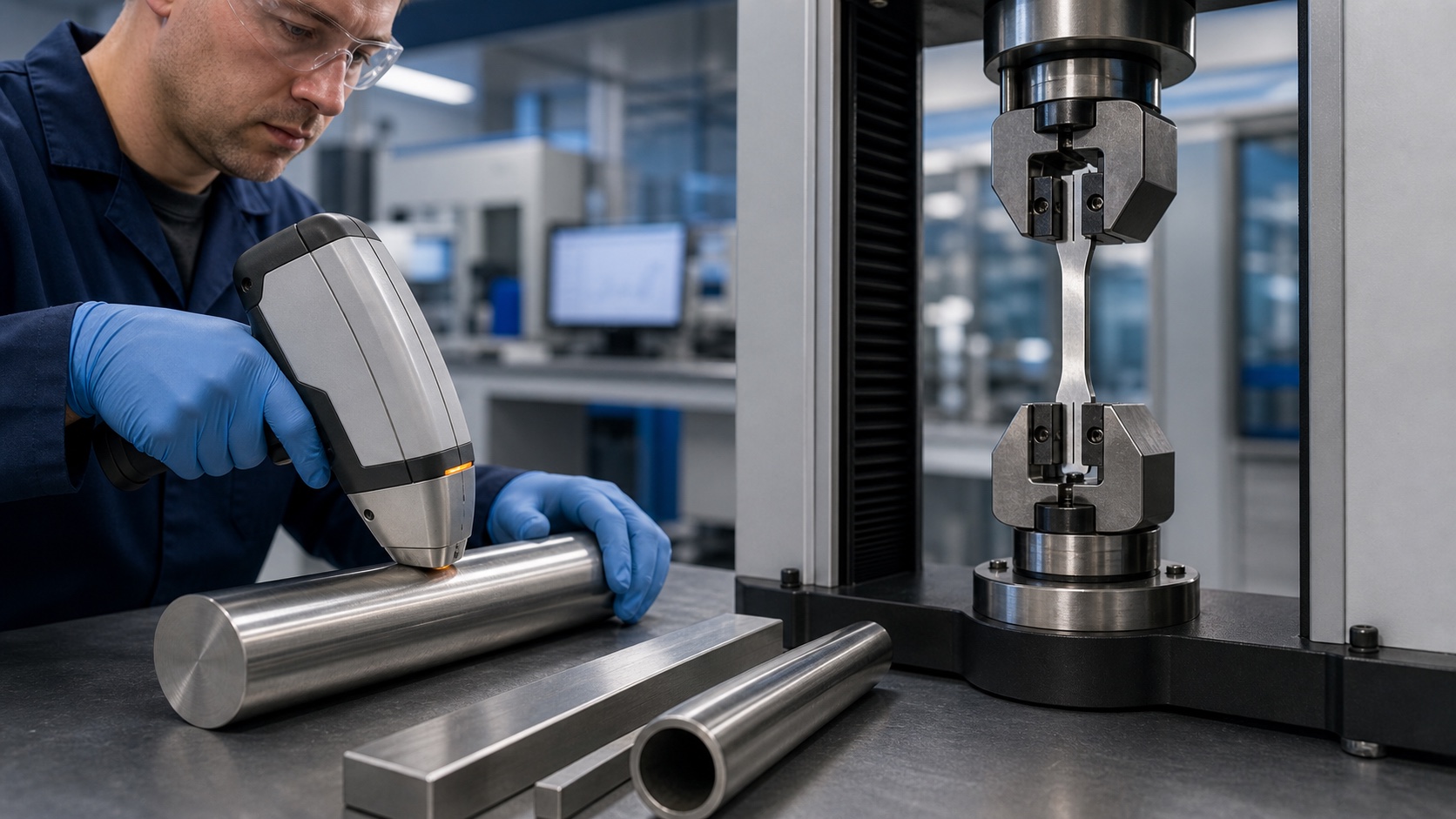
In-House Lab Analysis: We use advanced spectrometers for Spectrographic Analysis to verify chemical composition (Cr, Ni, Mo) and perform in-house mechanical testing for tensile and yield strength.
-
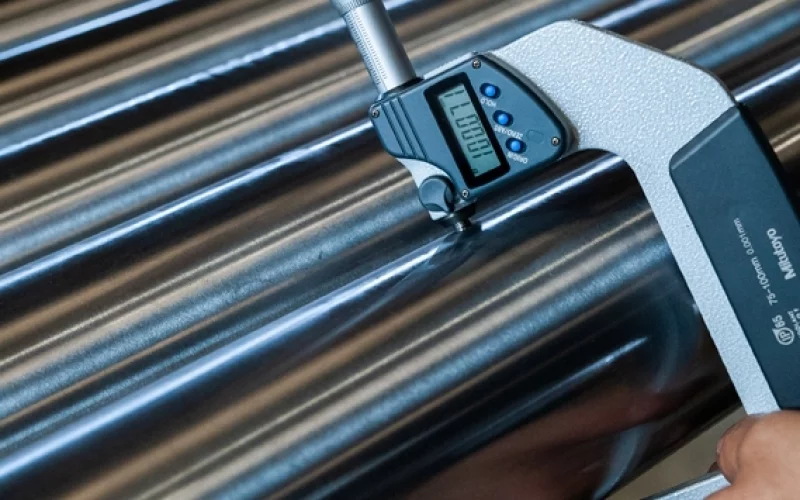
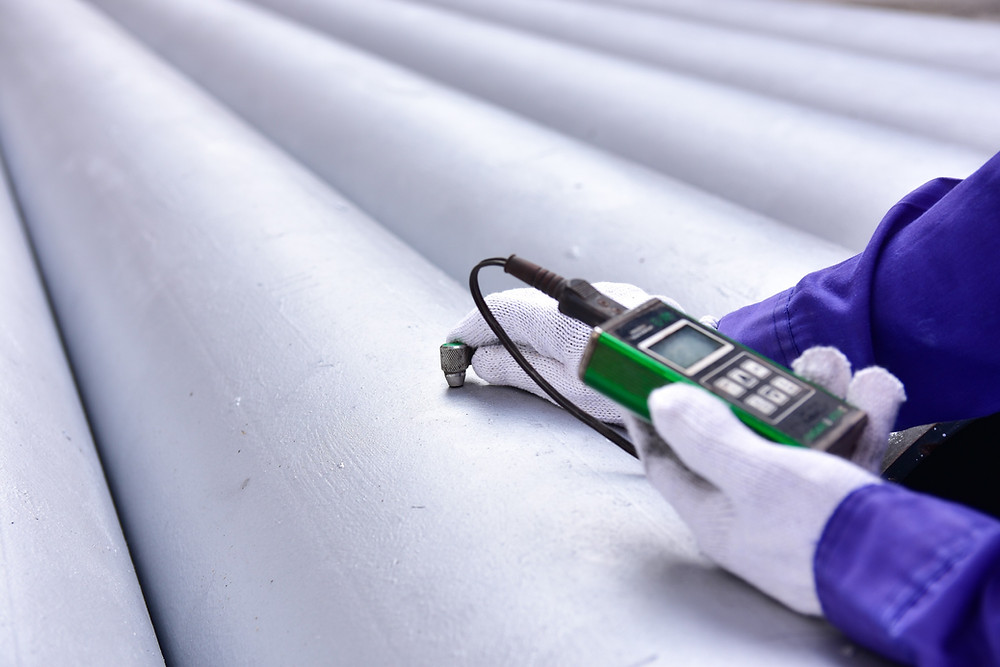
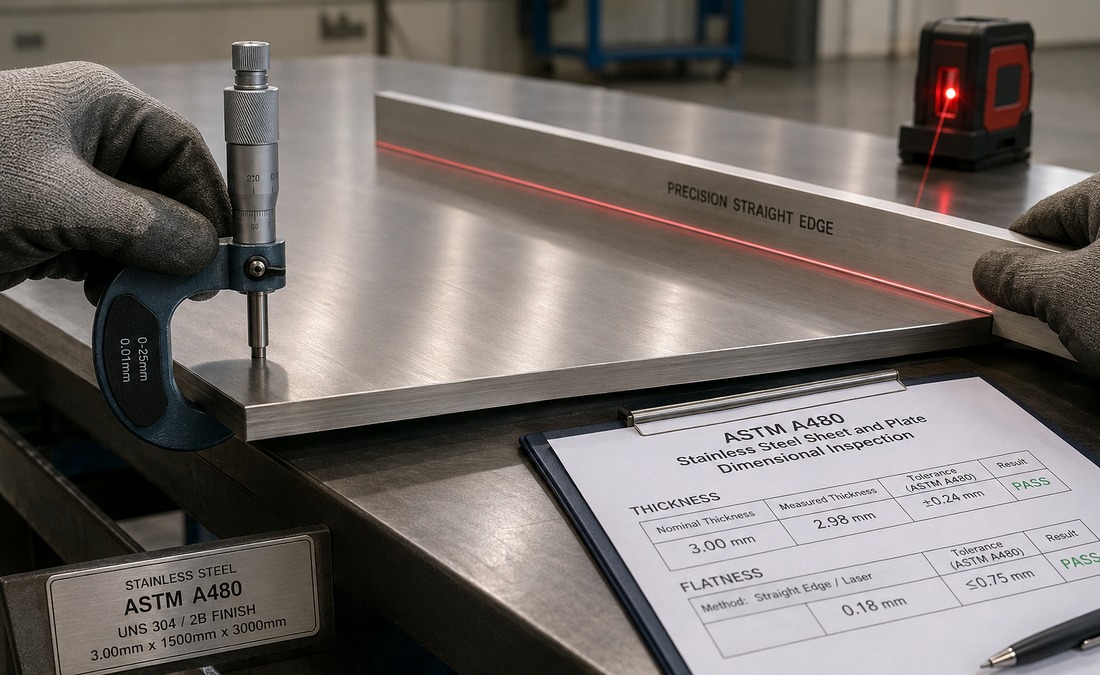
Dimensional Accuracy: Every batch undergoes a 100% check using calibrated micrometers to ensure thickness tolerance (typically within +/- 0.02mm), width, and flatness.
-
Surface Finish Integrity: We inspect finishes (2B, BA, No.4, 8K) for scratches or pits. For polished surfaces, we apply a 70μm – 100μm laser-cutting PVC film to ensure protection during fabrication.
2. Technical Documentation: The “Birth Certificate”
Accurate paperwork is the foundation of a compliant supply chain:
-
MTC (EN 10204 3.1): Every shipment is accompanied by a Mill Test Certificate. We ensure full Traceability by cross-checking the Heat Number stenciled on the steel with the data on your MTC.
-
Photo Report Requirement: Before final payment, we provide a comprehensive report including MTC copies, measurement photos with a visible scale, and container seal numbers.
3. Professional Export Packaging: The Jianglin Standard
To withstand 30–60 days of maritime humidity and transshipment, we employ a heavy-duty protection system:
-
Moisture Barrier: Products are wrapped in VCI (Vapor Corrosion Inhibitor) anti-rust paper, followed by waterproof plastic film and a secondary galvanized iron outer casing.
-
Structural Reinforcement: * Coils: Secured with high-tensile steel straps on reinforced steel or fumigated wooden skids (Eye-to-Sky or Eye-to-Wall).
-
Sheets/Bars: Bundled with steel corner guards to prevent strap indentation and fixed onto seaworthy pallets.
-
4. Global Logistics & Third-Party Inspection (PSI)
We bridge the gap between our factory and your port with transparent logistics:
-
TPI Support: We fully support inspections by agencies like SGS, Bureau Veritas (BV), or Intertek. Our team coordinates loading supervision to ensure the cargo is properly braced and lashed with timber or air bags.
-
Incoterms & Shipping: We recommend FOB for maximum buyer control, though CIF is available for convenience. Whether via Sea Freight (FCL/LCL) or the China-Europe Railway Express (Rail Freight), we provide precise HS Codes (Chapter 72) to ensure correct tariff application.
-
Timeline Management: Our standard production lead time is 15–30 days. We recommend building a 3–5 day buffer for customs clearance and final delivery.

Why Partner with Jianglin Steel?
Navigating the international stainless steel market requires a partner who combines manufacturing excellence with global logistics expertise. With over 20 years of industry experience, Jianglin Steel has evolved into a trusted global leader in the stainless steel supply chain.
Our Global Footprint & Proven Reliability
-
20+ Years of Excellence: Two decades of refining our production processes, ensuring that every batch of steel meets the highest structural and aesthetic standards.
-
Serving 180+ Countries: From large-scale infrastructure projects in the Middle East to precision manufacturing in Europe and North America, our products are trusted by clients in over 180 countries and regions.
-
Gold-Standard Certifications: Our facilities and processes are fully certified by international bodies, including ISO 9001, SGS, and ICR, ensuring full compliance with global quality and safety mandates.
One-Stop Product Solutions
We offer an extensive portfolio of stainless steel grades and forms, allowing you to consolidate your sourcing:
-
Flat Products: Cold-rolled and hot-rolled coils, sheets, and plates (304, 316, 430, etc.).
-
Long Products: Precision-engineered round bars, hexagonal bars, and angles.
-
Pipes & Tubes: Seamless and welded solutions for industrial and decorative use.
-
Specialty Alloys: High-performance materials including Inconel, Monel, and Duplex steel.
Advanced Customization & Technical Support
We don’t just sell steel; we provide tailored solutions to meet your exact project requirements:
-
Custom Surface Processing: From Mirror (8K) and Hairline to PVD color coating and anti-fingerprint treatments.
-
Precision Cutting: Advanced CNC machining, laser cutting, and slitting services to deliver “ready-to-use” materials.
-
Technical Consultation: Our engineers assist in material grade selection to optimize both performance and cost-efficiency for your specific application.
The Jianglin Advantage: Built for Long-Term Success
Beyond the product, we provide a seamless export experience. Our dedicated team handles everything from EN 10204 3.1 MTC documentation to seaworthy packaging and complex customs coordination.
Ready to elevate your supply chain? Talk to Our Technical Team.
Frequently Asked Questions (FAQ)
1. What documents are required to import stainless steel from China?
The core documentation includes a Commercial Invoice, Packing List, Bill of Lading (B/L), and Certificate of Origin (CO). Most importantly, a Mill Test Certificate (MTC) is required to verify the technical grade and chemical composition of the steel.
2. How do I verify stainless steel quality before shipment?
Quality can be verified through a Pre-Shipment Inspection (PSI). We recommend checking the dimensional accuracy (thickness and width), surface finish integrity, and cross-referencing the Heat Number on the physical product with the MTC. You can also engage third-party agencies like SGS or Bureau Veritas for independent testing.
3. Can Jianglin Steel provide MTC for stainless steel products?
Yes. All our shipments are accompanied by a Mill Test Certificate (MTC) according to EN 10204 3.1. This ensures full traceability and confirms that the material meets international standards such as ASTM, EN, or JIS.
4. How long does stainless steel shipping from China usually take?
The total timeline includes production (15–30 days) and transit time. Sea freight typically takes 20–40 days depending on the destination, while rail freight to Europe offers a faster middle-ground option. We recommend building a 3–5 day buffer for customs clearance.
5. Which Incoterms are commonly used for stainless steel export?
FOB (Free On Board) is highly recommended as it gives importers better control over freight costs and logistics. CIF (Cost, Insurance, Freight) is also commonly used for buyers who prefer the supplier to manage the international shipping and insurance.
6. How are stainless steel coils and sheets packed for export?
We use Seaworthy Export Packaging, which includes VCI anti-rust paper, waterproof plastic film, and a galvanized outer casing. Products are secured with high-tensile steel straps on reinforced pallets, with additional PVC film (70μm – 100μm) to protect the surface finish.
7. Can Jianglin Steel support custom cutting or fabrication before shipment?
Absolutely. We provide advanced customization services, including precision CNC laser cutting, slitting, and surface treatments (Mirror, Hairline, or PVD color coating), delivering “ready-to-use” materials tailored to your project specifications.