Skip to content

ASTM A312, ASTM A269, ASTM A270, and ASTM A554 are among the most commonly used stainless steel standards. Each standard is designed for a specific purpose. Some focus on pressure and high-temperature service. In contrast, the others are intended for sanitary or structural applications. Although these standards may appear similar, they differ in product type, mechanical requirements, finishing, testing, and end use. Understanding these differences is important when selecting the correct material for a project. The wrong standard can lead to performance issues, higher costs, or compliance problems. This comparison explains the key features, applications, and differences in a clear way.
Why Buyers Confuse These Four Standards
These four ASTM standards are often confused by buyers. However, each standard is made for different applications. The confusion mainly comes from overlapping grades, similar product forms, and closely related size specifications.
Similar material, different end use
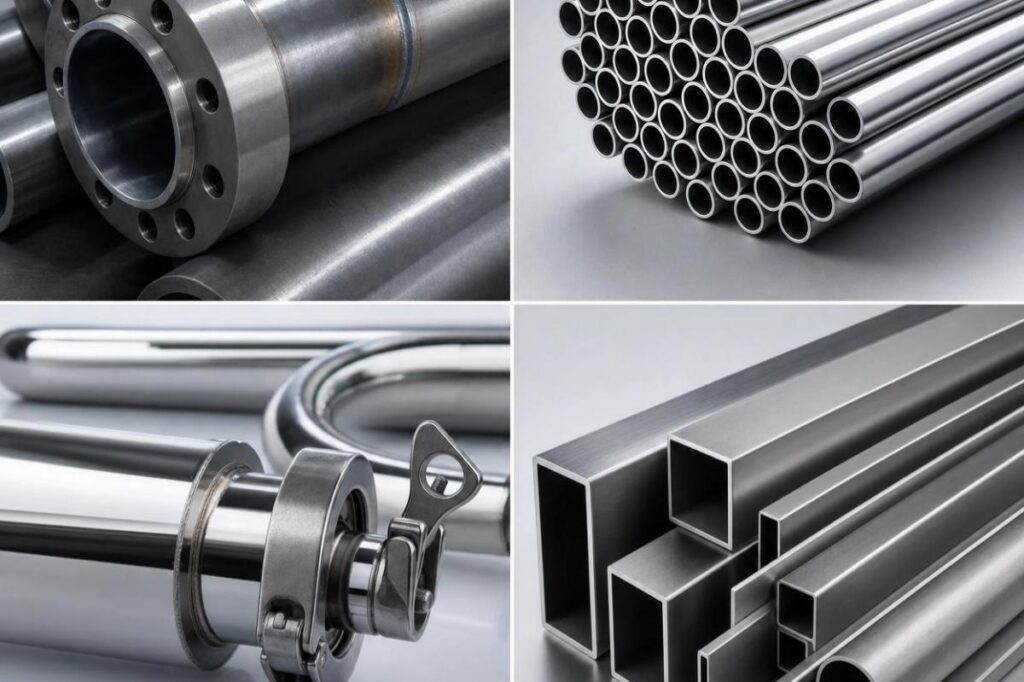
Standards such as ASTM A312, A269, A270, and A554 may use the same stainless steel grades, including 304 and 316. However, their applications are different. ASTM A312 is mainly used for pressure and process piping. ASTM A269 is used for general-purpose and instrumentation tubing. ASTM A270 is intended for sanitary service, while ASTM A554 is used for structural and decorative tubing.
Pipe and tube naming issues
Many buyers use the terms pipe and tube interchangeably, which creates confusion. As shown in Figure 01, the pipe is generally associated with pressure and fluid transport systems. Tube is commonly selected for dimensional accuracy, a cleaner finish, or structural use. The pipe uses nominal size (NPS), while the tube uses exact OD and wall thickness for precision use.
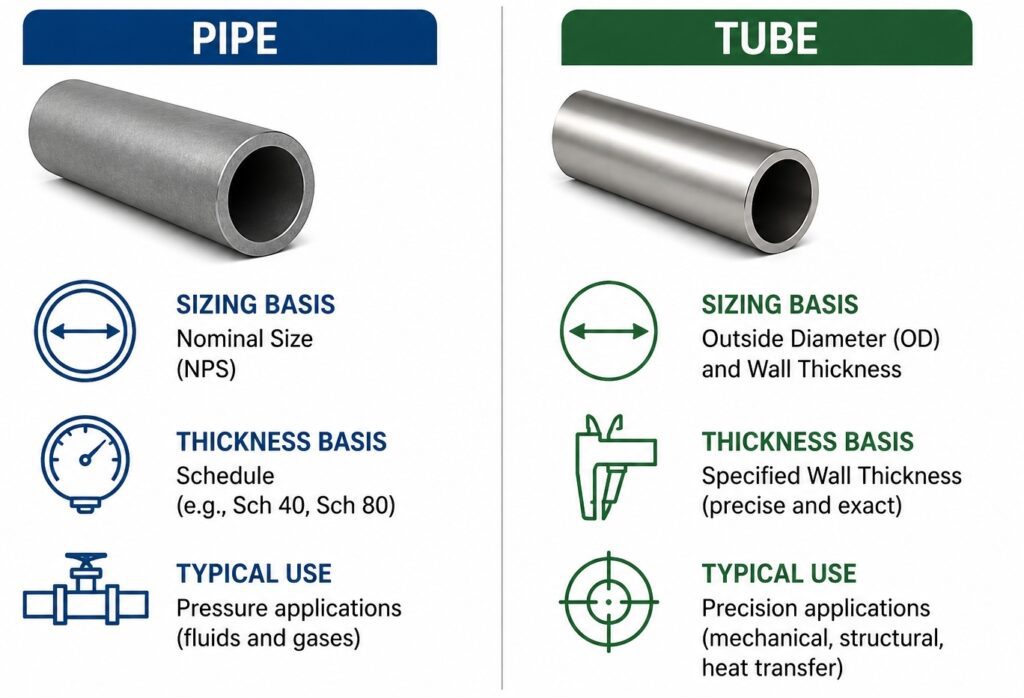
Figure 1: Key difference between pipe and tube
What ASTM A312 Covers
ASTM A312 is a standard for seamless and welded stainless steel pipes. This standard is used in high-temperature and general corrosive service. It is widely used in industrial piping systems where strength, corrosion resistance, and pressure handling are important.
Industrial pipe
ASTM A312 covers stainless pipe used in industries such as chemical plants, oil and gas, and power generation. These pipes are designed for transporting fluids and gases under controlled conditions.
Pressure and process systems
ASTM A312 is mainly used in pressure and process systems. This standard required where pipes must handle internal pressure and elevated temperatures. ASTM A312 includes requirements for mechanical strength, heat treatment, and testing.
What ASTM A269 Covers
ASTM A269 specifies seamless and welded stainless steel tubing for general service. It is mainly used where corrosion resistance and dimensional consistency are required. This standard is not used for extreme pressure conditions.
General-service tubing
This standard covers tubing used in general applications. This includes the heat exchangers, condensers, and fluid transfer lines. ASTM A269 is suitable for moderate pressure and temperature conditions.
Instrumentation and precision use
ASTM A269 is also used for instrumentation and control systems. It provides good dimensional accuracy and surface quality. This makes it suitable for precise flow measurement and sensitive equipment connections.
What ASTM A270 Covers
ASTM A270 defines stainless steel tubing used in sanitary applications where hygiene and product purity are critical. It is mainly used in industries such as food, dairy, and pharmaceuticals.
Sanitary tubing
This standard covers tubing which are designed to carry food products and beverages. These tubes have smooth internal surfaces to reduce contamination risks. This standard covers tubing used in hygienic process lines. This includes the milk processing, juice production, brewing, and pharmaceutical fluid handling. The tubing is designed to ensure a smooth flow of products without contamination or bacterial growth. It is mainly used in systems where cleanliness is more important than high pressure or structural strength.
Cleanliness and finish expectations
ASTM A270 has strict requirements for surface finish, especially on the inside of the tube. The internal surface is usually polished to a specific roughness level. This leads to preventing product buildup and allows easy cleaning (CIP system). It also includes strict inspection for cleanliness, weld quality, and material traceability. These requirements ensure the tubing is suitable for high-purity applications.
What ASTM A554 Covers
ASTM A554 covers welded tubing used for ornamental and general mechanical applications. This standard mainly focuses on surface appearance and dimensional accuracy. It is commonly used for light structural applications and is not intended for pressure service.
Mechanical and ornamental tubing
ASTM A554 tubing is widely used in architectural and mechanical applications. The common uses include handrails, gates, frames, and decorative structures. It is available in round, square, and rectangular shapes. This standard is suitable for applications that require corrosion resistance and a clean surface appearance.
Appearance-focused and structural-use cases
One of the main features of ASTM A554 is its surface finish quality. The tubing is commonly supplied with polished or decorative finishes for commercial and residential projects. It is also used in light structural applications where moderate mechanical strength is required. However, it is not intended for high-pressure or high-temperature fluid service like ASTM A312 pipe.
Key Differences Between the Four Standards
Although ASTM A312, A269, A270, and A554 are all stainless steel standards. But they are developed for different industrial requirements. The main differences between these standards are product form, dimensional control, surface quality, and testing requirements. The selection of the correct standard is important for long-term performance. To better understand the key differences between these standards, the following table 01 summarizes their main technical and application features.
Product form
ASTM A312 mainly covers stainless steel pipe used in pressure systems. It is commonly supplied in standard pipe sizes and schedules. ASTM A269 and ASTM A270 cover stainless steel tubing, but for different purposes. A269 is used for general service and instrumentation tubing, while A270 is designed for sanitary processing systems. ASTM A554 covers welded mechanical tubing used in structural and ornamental applications. It is available in round, square, and rectangular shapes.
Tolerance
Dimensional tolerance requirements vary for each standard, depending on the application. ASTM A269 and A270 require tighter accuracy because they are used in precision systems. ASTM A554 maintains good dimensional consistency for appearance purposes. ASTM A312 tolerances do not have a precise tolerance, and it is suitable for industrial piping.
Surface finish
Surface finish is one of the major differences between these standards. ASTM A270 has strict internal and external finish requirements because it is used in hygienic industries. ASTM A554 also focuses on polished and decorative finishes for visible applications. ASTM A269 provides a cleaner finish suitable for instrumentation and fluid handling systems. ASTM A312 mainly focuses on service performance rather than visual appearance.
Testing
Each ASTM standard has different inspection and testing requirements based on its application. ASTM A312 includes pressure tests like hydrostatic or nondestructive testing. ASTM A269 requires basic mechanical tests for general service performance. ASTM A270 includes strict checks for surface finish, cleanliness, and weld quality. ASTM A554 mainly focuses on size checks and surface appearance.
End-use suitability
These standards are selected according to the final application. ASTM A312 is suitable for industrial piping systems under pressure and temperature. ASTM A269 is commonly used for instrumentation lines, heat exchangers, and general tubing service. ASTM A270 is preferred where cleanliness and smooth surface finish are critical. ASTM A554 is mainly used for architectural structures, railings, and decorative purposes. It is suitable where appearance and light structural strength are important.
Table 01: Quick Comparison of ASTM A312, A269, A270, and A554
Standard | Product Type | Main Use | Key Focus | Typical Industries |
ASTM A312 | Pipe | Pressure and process piping | Strength, pressure handling | Oil & gas, chemical, power plants |
ASTM A269 | Tube | General service & instrumentation | Dimensional accuracy, corrosion resistance | Heat exchangers, control systems |
ASTM A270 | Tube | Sanitary tubing | Cleanliness, surface finish | Food, dairy, pharma |
ASTM A554 | Tube | Mechanical & ornamental | Appearance, fabrication | Architecture, furniture, handrails |
How to Choose the Right Standard for Your Project
The selection of the correct stainless steel standard depends on the service condition. Different applications require different requirements. Pressure, cleanliness, and appearance are important factors. Dimensional accuracy should also be considered before selecting the standard. Table 02 highlights the key selection factors for each ASTM standard. Figure 02 shows how each ASTM standard is mapped to its primary application. This will help the buyers to quickly identify the right standard based on the industry.

Figure 02: Application mapping of ASTM A312, A269, A270, A554
For industrial piping
ASTM A312 is the preferred choice for industrial piping systems that operate under pressure or high temperature. It is used where strength and corrosion resistance are important. The common applications are chemical plants, oil and gas systems, power generation, and process industries.
For instrumentation lines
ASTM A269 is suitable for instrumentation and general service tubing. This standard is used where accurate dimensions and reliable tubing performance are required. It is commonly used in control lines, heat exchangers, and fluid transfer applications
For food and sanitary systems
ASTM A270 is recommended for food and sanitary applications. ASTM A270 is used where cleanliness and smooth internal surfaces are critical. It is widely used in the dairy, beverage, and pharmaceutical industries.
For handrails, frames, and decorative use
ASTM A554 is mainly selected for structural and ornamental applications. It is commonly used for handrails, furniture, frames, gates, and decorative structures. This is used where appearance, polish, and fabrication quality are more important.
Table 02: Key technical differences between each standard
| Factor | A312 | A269 | A270 | A554 |
| Pressure suitability | High | Medium | Low | Not suitable |
| Surface finish requirement | Standard industrial | Smooth | Very high (sanitary) | Decorative/polished |
| Dimensional tolerance | Standard | Tight | Tight | Moderate |
| Testing level | Pressure testing | Mechanical testing | Hygienic and surface inspection | Basic inspection |
| End-use suitability | Industrial piping | Instrumentation | Food and pharma systems | Structural and decorative |
Common Buyer Mistakes
Many buyers focus only on stainless steel grade and overlook the actual standard requirements. This can lead to incorrect material selection and performance issues. Understanding the service condition is equally important as the selection of the material grade.
Choosing by grade only
A common mistake is selecting material only by stainless steel grade, such as 304 or 316, without checking the standard. The same grade can be used in different standards. But the manufacturing method, testing, tolerance, and application may be completely different. A correct standard is necessary to ensure the product meets the required service conditions.
Ignoring finish and cleanliness
Surface finish and cleanliness are important in food processing, pharmaceutical, and instrumentation systems. Some buyers select the standard of industrial tubing to reduce cost. However, standard tubing may not have the required surface finish for sanitary applications. This can cause hygiene problems. It can also create cleaning difficulties and compliance issues.
Using ornamental tubing for process service
ASTM A554 ornamental tubing is designed mainly for structural and decorative use. Some buyers mistakenly use it for pressure or process piping because it looks similar to industrial tubing. However, ornamental tubing is not intended for pressure service. The ornamental tubing may not meet the required testing and inspection standards for industrial systems.
Conclusion
While ASTM A312, A269, A270, and A554 may use similar stainless steel grades, each standard is engineered for a completely different purpose:
- ASTM A312: Mainly used for industrial pressure piping operating in high-temperature and corrosive environments.
- ASTM A269: Best suited for general service and instrumentation tubing where precise dimensions and corrosion resistance are required.
- ASTM A270: Designed strictly for sanitary systems (like food, beverage, or pharma) that demand high cleanliness and an ultra-smooth surface finish.
- ASTM A554: Primarily utilized for structural and ornamental applications where aesthetics, weldability, and mechanical strength matter most.
Crucial Takeaway: Selecting the correct standard ensures long-term performance, regulatory compliance, and safety. Buyers should never select a material based solely on its grade or appearance.
Ready to Source the Right Material for Your Project?
Don’t leave your project’s safety and efficiency to chance. Partner with Jianglin Steel to ensure you get the exact ASTM-compliant stainless steel tailored to your industry’s specific demands.
Contact Jianglin Steel Today to speak with our technical experts, request a quote, or secure the perfect high-performance steel for your next application!
FAQ About Stainless Steel Pipe and Tube Standards
1. What is the main difference between pipe and tube in ASTM standards?
Pipe is mainly used for pressure and fluid transport systems. Pipes are identified by nominal pipe size and schedule. Tube is usually specified by exact outside diameter and wall thickness and is used where accuracy, appearance, or structural use is important.
2. Can ASTM A312, A269, A270, and A554 be used interchangeably?
No, even if they use similar stainless steel grades like 304 or 316, each standard is designed for a specific application. Using the wrong standard can cause issues in pressure handling, hygiene, or structural performance.
3. Which standard is best for hygienic or food-grade applications?
ASTM A270 is the correct choice for sanitary and hygienic applications. It has strict requirements for surface finish, cleanliness, and inspection. This makes it suitable for food, dairy, beverage, and pharmaceutical industries.
4. Why is ASTM A554 not suitable for pressure systems?
ASTM A554 is designed for mechanical and ornamental tubing, not for pressure service. It focuses on appearance and structural use, so it does not include the same pressure testing and safety requirements as ASTM A312.