Skip to content
Alloy steel round bars are crucial components in many demanding industrial applications, valued for their strength and durability. Several global manufacturers specialize in producing these high-quality materials, leveraging decades of expertise and advanced techniques. Here’s a look at some of the leading companies shaping this vital sector of the metals industry.
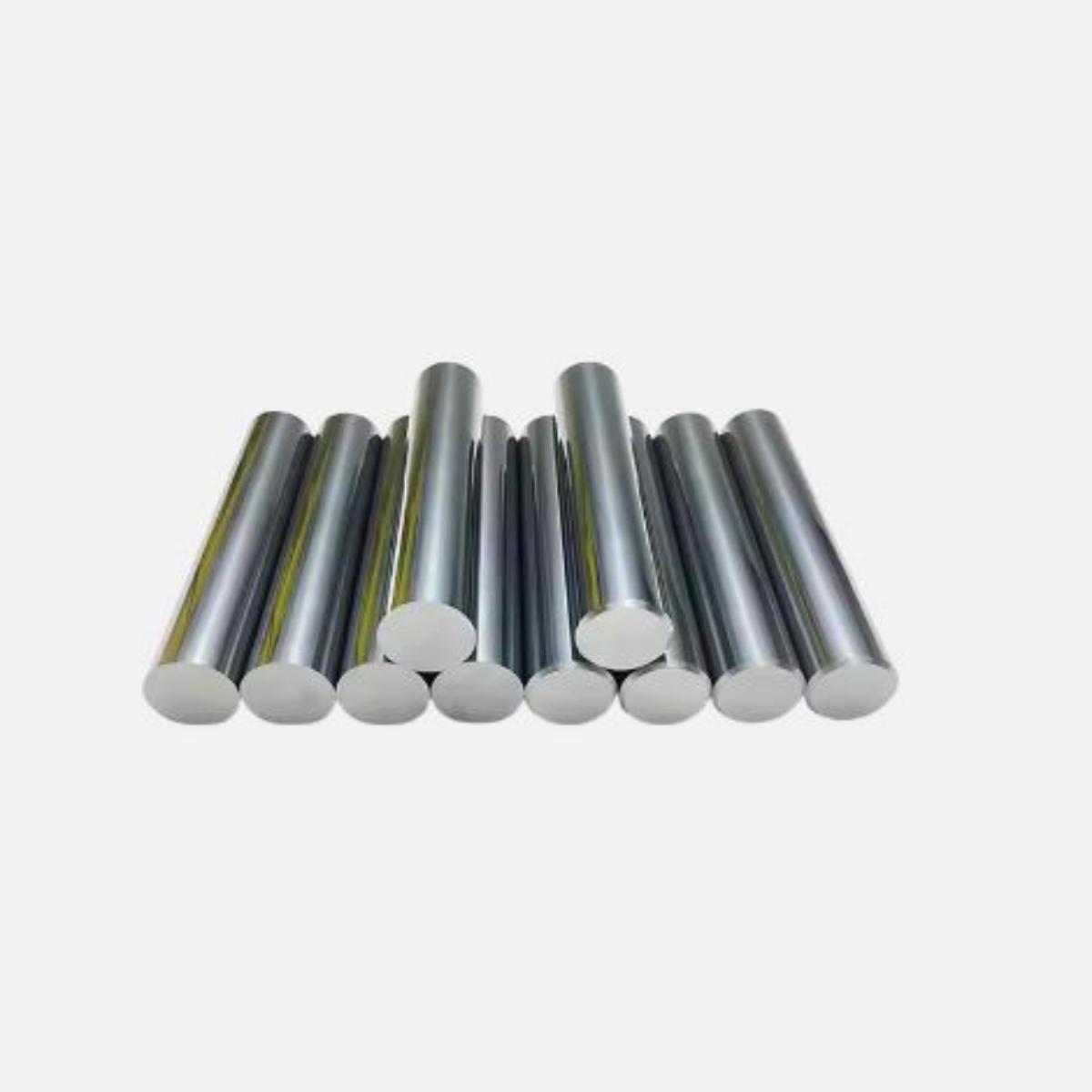
Sturdy alloy steel round bars mix iron with elements like chromium or nickel. Adding these extras amps up the steel, making it stronger, harder, and better against wear, rust, and heat. That’s why these tough bars are vital for parts needing to perform reliably under pressure in key industries.
Top 10 alloy steel round bar manufacturers list
Name | Founding Year |
Allegheny Technologies Incorporated (ATI) | 1939 |
TimkenSteel Corporation | 1915 |
Tata Steel Limited | 1907 |
ArcelorMittal | 2006 |
Nippon Steel Corporation | 1970 |
POSCO | 1968 |
JFE Steel Corporation | 2003 |
Baosteel Group Corporation | 1978 |
Sandvik Materials Technology | 1862 |
JSW Steel Ltd. | 1982 |
Allegheny Technologies Incorporated (ATI)

Year Founded: 1939
Main Products
- Alloy steel round bars
- Hot-rolled round bars
- Stainless steel products
- Titanium and titanium-based alloys
- Nickel-based alloys and superalloys
- Specialty steels and alloys
- Zirconium, hafnium, and niobium products
- Precision forgings and castings
Company Description
Allegheny Technologies Incorporated (ATI), headquartered in Dallas, Texas, is a prominent American producer specializing in specialty materials. The company got its start way back in 1939 when two steel companies decided to merge; Allegheny Steel from Pittsburgh joined up with Ludlum Steel from Watervliet, New York. Before they even combined, both these companies had reputations for supplying steel for some pretty famous buildings, you know, like the Chrysler Building and the Empire State Building.
ATI runs quite a few manufacturing plants, not just in the United States but overseas too. You can find ATI facilities in states like Pennsylvania, Illinois, Ohio, California, South Carolina, Texas, New York, and others. There’s also a plant over in Shanghai, China, plus several places across Europe.
Something important happened in 1996 – ATI merged with Teledyne. This move really helped ATI get better at making specialty metals, particularly things like alloy steel round bars. After a while, ATI sold off some parts of the business that weren’t its main focus; this let the company put more effort into producing metals and alloys, which is its core business.
Alloy steel round bars are a big deal for ATI, a major part of what they make. The company uses some advanced methods to produce these bars. One method is vacuum induction melting, or VIM – ATI actually bought a company, Allvac Metals, that pioneered using VIM for business back in 1957. Using VIM helps make sure the steel is top quality.
ATI makes round bars in a few different ways. You can get hot-rolled bars, cold-drawn bars, or even bars shaped specifically for a customer’s needs. Their alloy steel round bars are known for being really strong and tough; they also resist wear, rust, and heat well. That’s why important industries like aerospace, defense, and energy use these bars for parts that absolutely have to work right.
Making these alloy steel round bars isn’t simple. At plants like the one in Richland, metal gets melted down using electron beams inside furnaces. Then, it flows into special hearths that take out defects or unwanted bits. From this, they make huge metal blocks called billets, sometimes weighing 44,000 pounds, which become the base for the round bars. They also use vacuum arc remelting to make the final material even better.
TimkenSteel Corporation

Year Founded: 1915
Main Products
- Alloy steel bars (up to 16 inches in diameter)
- Special Bar Quality (SBQ) steel
- Seamless mechanical tubing
- Carbon and micro-alloy steel products
- Customized steel components
- Over 500 grades of steel
Company Description
Metallus Inc., based in Canton, Ohio, makes specialty steel and has been around a long time; you might know it better as TimkenSteel Corporation, but the name changed in February 2024. It actually started back in 1915. Back then, The Timken Company needed steel for bearings during World War I, so they just started making their own steel supply.
Pretty soon, they were making more steel than they needed for just bearings. That led to selling the extra alloy steel to other companies. It’s kind of interesting how it grew.
The whole thing traces back to Henry Timken. He got a patent for a better roller bearing in 1898 and started the Timken Roller Bearing and Axle Company. While that company kept making bearings, the steelmaking part became its own thing. In 2014, it officially split off, creating TimkenSteel, now Metallus, focused only on steel.
Metallus is still headquartered in Canton, Ohio. The company runs modern plants there, like the Harrison steel plant that started operating way back in 1916. They’re considered a top US maker of alloy steel round bars – these are tough steel bars built for demanding jobs needing serious strength.
The alloy steel round bars from Metallus have a reputation for being high-quality and really clean, meaning fewer tiny flaws. They use electric arc furnaces. This method lets them control the heat and process very carefully, which is key for top-notch alloy steels. Because they’re precise, Metallus can produce some huge special bar quality (SBQ) steel bars, some as thick as 16 inches across.
One cool thing is how Metallus can customize these alloy steel round bars. They have experts who know how to adjust the steel’s makeup for different industries. Cars, planes, defense gear, energy equipment – they all use steel tweaked for their specific needs. Customers count on this steel for important parts because it’s strong and pure.
Metallus makes bars for different levels of jobs. Some are standard quality for everyday use, others are premium grades for really critical applications. They even have something called Ultrapremium™ certified air-melt steel. It’s extra, extra clean for parts that absolutely cannot fail, like in airplane landing gear or deep oil wells.
Making sure the steel is right is a big deal. Metallus tests its alloy steel round bars thoroughly to meet industry rules and exactly what the customer ordered. The bars follow standards from the American Iron and Steel Institute, and they can get special heat treatments, too, to improve certain qualities. They also invent new steels, like the Endurance steels, that are super strong yet tough.
Tata Steel Limited

Year Founded: 1907
Main Products
- Alloy steel round bars
- TMT rebars and steel bars
- Automotive steels
- Galvanized steel products
- Ferro alloys and minerals
- Steel tubes and pipes
- Steel wires
- Bearings and agricultural equipment
- Construction steel products
- Industrial by-products
Company Description
Tata Steel, with its main offices located in Mumbai, India, stands as one of the globe’s most established steel manufacturers. It’s actually been around a very long time, making it one of the oldest, and it’s certainly one of the biggest steel producers you’ll find anywhere.
You can find their operations spread out quite a bit. While India is home base, they run major steel plants in other countries too, places like the Netherlands and the United Kingdom are significant centers for them. This definitely gives the company a worldwide presence.
The list of things Tata Steel makes is quite diverse. They produce steel specifically designed for car manufacturing, along with TMT rebars, which are crucial for construction projects. There are also steel pipes, wires, and galvanized products – that’s steel coated to resist rust.
They don’t just sell steel; they also produce ferro alloys and minerals, which are necessary ingredients used within the steelmaking process itself. Plus, they make bearings and even some equipment used in farming. It’s quite a range.
Looking beyond just making steel, the company puts resources into developing new types of steel and improving processes. There’s also a stated focus on operating more sustainably and making sure they contribute positively to the local areas around their facilities. They manage the whole chain, from getting raw materials out of the ground to the final steel items.
ArcelorMittal

Year Founded: 2006
Main Products
- Alloy steel round bars
- Hot rolled steel bars
- Wire rod products
- Merchant bars
- Structural steel products
- Long steel products
- Rebar and construction steel
- Special steel grades for automotive applications
- Tubular products
Company Description
ArcelorMittal has its headquarters in Luxembourg City and was created in 2006 when Arcelor and Mittal Steel Company merged. That combination actually made it the world’s biggest steel producer at that moment. It was a significant joining of forces.
The company runs steel-making operations across 15 countries now. It uses 37 different sites, a mix of what they call integrated and mini-mill facilities, to get the job done.
You can trace the company’s origins to Lakshmi Mittal. He started building his steel empire way back in the 1970s. His method often involved finding steel mills that were having trouble and turning them around, improving how things were run.
The merger with Arcelor in 2006 was a big step in bringing parts of the global steel industry together. The new, combined company was responsible for something like 10% of all the steel made worldwide then.
ArcelorMittal really concentrates on producing top-notch alloy steel round bars. These specific bars are important for several critical industries. They manufacture these round bars carefully, making sure they meet very strict quality rules. Plus, they offer them in various grades and specs to fit different needs.
People often choose these round bars because they’re known for being exceptionally strong and durable. They perform reliably even when conditions get demanding. You’ll find these alloy steel round bars used in cars, buildings, general engineering, and the energy business – places where having sound material is absolutely essential.
ArcelorMittal’s production process focuses on keeping the dimensions exact and the metal properties consistent from bar to bar. The round bars produced come in sizes ranging from 10 millimeters to 110 millimeters in diameter. That range offers a lot of flexibility for different industrial uses.
The company didn’t just stop there; they developed specialized alloy mixes for the steel round bars. These mixes give the bars better mechanical properties. Think improved strength against pulling (tensile strength), better ability to resist bending permanently (yield strength), and more resistance to wear and fatigue over time. This makes the alloy steel round bars great for manufacturing parts that have to handle high stress and operate in harsh places.
Nippon Steel Corporation

Year Founded: 1970
Main Products
- Steel plates and sheets
- Structural steel
- Alloy steel round bars
- Stainless steel products
- Pipes and tubes
- Railway, automotive, and machinery parts
- Titanium products
- Steel slag products
Company Description
Nippon Steel Corporation, with headquarters in Marunouchi, Chiyoda, Tokyo, was officially formed in 1970 through a significant merger. This merger brought Yawata Iron & Steel and Fuji Iron & Steel together into one company.
But the company’s story actually starts much earlier. Think 1934. That’s when Japan Iron & Steel Co., Ltd. was first established by combining Yawata Steel Works with other steel producers using blast furnaces.
Things changed after World War II. Around 1950, the original company was split into two separate businesses again: Yawata Iron & Steel and Fuji Iron & Steel. They went their separate ways for a while.
Eventually, though, those two companies decided to join forces again. That reunion is what created the Nippon Steel Corporation we know today.
Nippon Steel is Japan’s biggest steelmaker and a major producer on the world stage. The company operates across four main business areas: making steel, handling engineering projects, producing chemicals, and offering systems solutions. This diverse approach helps it compete globally, even when the economy gets tough.
The company has developed real expertise in manufacturing alloy steel round bars. These particular bars are known for their high quality and how reliably they perform. Nippon Steel uses advanced metallurgy techniques – fancy ways of working with metals – to give the bars the best mechanical properties.
What kind of properties? High tensile strength, for one. They also resist corrosion well and are quite durable, holding up even under difficult conditions. You can get these bars in various grades and specifications to fit all sorts of industrial needs.
Plus, the bars go through intense quality control checks. This is done to keep everything consistent and reliable, bar after bar. What really makes Nippon Steel’s alloy round bars notable is the precision engineering behind them.
POSCO

Year Founded: 1968
Main Products
- Hot rolled steel sheets and coils
- Cold rolled steel sheets and coils
- Stainless steel round bars
- Alloy steel round bars
- Steel profiles (H-beams, I-beams, channels)
- Galvanized steel products
- Steel wire rods
- Steel plates (including structural and alloy)
Company Description
POSCO, which started as Pohang Iron and Steel Company, is located in South Korea and got its start back on April 1, 1968. The Korean government actually founded the company. Park Chung Hee, the president then, picked a retired army general, Park Tae-joon, to run it first. The whole point was for South Korea to make its own steel, you see, because that was super important for the country’s economy to grow.
Building the first big steel factory began in April 1970. They built it in Pohang, which used to be just a fishing town.
That plant officially opened up on July 3, 1973. At first, it could produce about 1.03 million metric tons of steel each year. Japan actually helped out quite a bit, giving money and technical advice after things got better between South Korea and Japan in the late 1960s.
POSCO’s main offices are still right there in Pohang, South Korea. The company runs two major steel mills in the country now. There’s the original Pohang Works and then the Gwangyang Works, which they built between 1982 and 1992.
These huge factories really changed Pohang. It went from a little fishing place to a big industrial city. More than 500,000 people live there now, largely because of all the steel being made.
Now, about those alloy steel round bars. POSCO is known for making really good ones. Lots of different industries use them.
The process involves making the steel, rolling it hot, and doing other things to get the metal just right. What you get are round bars that are strong but also flexible. They handle stress and tough environments well.
They mix in other metals like manganese, chromium, nickel, and molybdenum into the steel. This makes the bars stronger, harder, or better at resisting rust, depending on the mix. That’s why car makers, machine builders, construction companies, and the energy sector use these bars. Regular carbon steel often just isn’t good enough for their needs.
Making these alloy steel bars takes a lot of control. They have to get the mix of metals perfect, keep the temperature just right during production, and control how fast the steel cools. This careful process makes sure the steel has the right structure inside and the right physical abilities.
POSCO uses modern tech, like computer systems, to keep the quality the same every time. It also helps make sure the bars are exactly the right size.
The company doesn’t just stick to the basics either. They keep developing new kinds of alloy steel bars for special jobs. Think high-strength low-alloy (HSLA) bars for building things, or bars that can be heat-treated for tough car parts. They even make special alloys designed for really extreme conditions.
JFE Steel Corporation

Year Founded: 2003
Main Products
- Steel sheets and plates
- Alloy steel round bars
- Stainless steel products
- Steel pipes and tubes
- Wire rods
- Special steel products
- Premium tubular goods
- Construction materials, including stainless steel gates and fences
Company Description
JFE Steel Corporation, headquartered in Tokyo, Japan, got its start from a pretty big shakeup in Japan’s steel world. It officially formed back in 2003 when two older Japanese steel companies decided to pool their steel businesses; those were Kawasaki Steel Corporation (around since 1906) and NKK Corporation (started in 1912). This move created Japan’s number two steel maker, putting them in a good spot to compete worldwide.
That name, JFE? It stands for Japan, Fe (you know, iron on the periodic table), and Engineering. Kinda tells you exactly what they’re about – Japanese roots and their main line of work in iron and steel engineering. Besides the main office in Tokyo, JFE Steel runs several big production hubs across Japan. Think two massive coastal steelworks, one east, one west, and the Chita Works, which handles more specialized tasks.
The Eastern Japan Works includes plants in the Chiba area and the Keihin area. Out west, the Western Japan Works covers the integrated plants at Fukuyama and Kurashiki. Being right on the coast like that is smart; it makes moving materials and finished steel around by ship way easier, whether it’s staying in Japan or going overseas.
Now, about those alloy steel round bars – JFE Steel has put serious effort into making them. They can produce these bars in sizes from a relatively small 16mm diameter all the way up to a huge 450mm, which is quite something in the industry. This flexibility means different sectors needing various alloy steel bars can get what they need.
To make these, JFE Steel uses some cool tech, like their own special 4-roll mill and a process called round billet peeling. These methods help create wire rods without flaws and of really high-quality steel bars. What you get are alloy steel round bars known for being of top-notch quality and having exact dimensions.
They manage this quality through careful control over the ingredients, basically, and adjusting the rolling process for how the steel will eventually be used or processed. JFE Steel’s alloy products perform well during later manufacturing steps. They’re easier to clean (descaling), shape (drawability and cold forgeability), cut (machinability), and respond well to heat treatments.
Baosteel Group Corporation

Year Founded: 1978
Main Products
- Alloy steel round bars
- Stainless steel products
- Hot rolled steel
- Cold rolled steel
- Galvanized steel sheets
- Heavy plates
- Pipe and tube products
- Bar and wire rod
- Special steel
Company Description
Baosteel Group Corporation is a state-owned steel company with its main offices located in the Baosteel Tower in Pudong, Shanghai, China. The company first started back in 1978, under the name Baoshan Iron & Steel (Group) Corporation. It was founded because the Chinese leader Deng Xiaoping wanted to build up large-scale steel-making capacity. This happened during a time when China was reforming its economy and opening up more.
Baosteel grew quite a bit over time. It became one of the really big steel producers in the world. A significant change happened in 2016. Baosteel took over Wuhan Iron and Steel Corporation then. That move created China Baowu Steel Group Corp., Ltd., usually just called Baowu, making it an even larger force in global steel.
When it comes to alloy steel round bars, a specific part of the company does most of that work. It’s called Baosteel Special Material Co., Ltd. This subsidiary actually started out as the Shanghai No.5 Steel Plant way back in 1958. Within Baosteel, this is the main place for making special types of steel, acting as the center for these specialized items.
The alloy steel round bars Baosteel makes have a reputation for good quality and being made precisely. Manufacturing uses advanced technologies. This helps make sure the steel always has the right properties and the dimensions are accurate. They use carefully picked raw materials for these bars, and quality is checked thoroughly during production.
You can get these alloy steel round bars in various diameters, anywhere from 10mm up to 600mm. The typical lengths are usually between 3 and 11 meters. Many important industries use these bars. Think automotive manufacturing, the energy sector, aerospace companies, and businesses making heavy machinery.
Why do they use them? These industries need the strong mechanical properties found in Baosteel’s alloy bars. Qualities like excellent strength, hardness, and good resistance to wear down are important. The company also does research and development. This work helps make sure the steel formulas are just right for what different industries need.
The factories making these alloy steel round bars have modern production lines. They’re equipped with current technology. The process involves keeping tight control over the chemical mix when the steel is melted. Then comes careful casting, hot rolling, heat treatments, and the final finishing touches.
Every single step gets monitored. This makes sure the final bars meet the required international standards. It also ensures they meet what specific customers ordered. Baosteel makes other things too, like stainless steel gates. These are made using high-grade stainless steel, which fights off rust well, lasts a long time, and looks nice.
These stainless steel gates are designed for homes and for commercial buildings. They provide security but also add to how a building looks. The gates get special surface treatments too. Those treatments help the gates stay shiny and resist corrosion, even if they face tough weather conditions.
Sandvik Materials Technology

Year Founded: 1862
Main Products
- Alloy steel round bar and hollow bar
- Stainless steel bars and rods
- Specialty high-performance alloys
- Duplex and super-duplex stainless steels
- Nickel-based alloys
- Seamless tubes and pipes
- Precision strip steel products
- Wire and heating elements
Company Description
Sandvik Materials Technology is based in Sandviken, Sweden, and was started back in 1862. Göran Fredrik Göransson founded the company; he was an industrialist always looking for new ways to do things. He actually managed to be the first person anywhere to successfully use the Bessemer process to make steel on a big, industrial scale. This move helped the company become known as a leader in metals right from the start.
How it began was that Göransson got part of the rights to the Bessemer method back in 1857, which really changed steelmaking. He did some early tests at a place called Edsken, then started a new company, Högbo Stål & Jernverks AB, in 1862. That company later turned into Sandvik.
The name wasn’t always Sandvik, though. It was renamed Sandvikens Jernverks AB in 1868, and then just Sandvik AB in 1972. Through all that time, the company has kept its attention on developing new things, doing research, and producing materials of high quality.
Sandvik started selling under its own brand name in the United States way back in 1876. It shows the company was thinking globally pretty early on. Then, by 1921, Sandvik began making stainless steel, expanding beyond just the usual carbon steels.
When you look at alloy steel round bars, Sandvik Materials Technology has quite a range used across many industries. Their alloy steel round bars have a reputation for excellent quality, being made to exact sizes, and having properties you can count on. These bars are available in diameters starting at 20mm and going up to 450mm.
You can get different surface finishes, too. Options include peel turned, ground, burnished, or even rough machined surfaces, depending on what the job requires. Sandvik makes these alloy steel bars to very high standards. Plus, there are lots of grades available, like their special Sanmac® series.
The Sanmac® stainless steel bars are engineered for great machinability. What that means is manufacturers can cut the metal faster, their tools don’t wear out as quickly, and setting up machines takes less time. Ultimately, it helps customers be more productive.
Another point about Sandvik’s alloy steel round bars is customization. They can supply the bars in random lengths, or they can cut them to specific fixed lengths if that’s what a customer needs. Having this flexibility and a delivery network that reaches around the world helps make Sandvik a go-to supplier for companies needing high-performance alloy steel components.
JSW Steel Ltd.

Year Founded: 1982
Main Products
- Special Alloy Steel (round bars, round-cornered squares, wire rods, hexagonal and flat sections)
- Hot Rolled Products
- Cold Rolled Products
- Galvanized/Galvalume Steel
- TMT Bars
- Wire Rods
- Plates and Pipes
- Pre-painted Steel Products
Company Description
JSW Steel Ltd is the main company within the large JSW Group, a business involved in steel, energy, and infrastructure, among other areas. The company’s story really began in 1982. That year, the Jindal Group bought Piramal Steel Limited. This was just a small steel mill in Tarapur, Maharashtra. They gave it a new name: Jindal Iron and Steel Company (JISCO). Around the same time, their first steel plant was built in Vasind, not far from Mumbai.
Fast forward to 1994, and a different company, Jindal Vijayanagar Steel Limited (JVSL), was created. JVSL built its plant down in Toranagallu in Karnataka state. That location was picked carefully – it’s right in the middle of India’s iron ore region, a key ingredient for steel. Then, in 2005, JISCO and JVSL merged. That merger formed the company we now know as JSW Steel Limited.
There’s a place called the Salem Works facility, about 350 kilometers from Chennai. You could say it’s JSW’s most important plant for making special alloy steel. It focuses on long products, things like bars and rods.
Being located where it is helps a lot. Major car factories are nearby in South India. This means the Salem plant can easily supply steel to those important customers.
The Salem Works plant makes high-quality alloy steel round bars. They use modern machines and careful methods to produce these bars.
Making the bars starts in the steel melting shop. Iron ore is melted down into hot metal using blast furnaces. The hot metal then goes through a process called oxygen steelmaking, which works well for alloy steels.
After that, the liquid steel gets refined in big containers called ladle furnaces. This step cleans the steel, removing things that aren’t needed. It also makes sure the steel’s composition and temperature are consistent throughout.
The Salem plant uses machines called continuous casters. These have fancy technology built in, like electromagnetic stirring (EMS). EMS helps improve the quality deep inside the steel.
The finished round bars range in size from 20mm across up to 200mm. They are shaped using hot rolling. For applications needing very exact sizes, the plant also produces precision-rolled black bars. These have very close size tolerances, made using something called Reducing Sizing Block (RSB) technology.
Conclusion
As you can see, the world of specialty steel production is complex and vital for many sectors. Leading manufacturers focus on quality control and advanced processing to create these essential materials. And if your project involves anything stainless steel related, remember Jianglin Steel is always more than happy to help meet your needs.