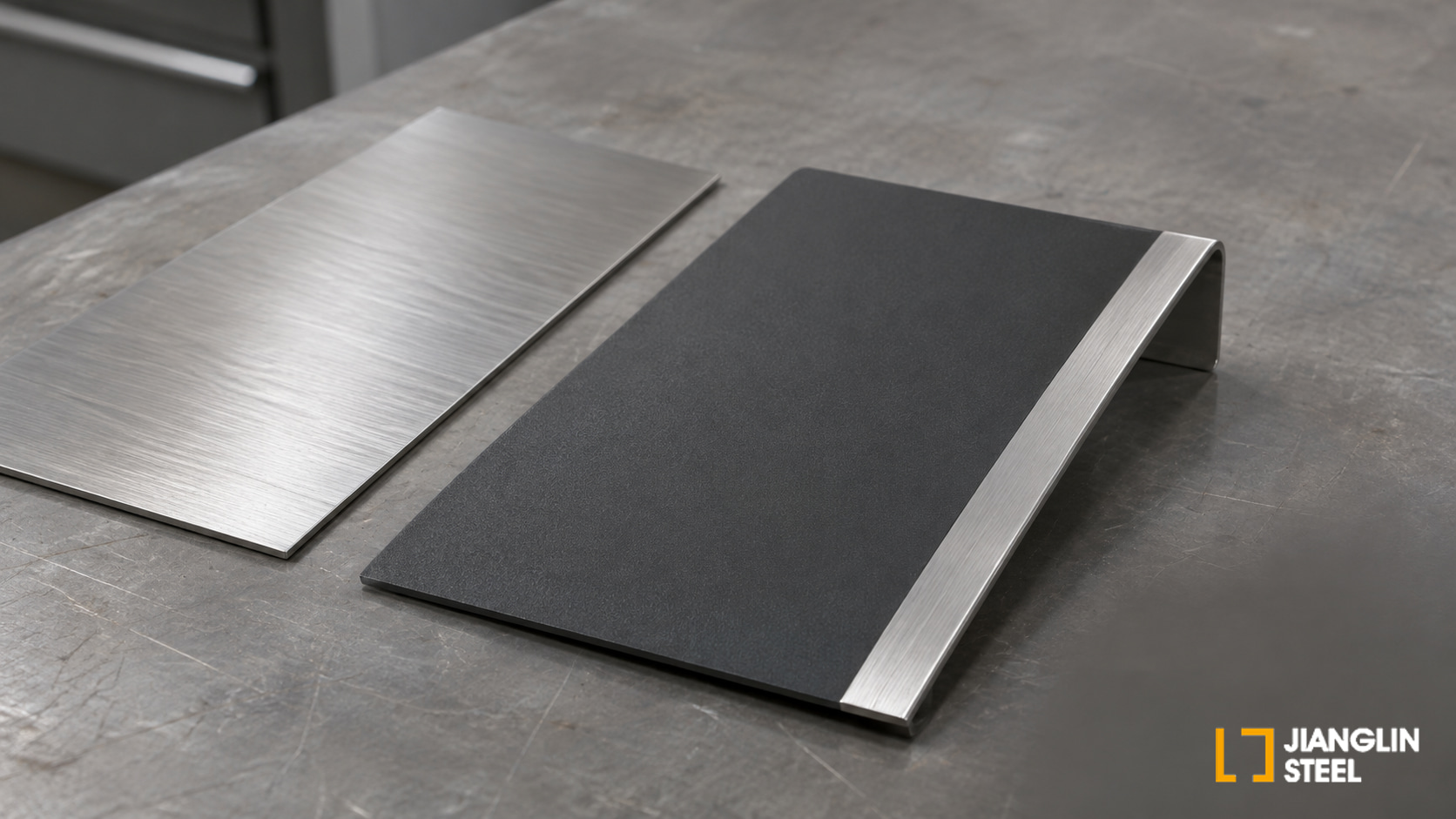
Two brushed stainless steel doors can come from the same sheet and still look different side by side. Cut one door with the grain running across it and the other with the grain running up it, and they catch the light differently.
Grain direction is one detail you can settle before ordering. This guide compares the smooth 2B mill finish, the brighter BA finish and the directional No. 4 finish. It also shows what to put on your drawing or quote request so the delivered sheet matches the intended appearance.
Key takeaways
- 2B is a smooth cold-rolled mill finish and a practical starting point for concealed panels and parts that will be finished later.
- BA is a brighter, more reflective mill finish. Approve a sample when the look of a visible panel matters.
- No. 4 has a directional grain. Specify the direction relative to a drawing edge and use an approved sample for adjoining panels.
- Confirm the grade and applicable project requirements separately from the finish. Add a roughness limit and measurement method if the job calls for them.
How do 2B, BA and No. 4 compare?
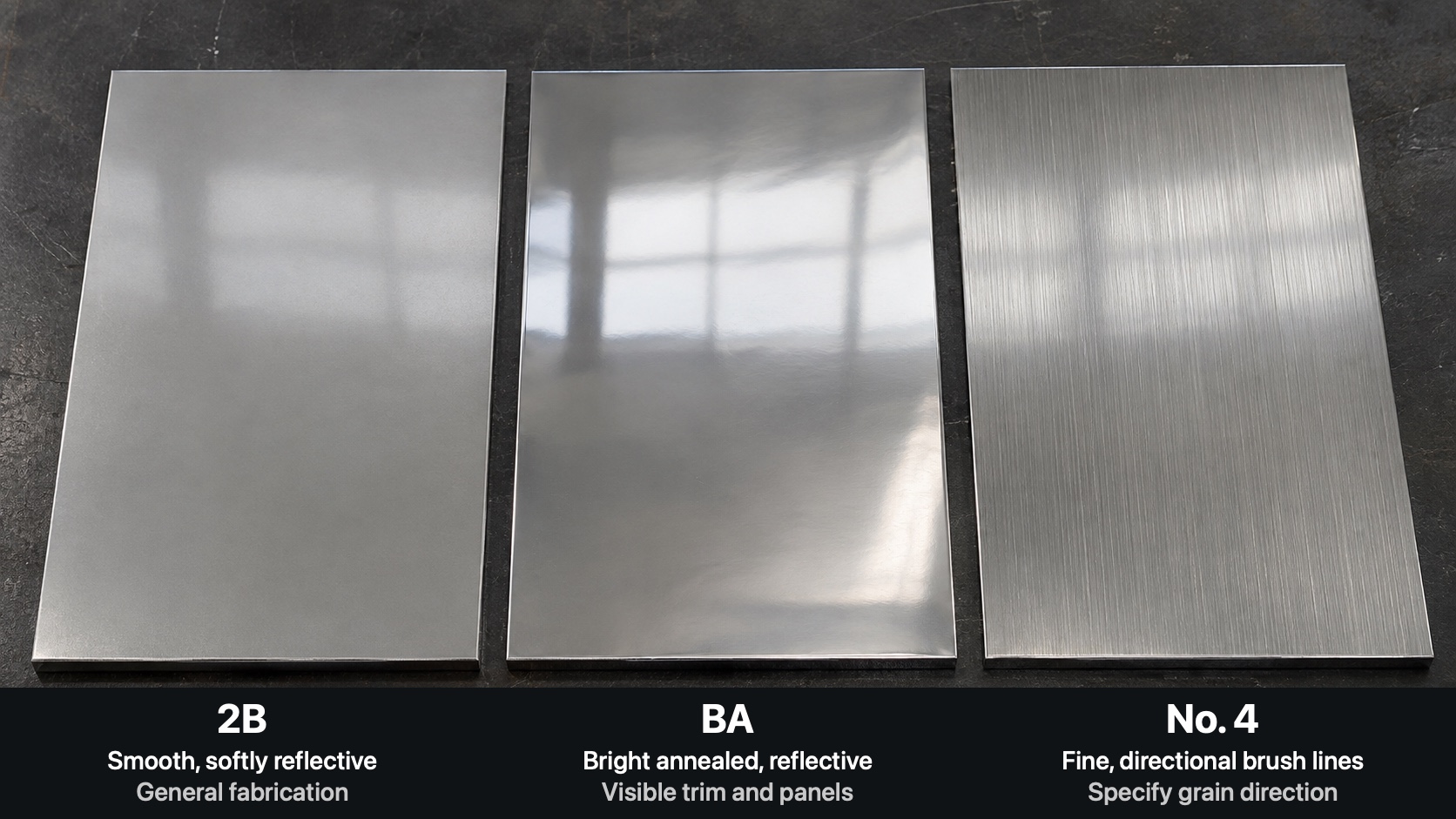
Surface finish comparison. Compare physical samples of the same grade and product form under the same lighting before approving a finish.
Use the table to decide which samples to request and what to put on the drawing.
| Finish | How it is produced | What you see | Where to consider it | What to confirm before ordering |
|---|---|---|---|---|
| 2B | Cold rolling, annealing and descaling, followed by a light final pass with polished rolls | Smooth, with a subdued reflection compared with BA | Concealed panels, general fabrication or a base for further finishing | Required face and any appearance criteria on exposed areas |
| BA | Bright annealing in a protective atmosphere after cold rolling | Bright and reflective | Trim or exposed panels where brightness is part of the design | Approved sample, reflection under installation lighting and protection during fabrication |
| No. 4 | Mechanical finishing with abrasives | Fine, visible grain running in one direction | Cabinet fronts, equipment covers and adjoining panels specified with a brushed appearance | Grain direction, finish face, sample match and protection requirements |
Finish descriptions are based on worldstainless surface treatment guidance and the ASSDA guide to cold-rolled finishes.
When is 2B a good starting point?
Consider 2B when the drawing calls for a general-purpose mill finish and the panel has no special requirement for brightness or a directional grain. A cabinet liner or a panel that will be polished later may be a good fit. If some of that panel remains visible after assembly, mark those areas on the drawing so the supplier knows where appearance matters.
For any surface that must meet a hygiene or cleaning specification, check the project’s requirements for the finished part, including welds and joints. Record any specified surface roughness separately.
When should you choose BA?
Choose BA when a brighter reflection is part of the design. For a trim strip next to a brushed panel, review both samples side by side. For a broad panel, check a representative piece at the intended viewing angle and under the lighting it will actually receive.
If the drawing calls for a polished mirror appearance, confirm it against a sample of the intended mirror finish. BA is a bright-annealed mill finish, and the appearance the buyer wants may call for a different surface. See Jianglin’s decorative stainless steel finishes guide.
How do you keep No. 4 panels looking consistent?
Mark the grain direction on the drawing before the sheet is cut. For adjoining cabinet doors, add a grain arrow to each part and identify the visible face. The grain arrow tells the fabricator whether a blank can be rotated during nesting. Agree on the appearance of adjacent panels as an assembly, since a finish that looks acceptable on one panel can look different beside another.
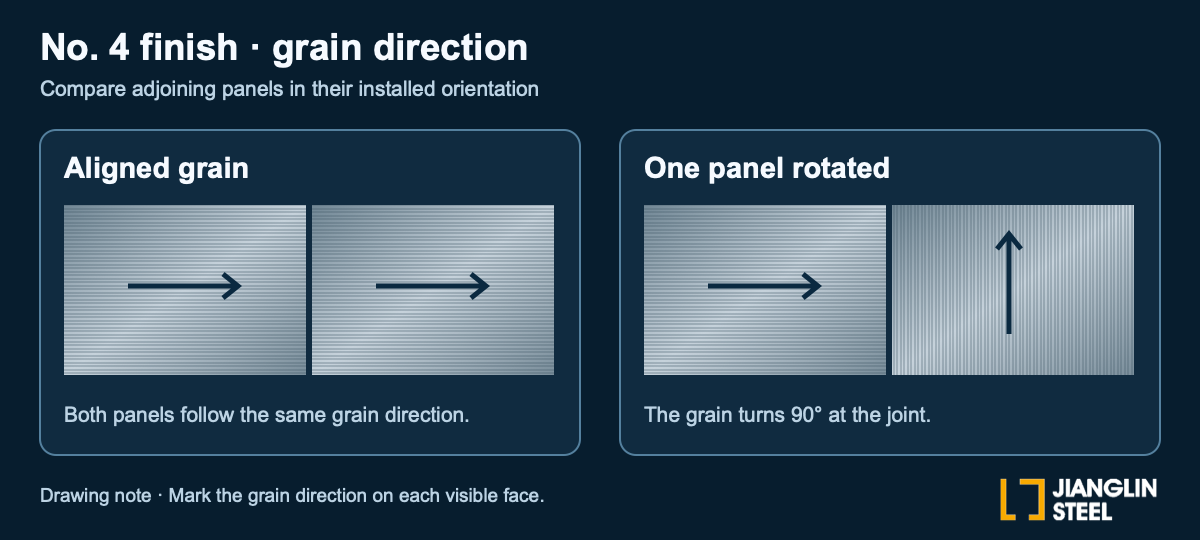
If welding or blending is required on the visible face, review a finished sample of the joint as well as the flat sheet. Confirm whether protective film is required and whether it needs to suit a specific cutting or forming process. See Jianglin’s polished stainless steel sheet page.
What should you put on the RFQ and inspect at delivery?
Start with grade, applicable product standard, thickness, sheet size, quantity and finish. For exposed surfaces, identify the finish side, the grain direction where applicable, the approved sample and any film requirement. Send the same drawing and finish notes to each supplier so the quotes cover the same requirements.
Example drawing note for a brushed cabinet door
No. 4 finish on Face A. Grain parallel to the long edge shown on the drawing. Match the approved appearance sample. Confirm protective film requirements before production.
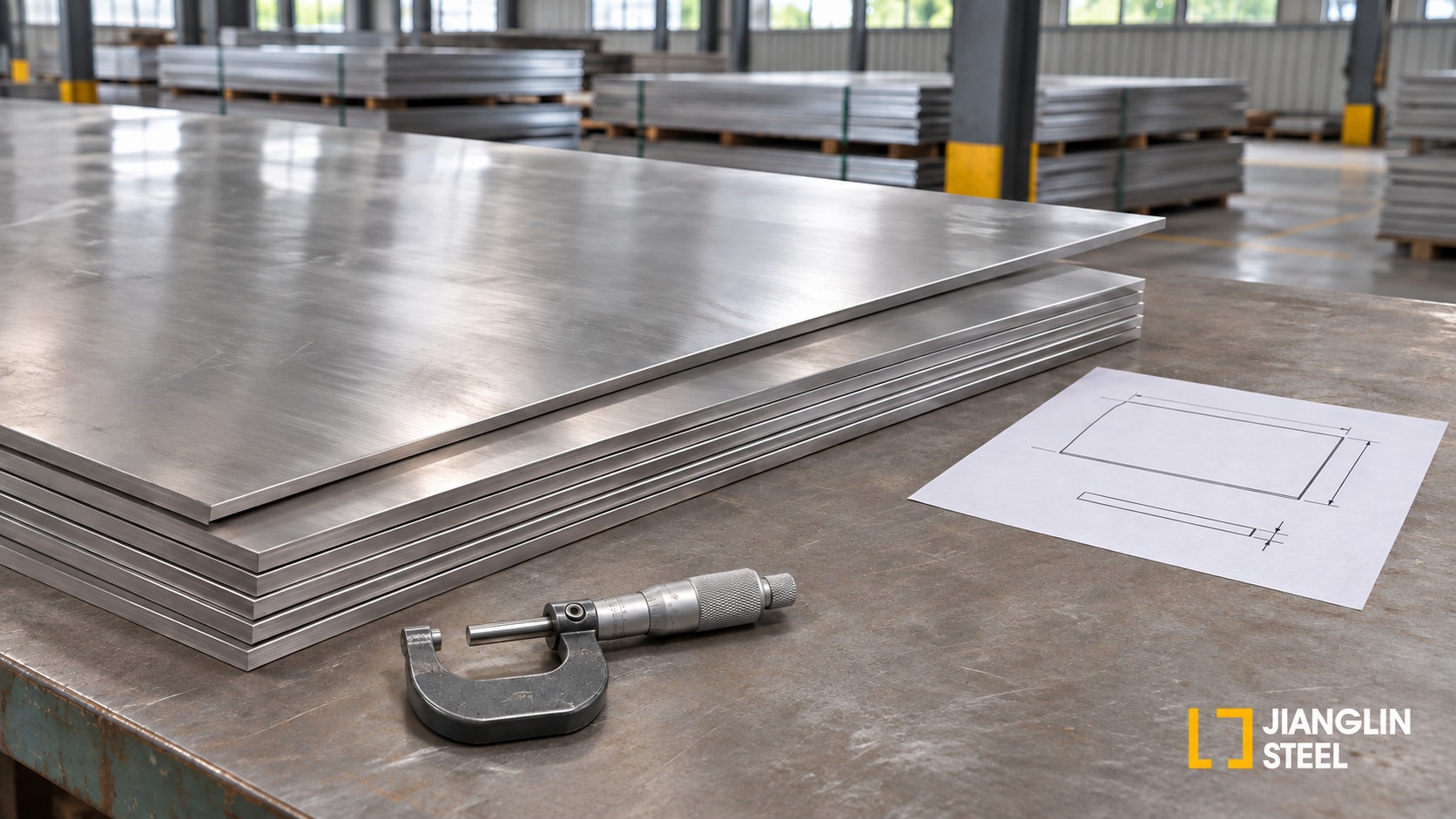
At receipt, confirm that the delivery matches the order and check the visible face for the agreed grain direction and appearance. Compare adjoining parts under consistent lighting. If film covers the surface, agree on how to expose inspection areas without damaging the parts. Where the order specifies an Ra limit, use the agreed instrument, measurement direction and sampling plan.
For a complete inquiry checklist, see How to Write a Clear Stainless Steel RFQ.
Frequently asked questions
Is BA the same as a polished mirror finish?
BA is a bright-annealed mill finish. If the job calls for a particular mirror appearance, specify that finish and approve a representative sample.
Can I use different finishes on parts made from the same grade?
Yes. Specify the grade and finish separately on each part. Confirm availability for the dimensions and product form you need.
Does a No. 4 designation tell me the Ra value?
Use the drawing or purchase order to specify any required Ra limit and measurement method. Put the Ra requirement on the order if it will be checked at receipt.
Can I match No. 4 sheet to an existing panel?
Send a physical sample where possible, identify the grain direction and review the match under the intended lighting. A photo can show the general appearance, but lighting and camera angle affect how the surface looks.
Request a stainless steel sheet quote
Send Jianglin the grade, thickness, sheet size, finish and quantity. For visible panels, attach a drawing, reference photo or sample requirement and identify the finish face and grain direction. Send your sheet specifications to Jianglin.
Related Jianglin Guides
- Polished stainless steel sheet guide
- Decorative stainless steel finishes
- How to write a clear stainless steel RFQ
About the Author
The Jianglin Steel editorial team writes purchasing guides for buyers and fabricators sourcing stainless steel. Its Knowledge Base covers material selection, ordering specifications and incoming inspection.