Annealed wrought 316 stainless steel usually shows little or no attraction to a hand magnet. A cold-formed bend or a weld can respond differently. If a magnet pulls at the end of a 316L pipe spool or on the body of a fitting, start by finding out how that part was made. The location of the pull can guide the inspection, but confirming the grade takes traceable records and, when needed, a suitable material test.
This guide focuses on receiving 316 and 316L parts. For a comparison across stainless steel families, see the stainless steel magnetism guide.
Why does the same 316 assembly respond differently from one spot to another?
Start by comparing the weld, the bend and a straight section of base metal. Annealed wrought 316 is predominantly austenitic. Cold work can transform some austenite into magnetic martensite. The effect depends on the heat chemistry and amount of deformation, so two parts sold as 316 can respond differently after forming.
A response at a weld can have a different cause. Austenitic stainless weld metal can retain delta ferrite after solidification, depending on the weld chemistry and procedure. A cast austenitic fitting can also contain ferrite. Check whether the fitting was cast or wrought before comparing it with an annealed tube. The distinction is described in the BSSA guide to magnetic properties and TWI’s explanation of magnetic welds.
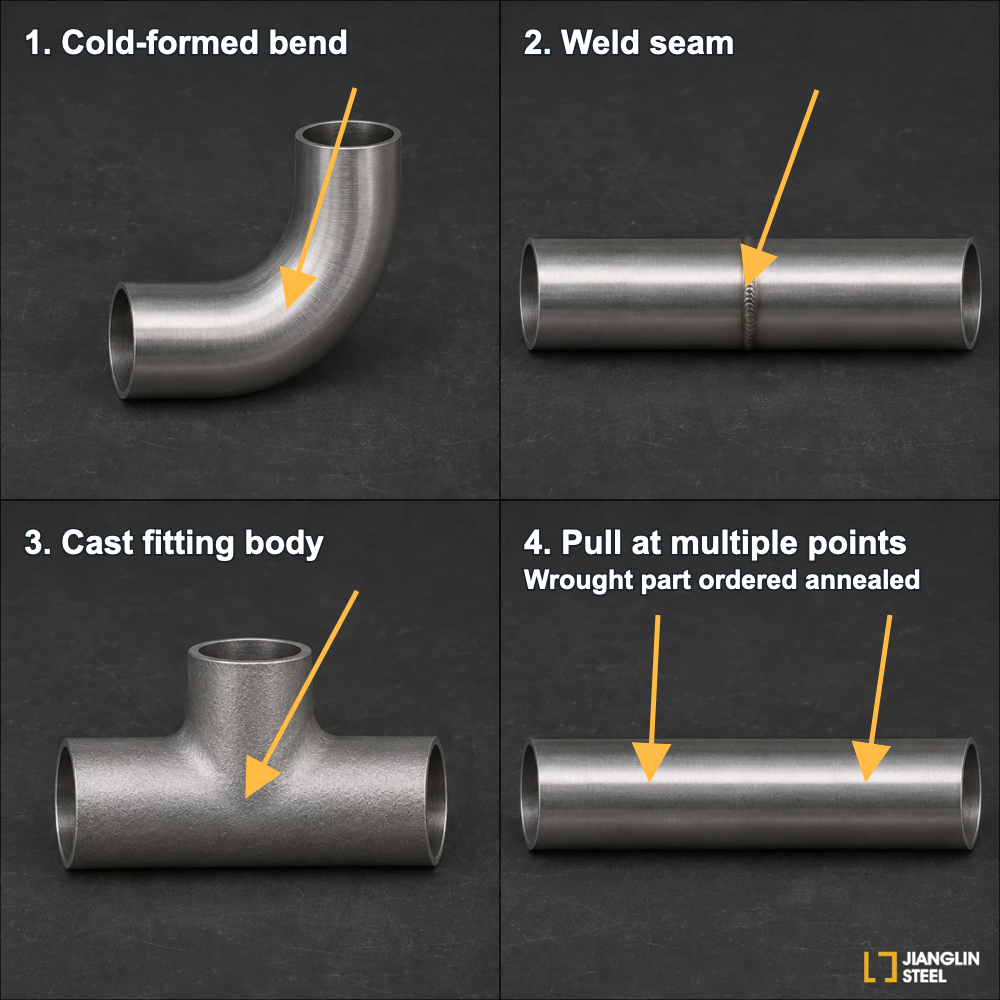
| Where you notice the pull | What to check first |
|---|---|
| Cold-formed bend | Compare with a less worked section of the same item. Confirm the forming route and specified delivery condition. |
| Weld seam | Check whether the response is confined to the weld. Review the welding procedure and consumable records where required. |
| Cast fitting body | Confirm the casting grade and product specification against the order and certificate. |
| Pull at multiple points on a wrought part ordered in annealed condition | If a magnet pulls at several points across the part and the response is unexpected, hold the item for review. Check markings, heat traceability and material condition before disposition. |
Can a magnet tell 316 from 316L or 304?
A hand magnet cannot distinguish these grades reliably. The L in 316L refers to a lower carbon limit. It does not establish a magnetic acceptance limit. Annealed 304 and 316 can both show little attraction, and processing can alter the response.
When an alloy mix-up is suspected, positive material identification (PMI) can help. A suitable handheld X-ray fluorescence test can screen for alloying elements such as molybdenum. Routine handheld XRF cannot verify the low carbon requirement for 316L. If the order calls for independent carbon verification, arrange a method qualified for that measurement. See ASSDA’s grade confirmation guide.
What should receiving inspection do when a magnet sticks?
- Record the location. Note whether the pull is on the weld, bend, fitting body or straight tube. Identify the affected items and keep their markings readable.
- Match the items to the purchase order. Check the specified grade, product standard and delivery condition. Match the heat or lot identifier on each item or its traceable packaging to the material test certificate. Review the guide to reading a stainless steel MTC for the document checks.
- Test against the actual requirement. Use suitable PMI if grade identity remains uncertain. If the order specifies a permeability limit, measure it by the agreed method in the agreed locations and condition.
What belongs in the RFQ for a low-permeability part?
If magnetic behavior affects an instrument or assembly, define it as a measured requirement on the drawing or RFQ. Specify the grade and product form, the maximum relative permeability set by the design owner, the test method and any field conditions it requires, and the locations and sampling plan. State whether the limit applies to incoming stock or to the finished part after bending and welding. Request the measurement report alongside the material certificates.
For an ordinary material order, start with the grade, product specification, dimensions, delivery condition and traceability requirements. For food equipment, specify the process exposure and contact-surface requirements separately. See the food-grade stainless steel selection guide.
Frequently asked questions
Is 316L stainless steel magnetic after welding?
It can show local attraction at the weld. The solidified weld metal can contain ferrite. Check the weld location and the purchase specification before deciding whether further testing is required.
Can a 316 stainless steel elbow attract a magnet?
Yes. The response can depend on how the elbow was manufactured and its final condition. Check whether it was formed or cast, and verify the actual grade and product specification against its records.
Does weak magnetic attraction say anything about corrosion resistance?
Magnetic attraction alone cannot establish corrosion performance. Review the specified alloy, service environment, weld condition and finished surface for that decision.
Send your fitting or pipe requirements for review
For a stainless steel fitting or pipe inquiry, send Jianglin Steel the drawing, grade, product standard, dimensions and certificate requirements. Include any finished-part permeability limit and test locations in your quotation request.