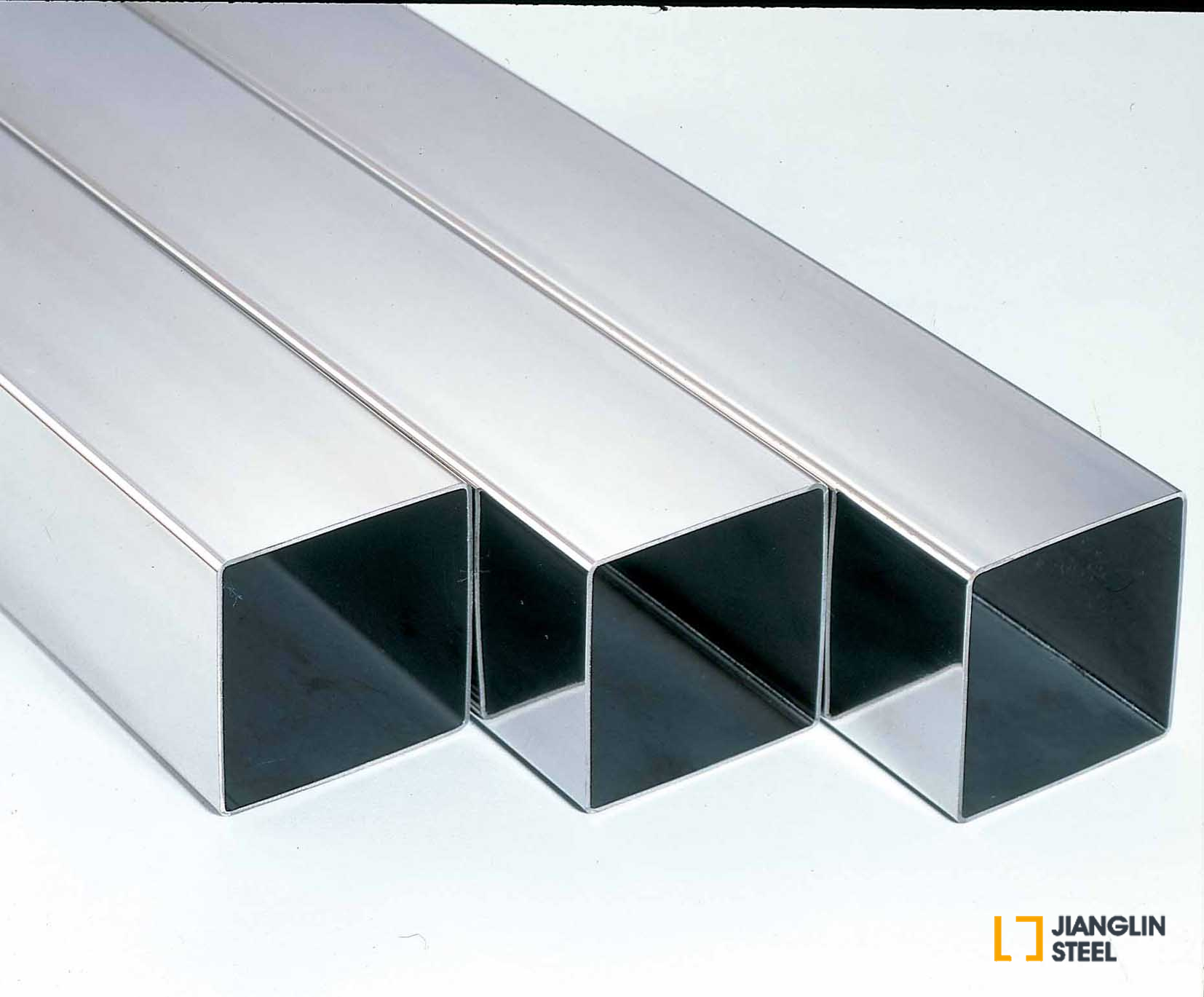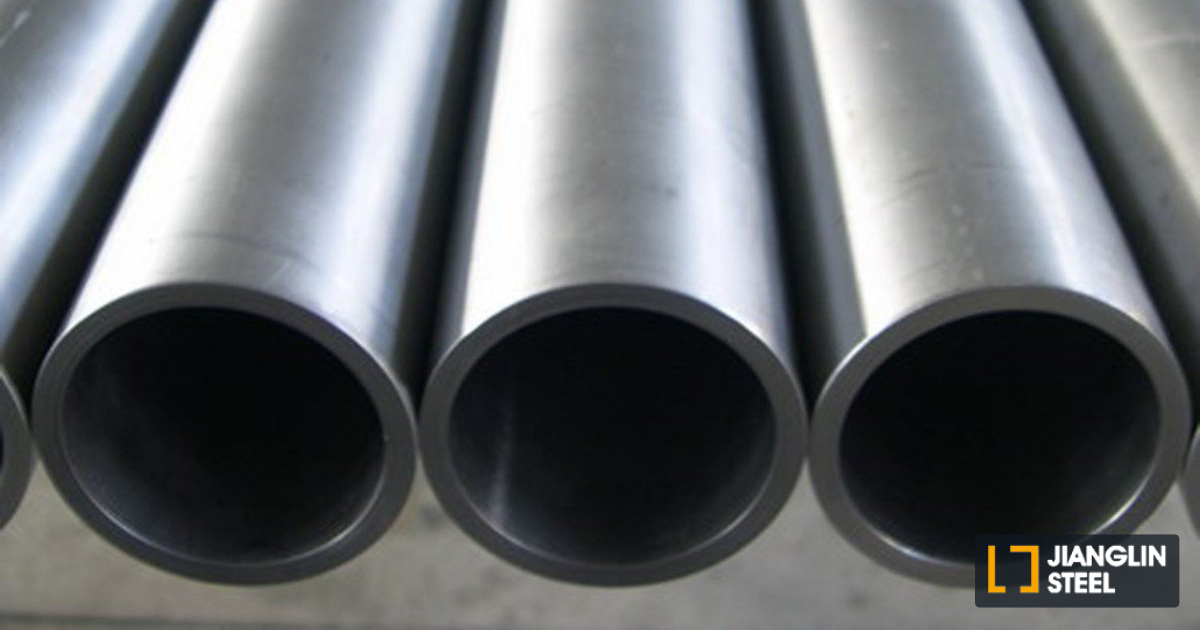
If a drawing says “201 stainless, food grade,” it leaves the most important question unanswered: what will the finished surface actually touch? Type 201 is a defined stainless steel grade, but “food grade” is not a blanket property conferred by its grade number. A buyer needs to know the food, contact time, temperature, cleaning chemicals, surface finish, and rules of the destination market before approving it for a food-contact part.
For the wider grade-selection framework, see Jianglin’s food-grade stainless steel guide. This article stays with the narrower 201 question: when it merits evaluation, when to move toward 304 or another grade, and what evidence belongs in the purchase order.
Key takeaways
- Type 201 (UNS S20100) is a real austenitic stainless grade. Its designation alone does not certify a finished item for food contact.
- Compared with 304, 201 has a different chromium, nickel, and manganese balance and generally offers less corrosion margin in demanding wet or chloride-bearing service.
- A mill test certificate establishes material identity against an ordered specification. It does not prove that a welded, finished piece of equipment meets food-contact requirements.
- For a direct-contact part, define the food and cleaning duty first. If those conditions or the required compliance evidence are unknown, do not approve 201 by default.
Is 201 stainless steel food grade?
There is no useful universal “yes” or “no.” Type 201 may be considered for a defined application, but its suitability for a particular food-contact surface has to be demonstrated for the finished item and its intended use. A label on raw sheet or coil cannot answer that question by itself.
The distinction matters because food-contact rules focus on how the surface behaves. In the United States, 21 CFR 117.40 requires food-contact surfaces in food-manufacturing equipment to be corrosion-resistant in contact with food, adequately cleanable, and able to withstand the intended use and cleaning procedures. In the EU, Regulation (EC) No 1935/2004 governs food-contact materials and articles under normal or foreseeable use. Neither rule turns the number “201” into a universal approval for every food or process.
If a supplier offers “food-grade 201,” ask what the claim covers: the base metal, the finished component, a particular use, or a test report. The answer should be written into the specification and supported by documents relevant to the destination market.
How does 201 differ from 304 for food equipment?
The chemistry is the starting point, not the final verdict. The Specialty Steel Industry of North America lists Type 201 as UNS S20100 and Type 304 as UNS S30400. The ranges below are composition references for these named grades; the governing product specification and certificate must be checked for the actual order.
| Element, mass % | Type 201 / UNS S20100 | Type 304 / UNS S30400 |
|---|---|---|
| Chromium | 16.0–18.0 | 18.0–20.0 |
| Nickel | 3.5–5.5 | 8.0–10.5 |
| Manganese | 5.5–7.5 | 2.0 maximum |
This does not mean that a simple nickel percentage predicts service life. Alloy balance, the food and cleaning chemistry, temperature, weld condition, crevices, and finish all affect performance. The Australian Stainless Steel Development Association warns that lower-chromium, low-nickel chromium-manganese grades can lose corrosion resistance relative to 304. It also notes grade-identification problems in the market. An offer described only as “201,” “200 series,” or a mill shorthand therefore needs a proper grade and heat-traceability check.
304 is a common starting point for many food-processing environments, while 316 may deserve evaluation when chlorides or process and cleaning chemistry raise the risk. Neither is automatically compliant simply because its number is familiar. The food-grade selection guide linked above covers that wider decision; this page does not repeat it.
Is Type 201 the same as any 200-series stainless steel?
No. Type 201 has the registered designation UNS S20100. “200 series” names a family that also includes other registered grades and proprietary chromium-manganese alloys. ASSDA's grade tables distinguish 201 from 202 and from trade designations such as J1 and J4, whose listed compositions are different. A label reading only “200 series” does not establish that the metal is Type 201.
The extra manganese in 201 helps maintain its austenitic structure with less nickel than 304. It does not make every high-manganese grade interchangeable, or make nickel content a food-safety score. Chromium balance and the conditions of use still matter for corrosion resistance. First identify the actual alloy; then assess the finished part for its intended contact and cleaning conditions.
Where might 201 be considered, and where is it a poor default?
For a non-food-contact cover, enclosure, or trim piece in a mild indoor setting, 201 may be a candidate. Even there, washdown, condensation, and splash can change the exposure. For a direct-contact part, a project team should consider 201 only after it defines the contact conditions and accepts evidence that the finished surface meets the applicable requirements.
ASSDA describes some 200-series grades used for cookware and serving bowls in relatively mild conditions, where the items are washed and dried. That is different from a tank wall that stays wet with a warm, salty product or retains cleaning solution at a joint. The cookware example concerns the broader grade family; it is not an approval for every Type 201 food-contact article. Contact duration, drying, residues, temperature, and cleaning chemistry change the exposure that must be evaluated.
| Intended duty | Procurement position |
|---|---|
| Non-food-contact indoor cover with limited moisture | 201 may be evaluated against cleaning and corrosion exposure; do not call the cover “food-contact approved.” |
| Defined, mild food-contact duty | Do not approve from grade name alone. Require an engineering and compliance review of the finished part and its intended use. |
| Salty or acidic food, prolonged wet contact, warm holding, or frequent aggressive washdown | Do not specify 201 as the default. Evaluate 304, 316, or another suitable material against the actual duty. |
| Welded tanks, creviced assemblies, or hard-to-clean product-contact joints | Review alloy, weld treatment, geometry, and cleanability together; a raw-material certificate is insufficient. |
These are screening positions, not a regulatory permission list. For example, even a short-contact component can fail if its finish traps soil or its cleaning chemical attacks the surface. Conversely, the material choice for a dry external panel should not be described as proof of direct-food-contact suitability.
Why can fabrication change the answer?
A material certificate describes the supplied metal, not every surface created during fabrication. ASSDA notes that some chromium-manganese grades can lose local corrosion resistance through sensitisation during welding; the risk depends on the alloy and welding conditions, not merely the number “201.” The Euro Inox food-equipment guide also explains how crevices can retain food and cleaning agents, making a finished assembly harder to clean and more vulnerable to corrosion. A smooth-looking coil is therefore not proof that its welded or formed component will be suitable for food contact. The contact-side joints and finish must be assessed on the finished part.
What does a 201 material certificate prove?
A mill test certificate (MTC) should let the buyer connect the delivered material to its heat or lot, ordered grade, product form, applicable specification, and reported test results. For flat-rolled sheet, plate, and strip, ASTM A240/A240M is a material specification that may be relevant when it is the standard named in the purchase order. Its scope is not a food-contact approval. A different product form needs its own appropriate specification.
The finished food-contact article raises further questions. Has the metal been welded, ground, polished, passivated, coated, or assembled with other materials? Can its surface be cleaned? Does the project require a specific food-contact declaration, migration assessment, or customer acceptance test in the destination market? The equipment maker and compliance owner should decide which of these are required. Request them explicitly rather than accepting a generic “food-grade certificate.”
At receiving, compare the heat number on the MTC with the material marking and delivery documents. Positive material identification can help investigate a mix-up, but a magnet or surface colour is not a reliable way to certify 201 versus 304. A spot test or handheld analyser also does not replace the full specification, traceability, and finished-part assessment.
Frequently asked questions
Can 201 stainless steel touch food?
Possibly in a defined application, but the grade name alone is not an approval. The finished surface must be assessed against the food, duration, temperature, cleaning regime, construction, and applicable market rules.
Is 201 the same as 304 if both are non-magnetic?
No. Their specified compositions differ. Magnet response can change with processing and cannot establish grade or food-contact suitability. Use the specified UNS grade, MTC, heat traceability, and appropriate verification.
Does an ASTM A240 certificate make 201 food safe?
No. It addresses the ordered flat-rolled material specification. Food-contact suitability also depends on the finished article and its intended use, including its surface, joints, cleaning, and applicable regulatory requirements.
Should buyers always replace 201 with 304?
No blanket substitution is justified. 304 usually offers more corrosion margin than 201 in demanding service, but the right choice still depends on the duty. A non-contact indoor part and a hot brine-contact tank are different specifications.
Send a defined requirement for review
If your drawing currently says only “food-grade 201,” send Jianglin Steel the drawing, product form, intended food or process, cleaning conditions, finish, required documents, quantity, and destination. Ask for availability and a quotation against an agreed material specification; the equipment designer and compliance owner should approve final food-contact suitability. Contact Jianglin Steel with those details.
Technical references
- SSINA composition table for Types 201 and 304
- ASSDA guide to 200-series stainless steels
- ASSDA on alternative 200-series grades and applications
- Euro Inox guide to stainless steel in food and beverage equipment
- U.S. 21 CFR 117.40 on equipment and utensils
- EU Regulation (EC) No 1935/2004
- ASTM A240/A240M catalog scope for flat-rolled material