Skip to content
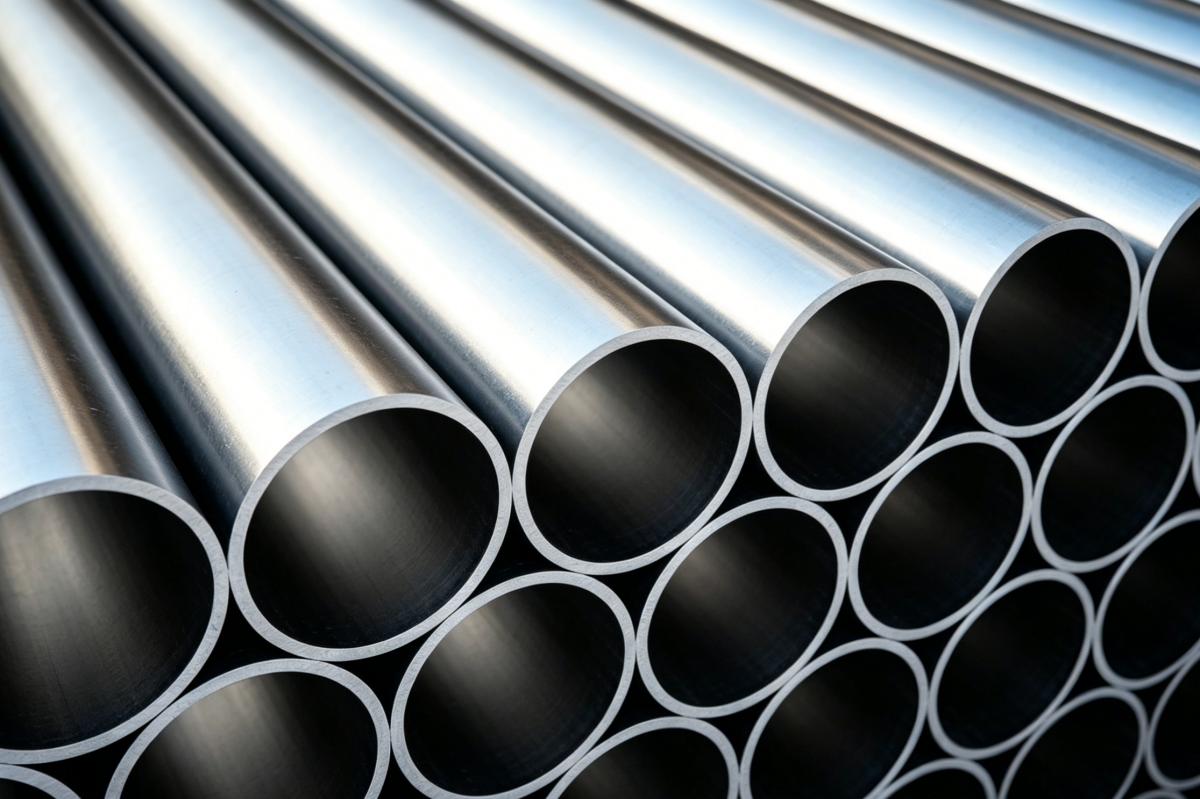
Stainless steel capillary tubes consist of extremely small diameters and tight dimensional tolerances. Stainless steel capillary tubes are manufactured in a wide range of sizes to meet the specific demands of industries such as instrumentation, medical devices, chemical processing, aerospace, and fluid control systems.
The selection of an appropriate stainless steel capillary tube size is critical because the minor variations in inner diameter, outer diameter, or wall thickness can significantly affect fluid flow, pressure regulation, and overall system performance. This article will discuss the OD, ID, dimensional tolerance range, and how to select the right size to ensure accuracy and reliability in high-precision applications.

Standard OD and ID Ranges
It is important to know the standard ranges of capillary tube OD and ID, which helps in selecting the most suitable capillary tube size for reliable performance. Standard ODs typically range from approximately 0.30 mm to 6.00 mm, while IDs may vary from as small as 0.10 mm up to 5.00 mm.
The thinner walls and smaller IDs are commonly used in analytical instruments and medical devices, whereas larger ODs and IDs are preferred where higher strength and durability are required.
Wall Thickness Options
The wall thickness is a critical parameter when selecting the stainless steel capillary tubes for the application. This directly influences the pressure resistance, durability, and flow characteristics. Depending on the outer and inner diameter combination, the capillary tubes are available in a wide range of wall thickness options. It typically ranges from ultra-thin walls (0.05–0.20 mm) to heavy walls (up to 1.00 mm or more).

The thicker stainless steel capillary tubes wall provides the mechanical strength and higher pressure tolerance, which makes them suitable for hydraulic systems and chemical processing environments. In contrast, the thin-wall stainless steel capillary tubes are commonly used in applications where precise flow control and rapid thermal response are essential.
Thin-Walled Capillary Tubes
The thin-walled capillary tube stainless steel design is optimized for precision, flexibility, and efficient fluid flow. Their lower internal volume and improved flow sensitivity make small capillary tubes ideal for medical devices, analytical instrumentation, chromatography systems, and temperature sensors. The lightweight structure of thin-walled capillary tubes offers faster thermal response and easier forming without significantly increasing system load.
Besides this, small capillary tubes maintain excellent corrosion resistance and dimensional accuracy, and ensure reliable performance in high-precision applications. By carefully selecting the appropriate thin-walled capillary tube, engineers can achieve both efficiency and durability in demanding systems.
Dimensional Tolerance Control
The control dimensional tolerance is a fundamental point to manufacture the stainless steel capillary tubes, as these products are used in applications where a minor variation in dimensions can affect performance. The poor tolerance control during manufacturing may cause localized stress concentrations and reduced pressure resistance.
The tight control over outer diameter (OD), inner diameter (ID), and wall thickness ensures consistent flow rates, accurate pressure regulation, proper fitting within the connectors, and microfluidic systems. Depending on application requirements, the typically used dimensional tolerances are in the range of ±0.005 mm to ±0.2 mm.
To get this narrow tolerance limit, the capillary tubes are typically produced using advanced cold drawing processes, which allow tolerances to be maintained within very narrow limits. The manufacturers also used the quality control inspectors and laser or optical measurement systems to control this narrow tolerance limit. To check the final quality, the different international standards such as ASTM, EN, or ISO are used.
Length Options: Straight vs Coil
Stainless steel capillary tubes are provided in a variety of stainless steel capillary tubes sizes to meet the requirements of different applications. The choice between straight and coiled formats depends on installation requirements, space constraints, and handling preferences. The straight tubes are supplied in fixed lengths and are suitable for applications requiring precise measurements.
The typical straight tube length ranges from 500 mm to 3,000 mm. They are easy to cut, inspect, install, and fit with connectors. It is commonly used in applications where exact length and alignment are critical, such as laboratory setups, instrumentation lines, and short-run industrial systems.
On the other hand, the coiled tubes offer compact storage, which makes them ideal for systems with limited space requirements. The coiled tubes are supplied in lengths from 5 meters up to 100 meters. The coiled tubes offer easier storage, transportation, and reduce the risk of kinks, which allows longer continuous runs without joints. It is typically used in refrigeration, hydraulic, and analytical applications. Table 01 summarizes the key differences, length options, and stainless steel capillary tube sizes, both in straight and coil stainless steel capillary tubes.

Table 01: The key difference of straight and coil capillary tubes with length options
Feature | Straight Tubes | Coiled Tubes |
Length Range | 500 mm – 3,000 mm | 5 m – 100 m |
Installation | Simple, direct installation | It can be routed around tight spaces. |
Handling | Less flexible, and may need bending tools | It offers high flexibility and less risk of kinks |
Applications | It is used for lab setups and instrumentation lines | It is used in refrigeration, chromatography, hydraulic systems |
How to Select the Right Size
The following are the key points to select the right size for your application:
1) Flow requirements: Determine the flow requirements and then match the inner diameter (ID) of stainless steel capillary tubes.
2) Operating pressure: It is important to ensure that the wall thickness can withstand system pressure.
3) Compatibility: It should be ensured that the tube material is compatible with fluids or gases.
4) Space: Based on installation layout, the straight or coiled length should be chosen.
5) Fitting & connection: The OD should match the available fittings and connectors.
6) Precision: Select tolerance and ID consistency based on the accuracy requirements of stainless steel capillary tube sizes.
Conclusion
Stainless steel capillary tubes are essential components in precision applications across industries such as medical, instrumentation, chemical processing, and hydraulics.
Due to precise applications and reliable performance requirements, the selection of the right tube involves the careful consideration of OD, ID, wall thickness, length format, and dimensional tolerances. The options of straight or coiled tubes and quality-controlled manufacturing make stainless steel capillary tubes a versatile solution for high-precision fluid systems. Jianglin continues to set the standard for quality, exemplified by our 304 stainless steel capillary tube supply to Tohoku University.