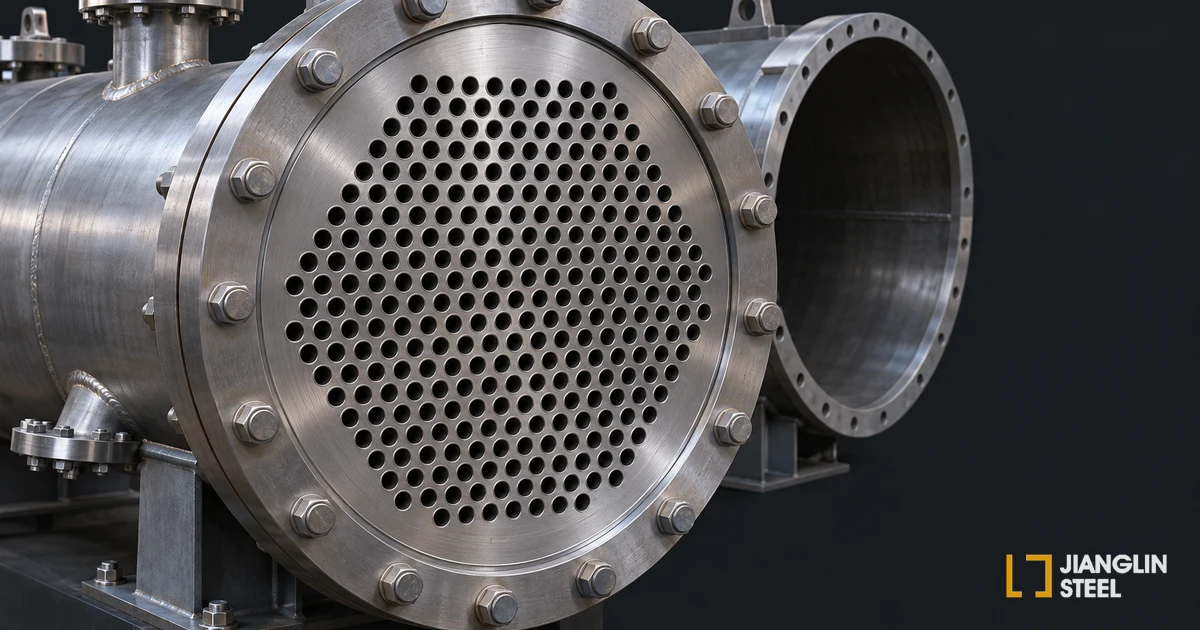
Two suppliers can quote the same stainless steel and both write “ASTM A262 included.” One may price a microscope screening test. The other may price a test that exposes the specimen to acid, then checks it after bending. A good quote tells you which test is included, what the lab will sample and what report you’ll get. Those details belong on the purchase order before the steel ships.
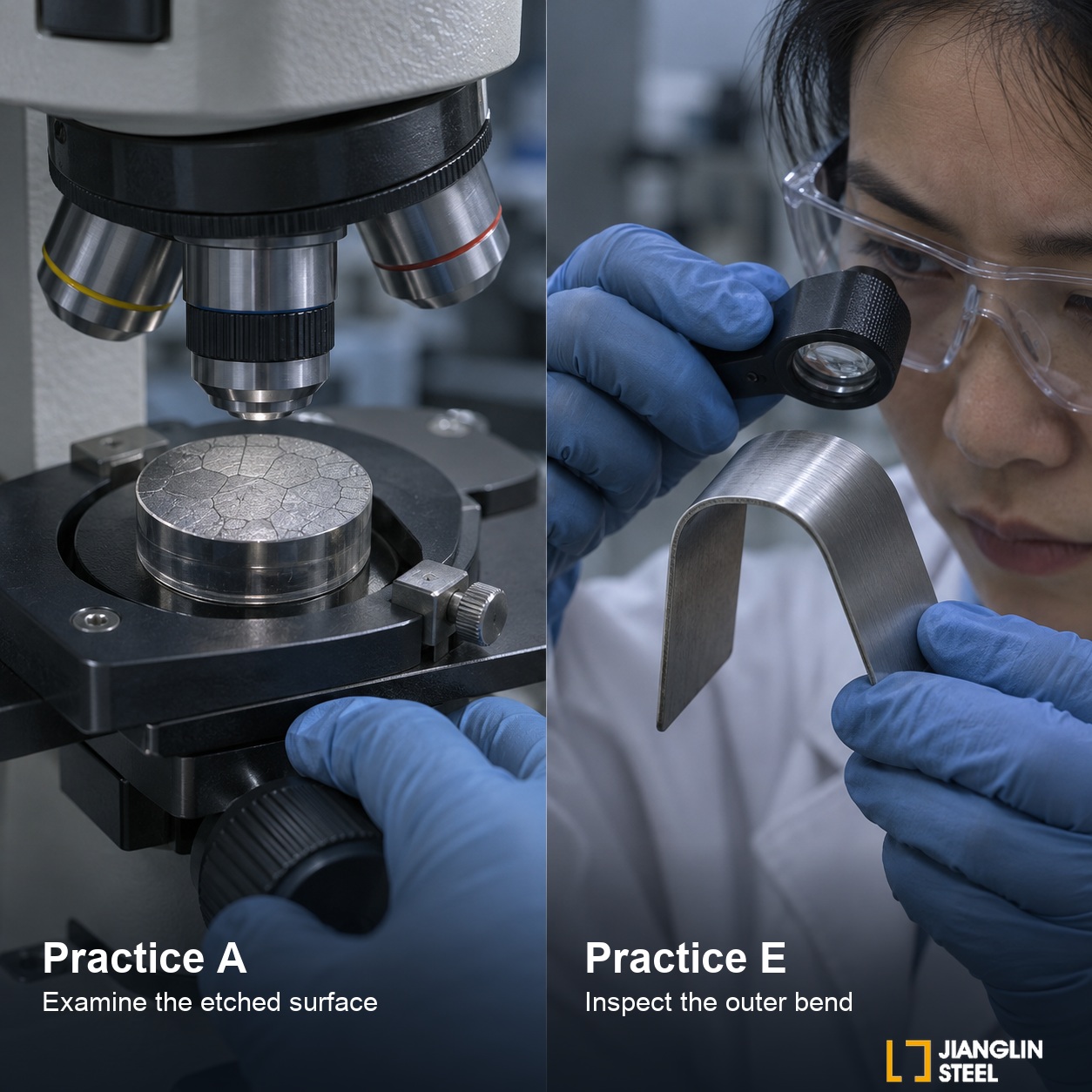
- Practice A uses an oxalic acid etch and microscopic examination to classify the specimen’s etch structure.
- A suspect Practice A result leads to the specified follow-up test under the screening route.
- Practice E uses a copper–copper sulfate–sulfuric acid exposure followed by a bend evaluation.
- Put the edition, practice, specimen condition, sampling basis and report requirements on the order.
What does ASTM A262 test?
ASTM A262 provides laboratory practices for detecting susceptibility to intergranular attack in austenitic stainless steels. Intergranular attack follows grain boundaries. One cause is sensitization. During certain thermal exposures, chromium carbides can form at grain boundaries, leaving nearby material depleted in chromium and more susceptible to attack under certain conditions. Technical background on sensitization and test methods
The result applies to the tested specimen in its documented condition. A base-metal coupon from incoming sheet tells you about that sample. If your concern is the heat-affected zone of a weld, specify a representative welded coupon and the region the lab needs to examine.
Field pitting is a different investigation. If you already see pinpoint cavities on installed stainless steel, record where they occur and investigate the surface and exposure history. An A262 report addresses susceptibility to intergranular attack under the specified test conditions. Jianglin’s guide to stainless steel corrosion symptoms
ASTM A262 Practice A vs Practice E
Practice A and E at a Glance
Practice A · Etch and screen
The lab etches a specimen with oxalic acid and classifies the pattern under a microscope. An acceptable result can complete screening when the grade qualifies and the order allows it. A suspect result goes to the specified follow-up test.
Practice E · Expose and bend
The lab exposes a specimen to a copper–copper sulfate–sulfuric acid test solution, then bends it and checks the bend for fissures caused by intergranular attack.
Buying rule If the purchase order requires Practice E to be performed, ask for the Practice E test report.
| Decision point | Practice A | Practice E |
|---|---|---|
| What the lab does | Electrolytically etches a prepared specimen in oxalic acid and examines its structure under a microscope. | Exposes the specimen to the specified copper–copper sulfate–sulfuric acid medium, then bends it and examines the bent area. |
| What the report shows | Etch structure classification and its screening disposition for the relevant grade and follow-up practice. | Bend observations for intergranular attack and the corresponding disposition under the agreed requirement. |
| How to use it | Use for eligible screening when the governing requirements allow it. Route a suspect result to the specified follow-up practice. | Use when the order requires E to be performed or when E is the agreed follow-up to a suspect screen. |
Some familiar Practice A structure names are step, dual and ditch. Interpret the classification against the applicable grade and test pairing in the contract edition. A suspect screen calls for follow-up under the screening route. Rejecting a lot on that label alone goes beyond the screening purpose.

For Practice E, the lab evaluates the bent specimen for evidence of intergranular attack. Have the lab document how it resolved any ambiguous feature under the applicable edition. A report that simply says “bend OK” leaves the buyer without the method, specimen condition or scope needed for review.
Perform E and review the exposure-and-bend report.
Check grade eligibility and the applicable criteria. An acceptable screen may close testing under the agreed route. A suspect screen goes to E.
Which specimen condition should the order name?
Start with the material or process you want the result to represent. For incoming sheet, identify the grade or UNS, product specification, thickness and supplied condition. For fabricated material, describe the representative weld or thermal history, the sampled region and any required post-weld treatment. Confirm specimen preparation and applicability with the lab before cutting coupons.
When the governing requirement calls for a laboratory sensitizing treatment, identify it explicitly and have the report record the treatment actually applied. If the project needs both delivered-condition and treated-condition evidence, request separate results with separate specimen IDs. This prevents an otherwise valid result from being matched to the wrong condition.
Use the drawing and inspection plan to settle sample location, orientation, lot definition, frequency and traceability. For example, if an inspection plan samples by heat, confirm how it treats material from that heat that has gone through different processing routes. Jianglin’s guide to North American stainless steel specifications
What should the RFQ and purchase order say?
Replace “ASTM A262 required” with a clause the supplier can quote and the inspector can verify. ASTM’s catalogue lists A262-15(2021). Use the edition required by your project and resolve conflicting requirements before placing the order. ASTM standards catalogue (A0262-15R21)
| Order field | What to specify |
|---|---|
| Method and route | Contract edition and exact practice. State if Practice E must be performed or if eligible Practice A screening is permitted. |
| Material and sample | Grade or UNS, product specification, form, thickness, location and orientation as applicable. Define the lot and coupon frequency. |
| Condition | Delivered condition, representative welded condition, or required thermal treatment. Identify the procedure or drawing where applicable. |
| Acceptance and exceptions | Governing criteria, handling of suspect or ambiguous results, and approval requirements for any retest or deviation. |
| Report and release | Lab or witness requirements, heat and lot identifiers, signed report, and any hold point before shipment. |
Example wording when Practice E is mandatory
Perform ASTM A262 [contract edition], Practice E, on [grade/UNS, product form and thickness]. Sample per [inspection plan, lot definition and frequency]. Test in [specified specimen condition, including any required heat treatment or representative weld]. Practice E is required on the specified specimens. Submit the signed, traceable laboratory report for [approval stage], with specimen IDs, heat and lot references, actual condition, bend observations and disposition per [governing acceptance requirement]. List deviations in the quotation.
Fill in the brackets with project-approved requirements. If the project allows screening, name the eligible Practice A route, its acceptance criteria and the follow-up test explicitly.
How do you check an ASTM A262 report?
Open the lab report alongside the purchase order and inspection plan. Tick each item when you have verified the evidence.
4 items to verify.
Cross-check the heat and grade on the material certificate. If the certificate lists an A262 result, make sure that entry carries the evidence the order requires or points to the relevant lab report. How to read a stainless steel mill test certificate
Frequently asked questions
Can Practice A replace Practice E?
Only as an allowed screening route for an eligible material and an acceptable etch classification under the governing requirements. A purchase order that requires Practice E to be performed calls for the actual E result.
Does a ditch structure mean I should reject the lot?
Review the applicable classification criteria. When the screen is suspect, send the specimen or representative material for the specified follow-up test and base the disposition on the agreed requirements.
Does a pass on the sheet cover a weld made from that sheet?
The sheet report represents the sampled sheet condition. If weld performance is part of acceptance, agree on a representative weld, the region to sample and the test condition.
Does ASTM A262 qualify stainless steel for chloride exposure?
A262 addresses susceptibility to intergranular attack under its test conditions. Chloride pitting resistance and suitability for a particular service need their own engineering assessment.
Request a quote with the test scope included
Send Jianglin your grade, dimensions, finish and quantity, along with the project’s corrosion testing clause or inspection plan. Ask for the quotation to identify the proposed test route, sampling basis and report deliverables.