Skip to content
Stainless steel bars are used in machining, construction, automotive components, food processing equipment, engineering parts, and many other industrial applications. Buyers usually pay attention to grade, size, surface finish, and price, but tolerance is just as important. If the bar dimensions are outside the required tolerance range, machining accuracy, assembly fit, material yield, and production cost can all be affected.
This guide explains why stainless steel bar tolerances matter, which tolerance items buyers should check, how tolerances vary by bar shape, and what information should be written clearly in an RFQ or purchase order.
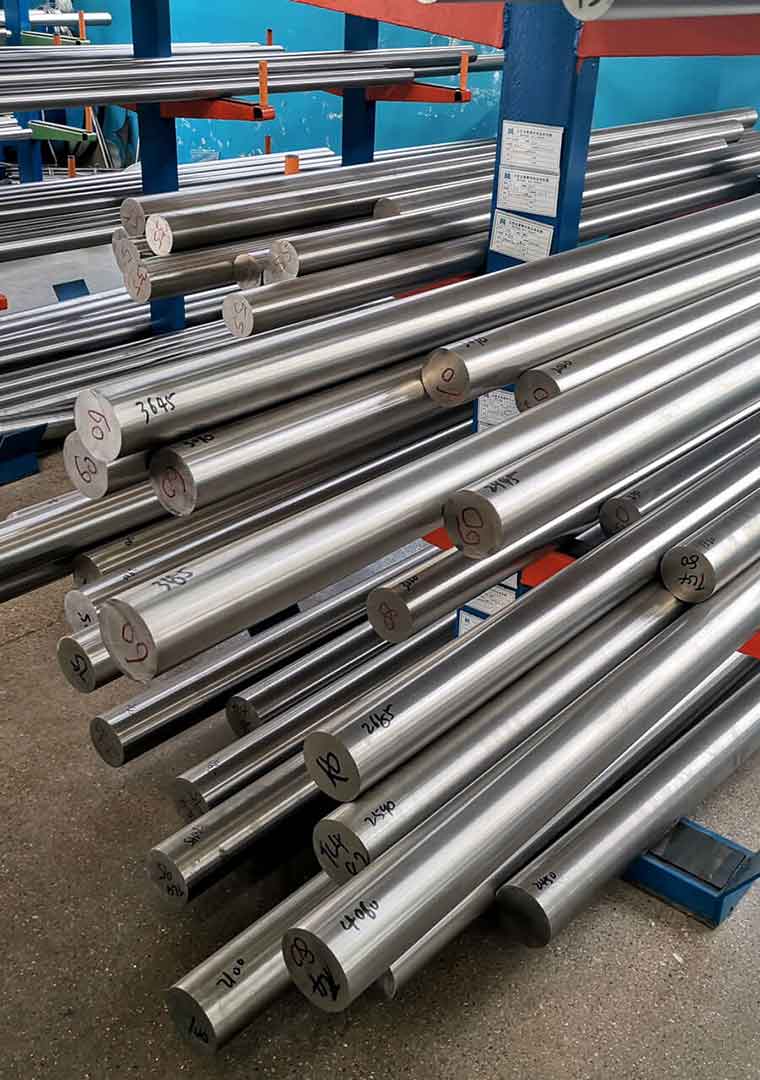
Why Stainless Steel Bar Tolerances Matter in Procurement
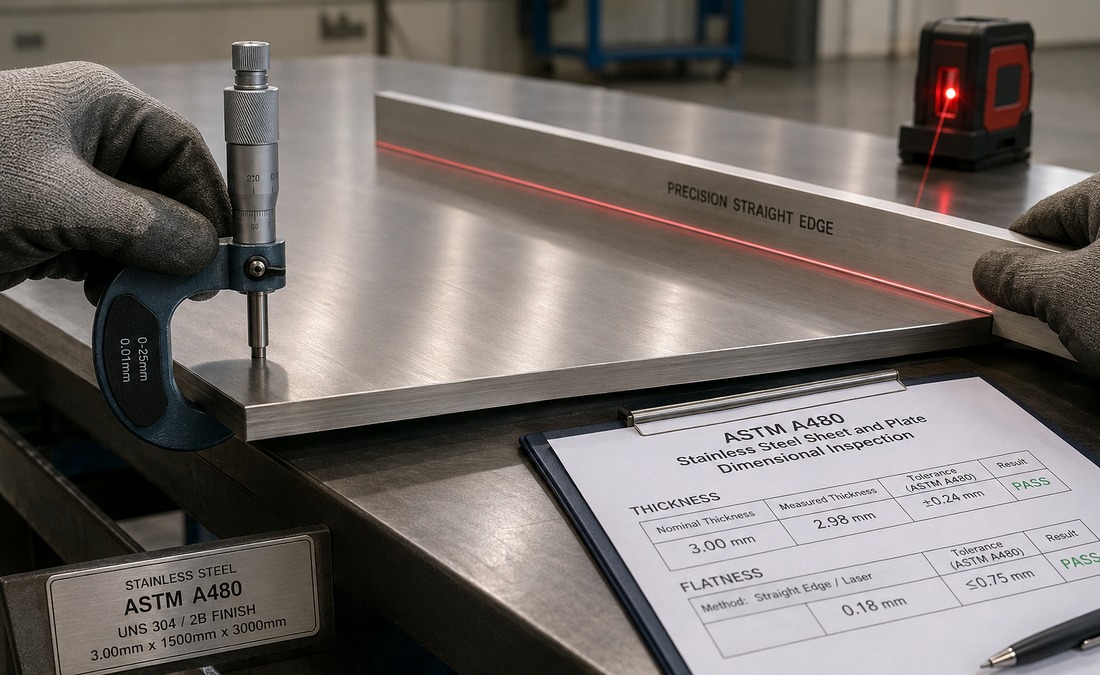
Tolerance defines the allowable variation from the nominal dimension. For stainless steel bars, this may include diameter, width, thickness, length, straightness, roundness, flatness, squareness, and surface condition. Clear tolerance requirements help buyers avoid rework, fitting problems, machining delays, and unnecessary cost.
Machining accuracy
Machining accuracy depends on the actual bar size. If the bar is larger or smaller than expected, additional machining may be required to reach the final dimension. This increases machining time, tool wear, inspection work, and production cost. For precision parts, standard mill tolerance may not be enough, so buyers should confirm the required tolerance class before ordering.
Material yield
Material yield refers to how much usable material remains after cutting or machining. Poor tolerance control may require extra material removal, which reduces yield and increases scrap. Proper tolerance selection helps improve material utilization and manufacturing efficiency.
Assembly and fit
Many stainless steel bar components are designed to fit into a defined space or mating part. If the bar dimension, straightness, or surface condition is outside the required range, the final component may not fit correctly. This can cause assembly delays, rework, or replacement costs.
Common Tolerance Items for Stainless Steel Bars
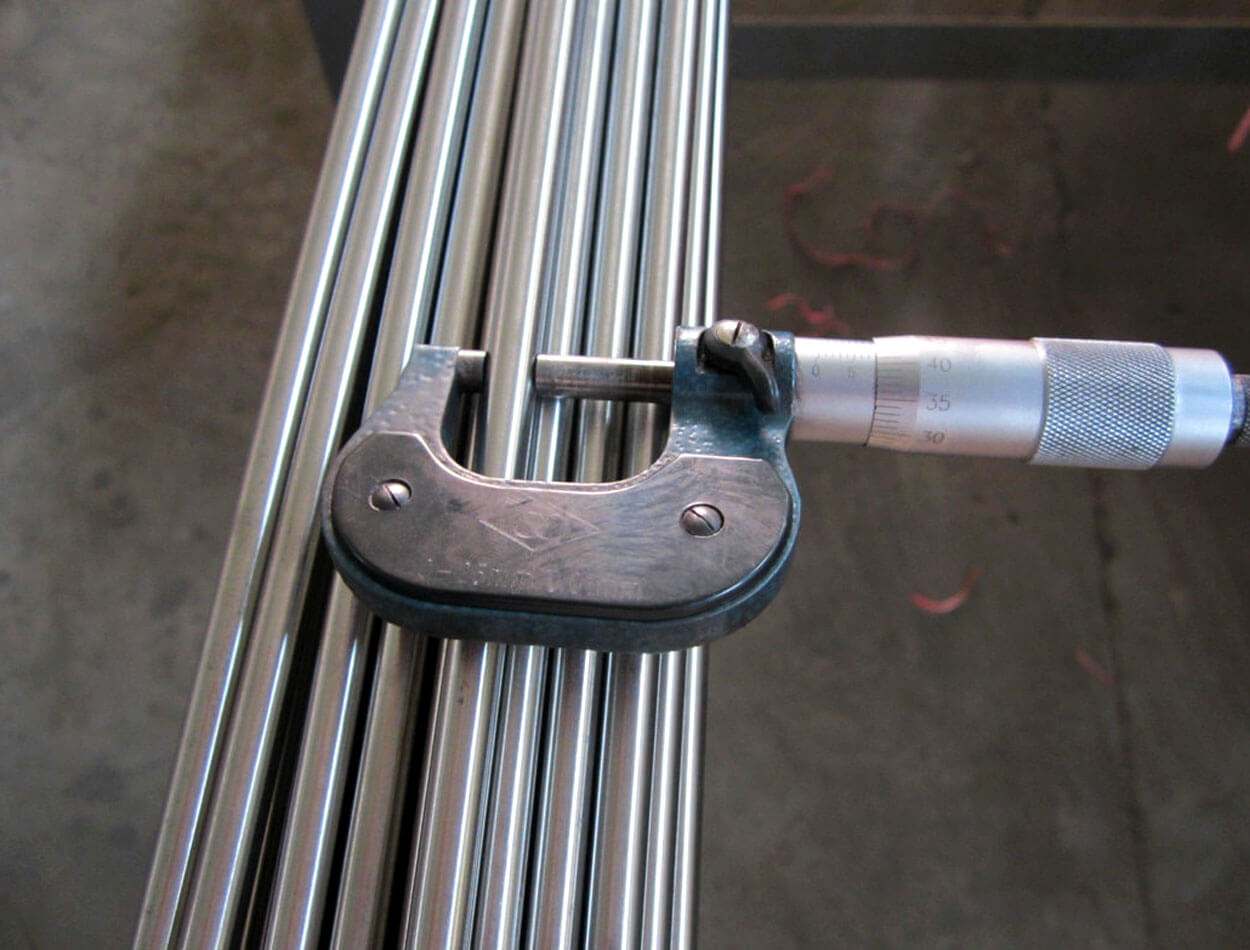
Tolerance requirements are used to control the size and quality of stainless steel bars. The exact items depend on the bar shape, standard, manufacturing method, and final application. For ASTM orders, the general dimensional and delivery requirements used with stainless steel bar specifications are covered by ASTM A484/A484M.
Diameter tolerance
Diameter tolerance applies mainly to round bars. It defines the allowable deviation from the nominal diameter. This is important for shafts, pins, machined components, and parts that must fit into holes, bearings, or other assemblies.
Length tolerance
Length tolerance defines the acceptable variation from the ordered length. Stainless steel bars may be supplied in standard lengths or cut-to-length. If the length is outside tolerance, the buyer may need to cut again, reject the material, or adjust the production plan.
Straightness tolerance
Straightness tolerance controls the allowable bend or curvature along the bar length. Straightness is especially important for long bars, automatic machining, shaft production, and applications where the bar must feed smoothly through equipment.
Surface condition
Surface condition includes surface finish and visible defects such as scratches, pits, scale, dents, or rough areas. Decorative parts, food processing equipment, precision-machined components, and corrosion-sensitive applications may require cleaner and smoother surfaces.
Table 01: Key Stainless Steel Bar Tolerance Requirements.
| Tolerance Requirement | What It Controls | Typical Check | Why It Matters |
|---|---|---|---|
| Diameter tolerance | Round bar diameter | Micrometer | Ensures proper fit and machining accuracy |
| Length tolerance | Bar length | Tape or scale | Reduces recutting and rework |
| Straightness | Bar alignment | Straightedge or measuring bench | Improves machining and feeding |
| Roundness | Circular accuracy | Roundness gauge | Supports uniform performance |
| Flatness | Surface flatness | Surface plate | Improves contact and assembly |
| Squareness | End perpendicularity | Square gauge | Supports accurate positioning |
| Surface finish | Surface quality | Visual check or roughness tester | Improves appearance, wear, and suitability |
Tolerances by Stainless Steel Bar Shape
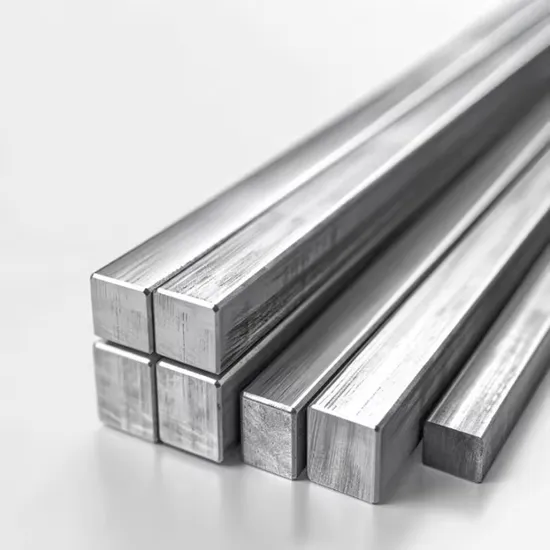
Tolerance requirements can vary by product form. Buyers should not use the same tolerance language for every stainless steel bar shape. Round bars, flat bars, square bars, and hex bars each have different key dimensions and inspection points.
Round bar tolerance
Round bar tolerance is mainly controlled by diameter, roundness, straightness, and length. Diameter tolerance is critical for machining shafts, pins, fasteners, and precision parts. If the round bar will be ground, peeled, or polished, the required finish and tolerance class should be stated clearly.
Flat bar tolerance
Flat bar tolerance normally includes width, thickness, length, and flatness. Width or thickness variation may affect machining, fabrication, welding, and assembly. Flatness is important when the bar must contact another surface evenly or be used in structural or support parts.
Square bar tolerance
Square bar tolerance includes side dimension, straightness, corner condition, and length. Consistent side dimensions help improve machining accuracy and assembly fit. Buyers should also confirm whether sharp corners, rounded corners, or specific edge conditions are required.
Hex bar tolerance
Hex bar tolerance is usually based on the size across flats. Hex bars are often used for fasteners, fittings, and machined parts, so across-flat tolerance and surface condition can directly affect tool holding, machining accuracy, and final part performance.
How to Order Stainless Steel Bars With Precision Requirements
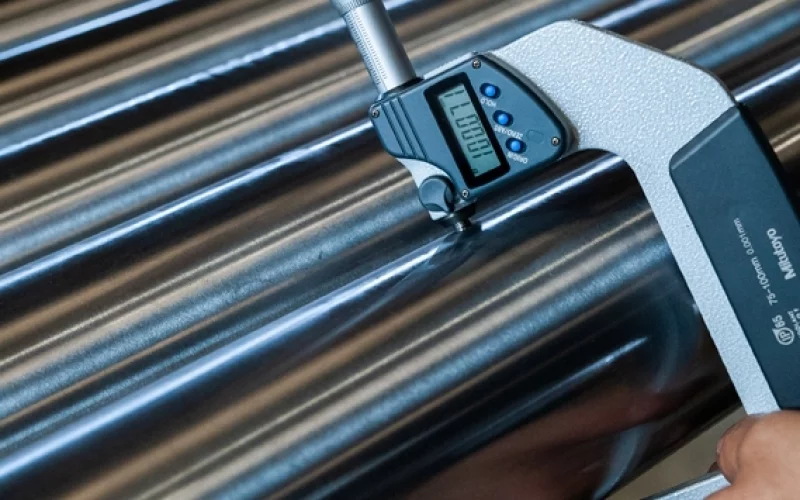
For precision applications, it is not enough to specify only the stainless steel grade. Buyers should define the standard, bar shape, size, tolerance class, surface finish, cutting requirement, inspection method, and certification requirements.
Table 02: Information Buyers Should Specify for Precision Bar Orders.
| Specification Item | What to Specify | Example | Why It Matters |
|---|---|---|---|
| Material grade | Stainless steel grade | 304, 316L | Confirms required properties |
| Standard | Material/product standard | ASTM A276 | Defines requirements and tolerance basis |
| Bar shape | Round, flat, square, hex | Round bar | Confirms product form |
| Size | Diameter or dimensions | Ø25 mm | Supports fit and machining |
| Tolerance | Tolerance class or value | h9, ±0.05 mm | Controls assembly accuracy |
| Surface finish | Required finish | Bright, ground | Affects appearance and performance |
| Straightness | Straightness limit | As specified | Supports machining and feeding |
| Inspection | Testing requirements | PMI, UT | Verifies quality |
| Certification | Required documents | EN 10204 3.1 MTC | Supports traceability |
Specify grade and standard
The stainless steel grade defines the chemical composition and mechanical properties. The standard defines manufacturing requirements, product form, testing, and tolerance rules. For example, buyers may specify ASTM A276/A276M, EN 10088, JIS, GB, or another applicable standard depending on the project and market.
Confirm tolerance class
Different applications require different tolerance classes. Standard mill tolerance may be acceptable for general fabrication, but precision machining may require tighter tolerances such as h9 or a project-specific tolerance. The tolerance class should be confirmed before production, not after delivery.
Add cutting or machining requirements
If bars must be supplied in cut lengths, the purchase order should specify cut length tolerance, chamfering, deburring, end squareness, or rough machining requirements. These details help suppliers prepare the material correctly and reduce additional processing after delivery.
Request inspection documents
Inspection documents help verify that the delivered bars meet the order requirements. Buyers may request an EN 10204 3.1 Mill Test Certificate, dimensional inspection report, PMI report, ultrasonic testing report, or third-party inspection certificate for critical applications. When independent testing is required, buyers should also confirm whether the laboratory operates to ISO/IEC 17025.
RFQ Checklist for Stainless Steel Bar Tolerances
A clear RFQ reduces misunderstanding between buyer and supplier. Before requesting a quotation, buyers should include the following information:
- Stainless steel grade, such as 304, 316L, 321, 410, or 420
- Applicable standard, such as ASTM A276, EN, JIS, or GB
- Bar shape: round, flat, square, hex, or special profile
- Nominal size and ordered length
- Required tolerance class or specific tolerance value
- Surface finish, such as black, bright, peeled, ground, or polished
- Straightness, flatness, roundness, or squareness requirements
- Cutting, chamfering, deburring, or machining requirement
- Inspection and testing requirements, such as PMI or UT
- Certification requirement, such as EN 10204 3.1 MTC
- Packing, marking, and shipping requirements
Common Mistakes When Ordering Stainless Steel Bars
Assuming standard tolerance is enough
Standard tolerance may be acceptable for general use, but it may not meet the needs of precision machining, automatic feeding, tight assembly, or critical components. Buyers should confirm the tolerance needed for the final application.
Only specifying grade and size
A purchase order that only lists grade and size may still be incomplete. Without standard, tolerance, surface finish, straightness, and inspection requirements, suppliers may quote different quality levels.
Ignoring shape-specific tolerance items
Round bars, flat bars, square bars, and hex bars are checked differently. For example, round bars need diameter and roundness control, while flat bars may require width, thickness, and flatness control. The RFQ should match the bar shape.
FAQ About Stainless Steel Bar Tolerances
What does stainless steel bar tolerance mean?
It means the allowable variation from the ordered size or condition. This can include diameter, width, thickness, length, straightness, surface finish, and other dimensional items.
Is tighter tolerance always better?
Not always. Tighter tolerance can improve fit and machining accuracy, but it may also increase production cost and lead time. Buyers should select the tolerance level required by the application.
What documents should buyers request?
For most industrial orders, buyers should request an MTC. For precision or critical applications, a dimensional inspection report, PMI report, UT report, or third-party inspection certificate may also be required.
Conclusion
Stainless steel bar tolerances affect machining accuracy, assembly fit, material yield, cost, and final product performance. Buyers should check diameter, length, straightness, surface condition, and shape-specific tolerance items before confirming an order.
For accurate procurement, the RFQ should include grade, standard, bar shape, size, tolerance class, surface finish, processing requirements, inspection documents, and certification requirements. Clear specifications help suppliers quote correctly and help buyers avoid rework, delays, and unnecessary cost.
Need stainless steel bars with specific tolerance, surface finish, or inspection requirements? Send us your grade, bar shape, size, tolerance class, quantity, and application for a practical quotation.