Skip to content

Stainless steel sheet thickness tolerance defines how much the actual thickness may vary from the ordered size. The permitted range depends on the applicable standard, sheet dimensions, and production method. When ordering stainless steel sheets, agree on the thickness range, price basis, and inspection requirements.
What Is Stainless Steel Sheet Thickness Tolerance?
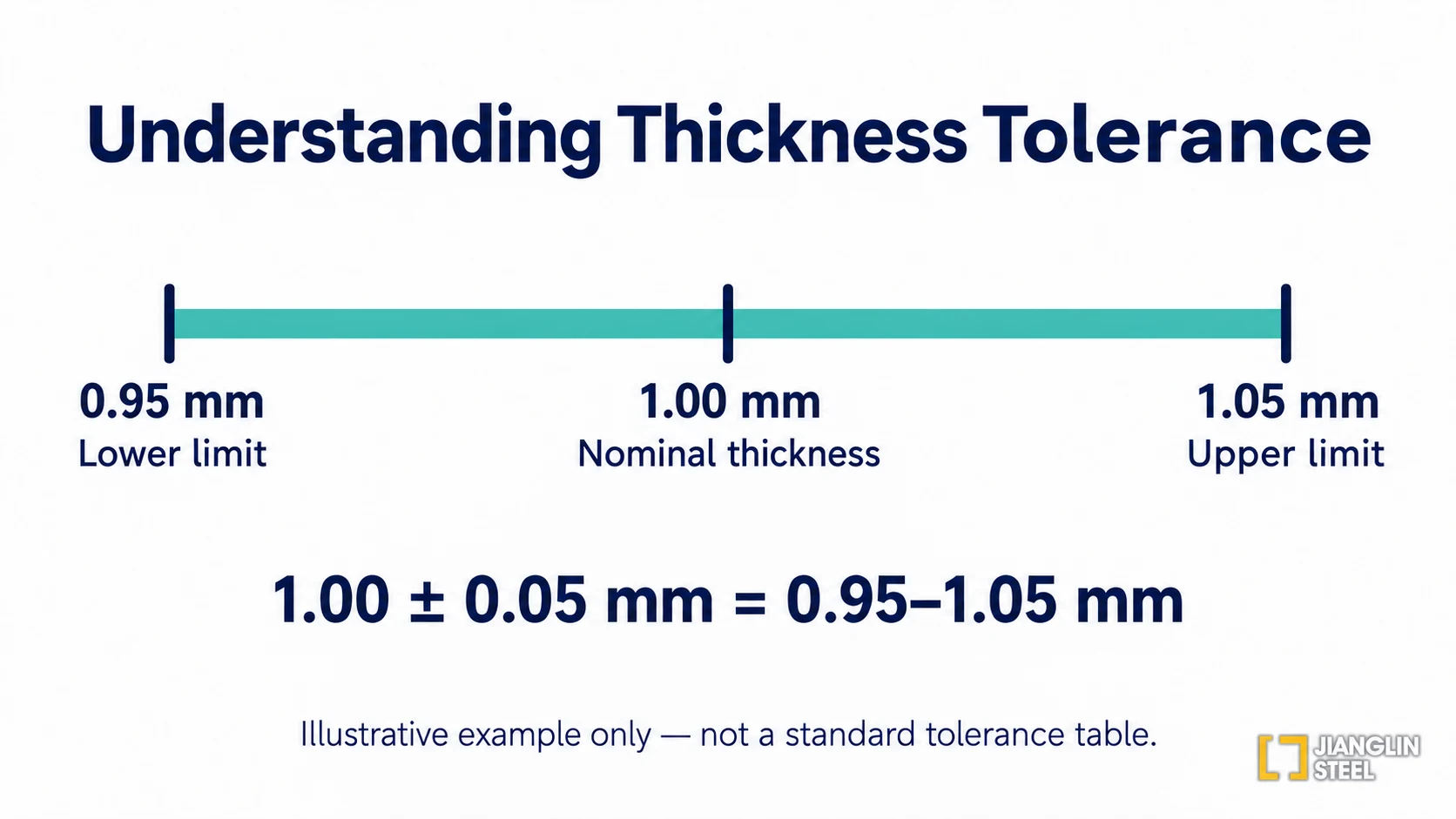
The thickness shown on an order is the nominal thickness. The actual sheet thickness may vary within an allowed range, called the thickness tolerance.
For example, if an order specifies 1.00 ± 0.05 mm, the permitted range is 0.95–1.05 mm. This is a simple illustration, not a standard tolerance for every 1.0 mm sheet.
The correct range depends on the applicable standard, sheet dimensions, and production method. If your application needs a minimum actual thickness, state that requirement before ordering.
Common Thickness Tolerance Standards
Different standards are used for stainless steel sheet orders. The correct choice depends on the project requirements and whether the material is cold rolled or hot rolled.
For ASTM orders, A240/A240M covers material requirements, while A480/A480M includes dimensional tolerances. They work together, as explained in our ASTM A240 vs A480 guide.
| Product | Common tolerance standard |
|---|---|
| Stainless steel flat-rolled products supplied under applicable ASTM specifications | ASTM A480/A480M |
| Continuously cold-rolled wide strip and sheet cut from it | EN ISO 9445-2 |
| Continuously hot-rolled wide strip and sheet or plate cut from it | EN ISO 9444-2 |
The table identifies the common standards, not a single tolerance value for all sheets. Confirm the applicable edition, unit system, and permitted range with the supplier. For JIS or GB orders, specify the full standard required by the project.
Factors That Affect Thickness Tolerance
Thickness tolerance depends on several product details. These should be confirmed together when selecting a sheet specification.
Sheet Thickness and Width
Tolerance tables commonly use thickness and width categories. A value listed for one size may not apply to another. Always check the dimensions covered by the selected table.
Cold Rolled or Hot Rolled Material
Cold-rolled and hot-rolled sheets follow different production routes and may use different tolerance tables. State the required product type when requesting a quotation.
Application Requirements
Some applications need closer thickness control for forming or assembly. If further polishing or grinding is planned, clarify whether the required thickness applies before or after processing.
Choosing the Right Thickness Tolerance
Choose a tolerance that meets the needs of the finished product. A tighter range may affect price and availability, so it is useful to confirm whether your application needs it. Before ordering, provide the supplier with:
- Dimensions: Thickness, width, and length.
- Product and finish: Cold-rolled or hot-rolled sheet, with the required surface finish.
- Thickness tolerance: Applicable standard and any additional minimum thickness requirement.
- Price basis: Price per tonne or per sheet, and actual or theoretical weight.
- Inspection: Required certificates and thickness inspection records.
If the finished product needs a minimum actual thickness, write that requirement clearly in the order. The nominal thickness alone does not guarantee that every measurement will be at or above that value.
Thickness Tolerance and Purchasing Cost
Compare quotations on the same thickness and weight basis. A lower price is only useful if the supplied sheet meets your requirements.
For the same grade and area, a thinner sheet weighs less. This matters when comparing prices per tonne, per sheet, or by theoretical weight. Ask how the supplier calculates the quoted quantity and invoice weight.
Confirm the permitted thickness range and weight basis before comparing offers. This makes it easier to judge whether the price matches the material you need.
Thickness Inspection and Quality Control
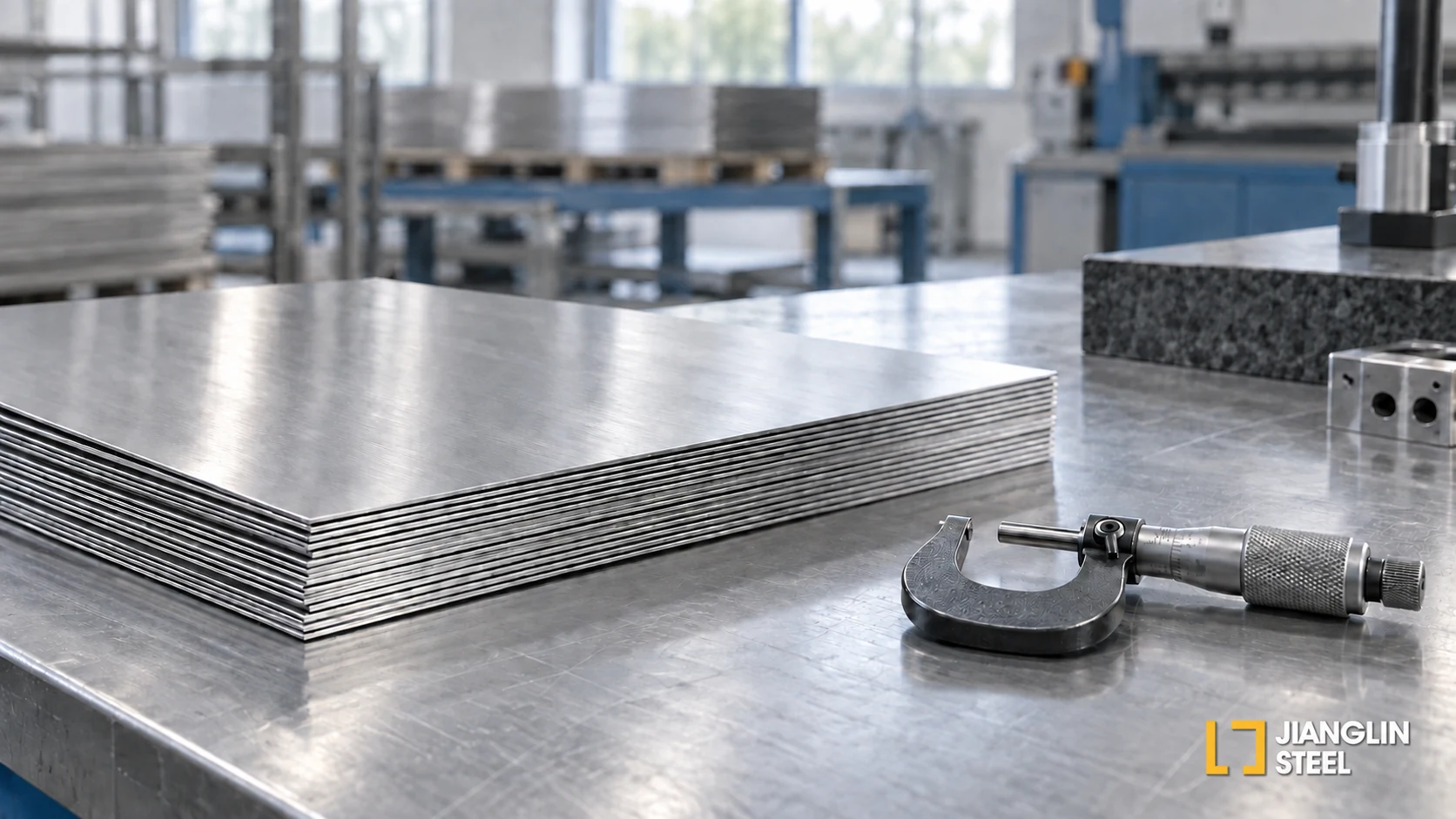
Check the material against the agreed standard and purchase order. Use a calibrated micrometer and follow the required measurement locations and sampling plan.
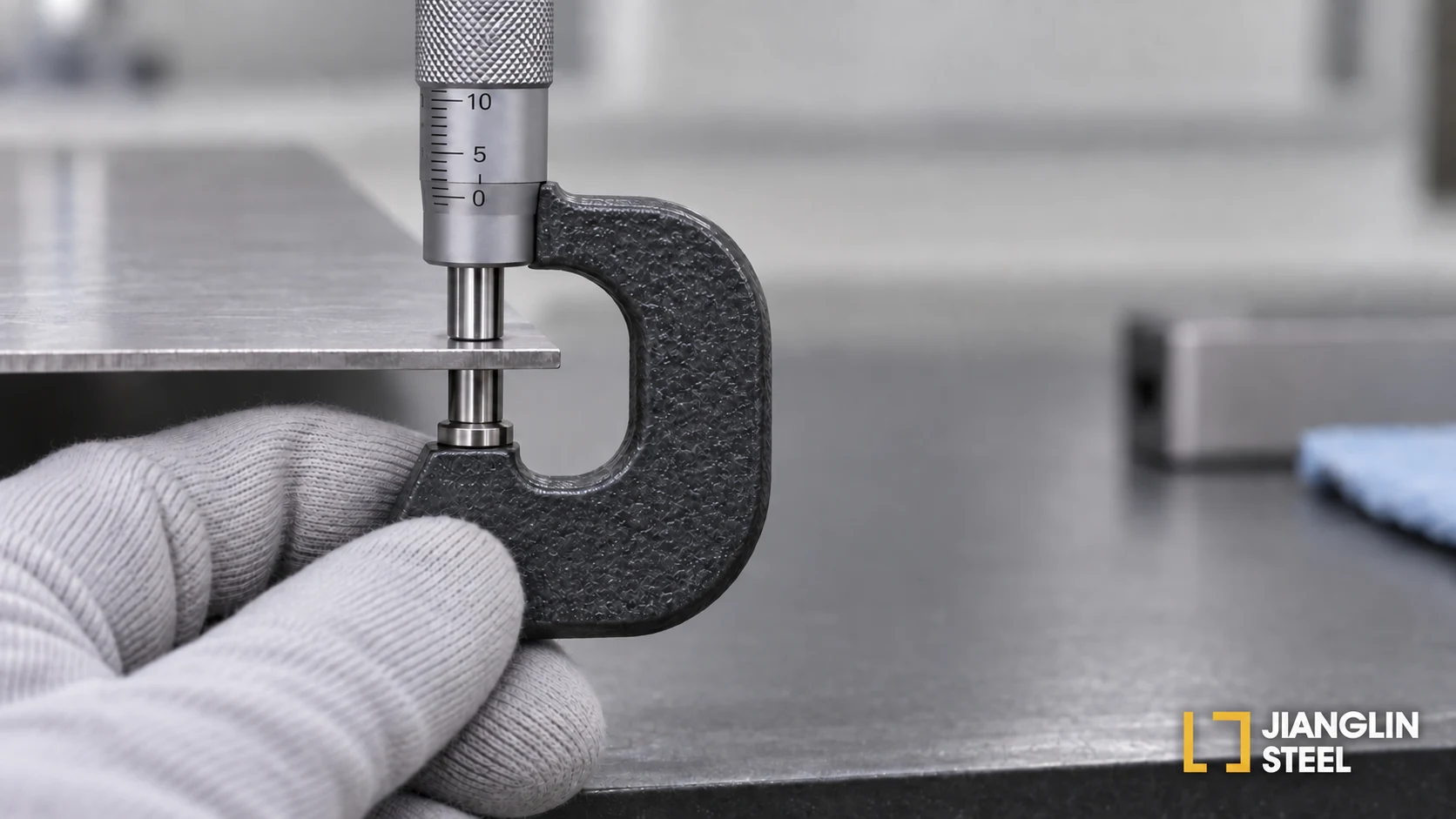
Keep protective film, dirt, and burrs from affecting the reading. Record measurements against the sheet, coil, or batch identification so any issue can be checked with the supplier.
A mill test certificate may list ordered dimensions without showing detailed thickness readings. If you need those readings, request a separate dimensional inspection report before shipment.
Frequently Asked Questions
Does 304 stainless steel have one fixed thickness tolerance?
No. The grade alone does not determine the tolerance. The standard, dimensions, production method, and agreed requirements also matter.
Can I order sheet with no negative thickness tolerance?
You can request a minimum actual thickness. The supplier must confirm a feasible range, including the upper limit, that meets the applicable requirements.
Is a gauge number enough for ordering?
Confirm the thickness in millimetres or inches as well as the tolerance. This helps avoid confusion over gauge conventions.
Conclusion
Before placing an order, agree on the thickness range, price basis, and inspection requirements. These details give both sides a clear basis for supply and acceptance.
Send Jianglin your grade, dimensions, finish, quantity, and tolerance requirements to request a quotation.