Skip to content

A stainless steel weld can look sound and still need surface work. Weld heat tint is the colored band around the bead, formed when the surface oxide thickens during welding. For equipment exposed to water or another corrosive medium, leaving that band untreated may reduce the corrosion resistance expected from the selected grade. The required cleanup depends on the service environment and on which faces of the weld are exposed.
This guide is for procurement and quality teams specifying fabricated parts, not for choosing a chemical bath on the shop floor. It explains what to agree with the fabricator before quotation, where pickling and passivation fit, and what evidence to request at acceptance.
What is weld heat tint?
Heat tint is visible discoloration caused by a thickened oxide next to a stainless steel weld. It may appear straw, brown, purple or blue. The color is a clue to the surface condition, but a photograph alone cannot quantify the remaining corrosion resistance of a specific weld.
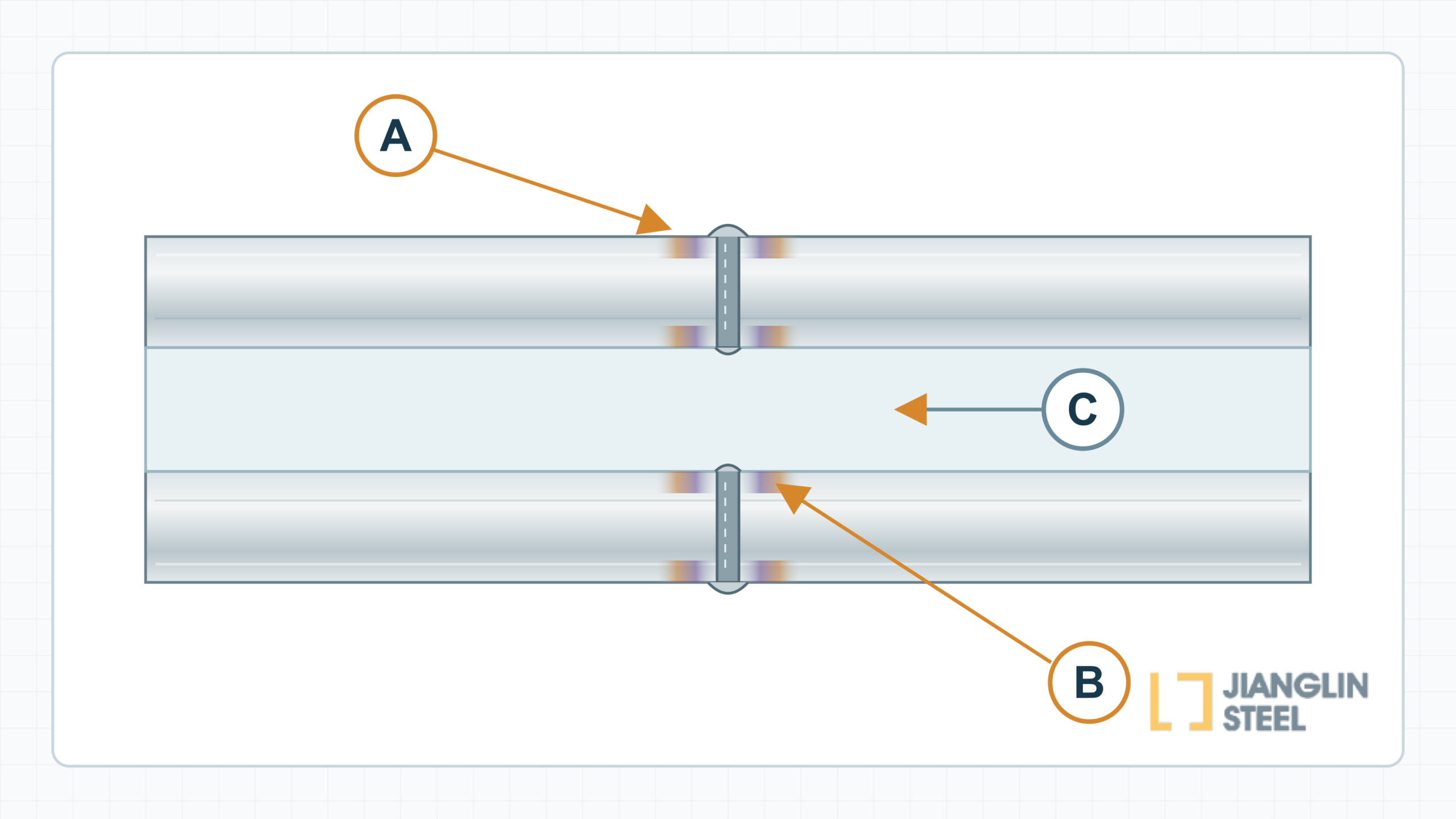
The British Stainless Steel Association's post-weld guidance explains that heat tint formation can leave a chromium-depleted region immediately beneath the oxide. That local change is why a corrosion-resistant base metal does not automatically guarantee the same performance at an unfinished weld. Heat tint is different from the thin, normally invisible passive film on clean stainless steel.
When should heat tint be removed?
Specify removal when the weld or its heat-affected area must retain corrosion resistance in the actual service environment. Wetted surfaces, crevices, coastal exposure, process fluids and cleanability requirements deserve particular attention. The British Stainless Steel Association's post-weld guidance distinguishes corrosion service from cases where high-temperature oxidation is the dominant concern; one universal visual rule is not appropriate for every application.
Do not inspect only the attractive outside face. A pipe or vessel weld may have heat tint on the root side, where the process fluid will contact it. If that side cannot be reached after assembly, the drawing and manufacturing plan should address access, shielding and acceptance before fabrication starts. The BSSA welding guidance explains why shielding the weld root against oxidation matters.
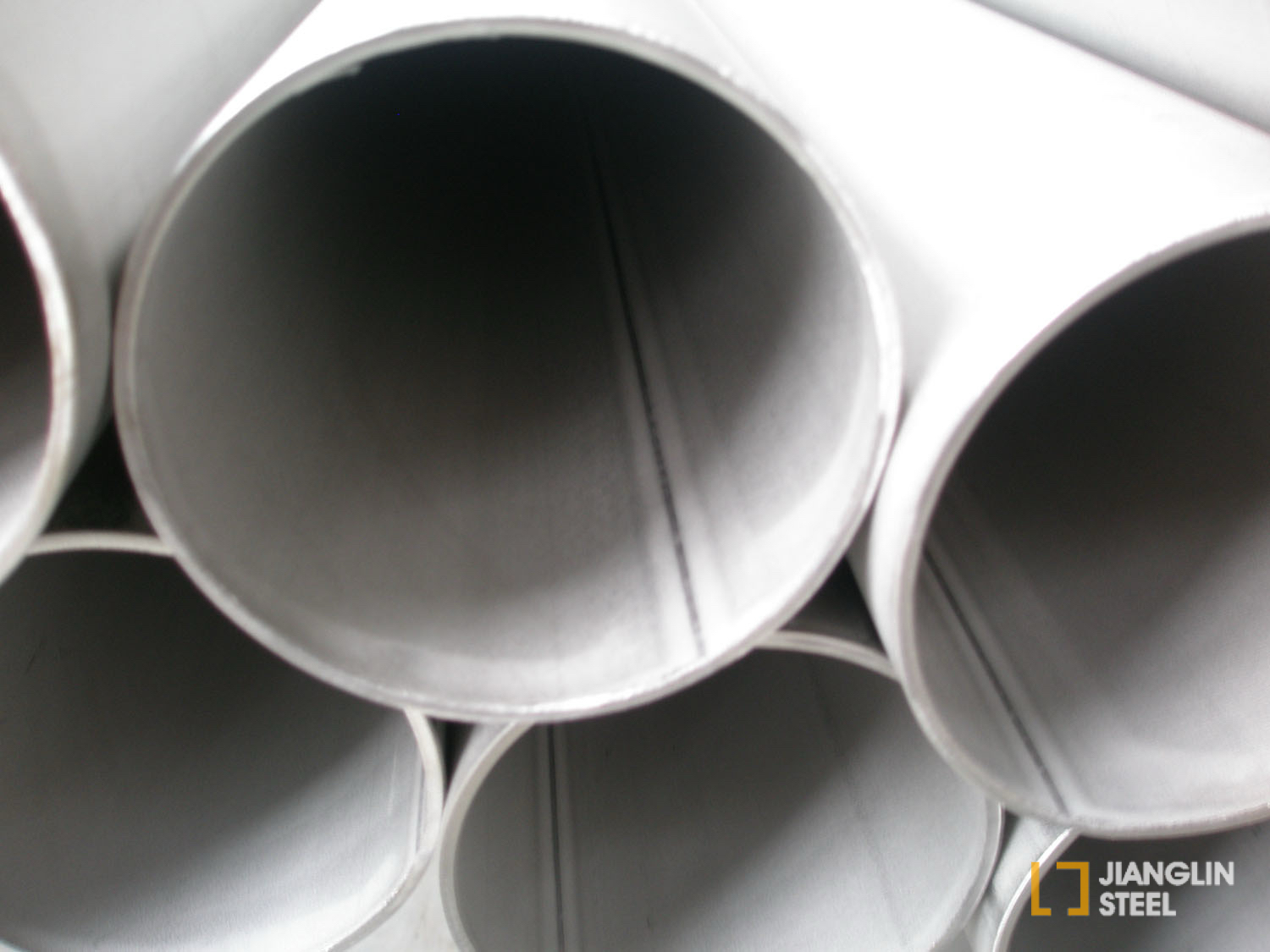
For a critical order, have the project engineer set a service-specific finish criterion. AWS D18.2:2020 is a photographic guide for discoloration inside austenitic stainless steel tube. It can support an agreed visual reference, but its scope should not be extended to every product form or treated as a universal pass/fail limit.
Which treatment should the order specify?
Start with the condition to be removed, then select a qualified process for the grade, part geometry and required finish. The distinction matters: “passivated” does not, by itself, tell a supplier to remove a heavy oxide band.
| Method | What it addresses | Procurement and inspection point |
|---|---|---|
| Pre-cleaning | Oil, dirt and fabrication residue | Required before a surface treatment; it is not heat-tint removal. |
| Mechanical dressing | Accessible oxide and surface irregularity | Agree the final appearance and avoid contamination from unsuitable tools; confirm whether a further chemical treatment is needed. |
| Pickling or other qualified descaling | Weld oxide and the affected surface layer | Specify the treated faces and post-treatment rinsing; method and safety controls belong with the qualified processor. |
| Electrochemical cleaning or electropolishing | Surface oxide and/or finish, depending on the process | Confirm access, finish target and whether the proposed process suits the part. |
| Passivation after suitable cleaning | Contaminant iron and the condition of a clean passive surface | Do not use the word “passivation” as a substitute for an oxide-removal requirement. |
ASTM A380/A380M-25 covers practices for cleaning, descaling, pickling and passivation of stainless steel parts and systems, including weld areas. It is useful as a process framework, but the purchase order still has to identify the applicable treatment and acceptance requirements. Chemical handling should be left to trained, qualified personnel; this article is not a procedure for applying acids.
How should the finished weld be inspected?
Separate appearance from cleanliness. First agree which faces must be examined and whether visible oxide, spatter, embedded iron, scratches or treatment residue are unacceptable. Record the weld locations, especially internal or otherwise hidden surfaces. A before-and-after photograph is useful evidence of the work, but it cannot replace a specified test.
If the order calls for verification beyond visual examination, choose the test and acceptance basis before production. ASTM A380/A380M-25 describes several cleaning and free-iron checks; the right one depends on the part and service. A test named only after the parts arrive is difficult for either party to price or perform consistently. Specify who performs it, the sampling plan and what record will accompany the shipment.
Frequently asked questions
Can passivation alone remove a dark weld-oxide band?
Do not assume so. First define the oxide or scale removal needed; then specify passivation if it is required for the cleaned surface. BSSA's passivation guidance distinguishes pickling from passivation.
Is a pale weld color always acceptable?
No universal color threshold applies to every grade and service. A visual reference must be tied to the agreed application and examination conditions. A critical internal surface may need a different requirement from a non-wetted decorative face.
Is a polished weld automatically clean enough?
No. A smooth appearance does not establish freedom from contaminant iron or treatment residue. If cleanliness matters to the application, specify a suitable inspection or test and the record required at delivery.