Skip to content

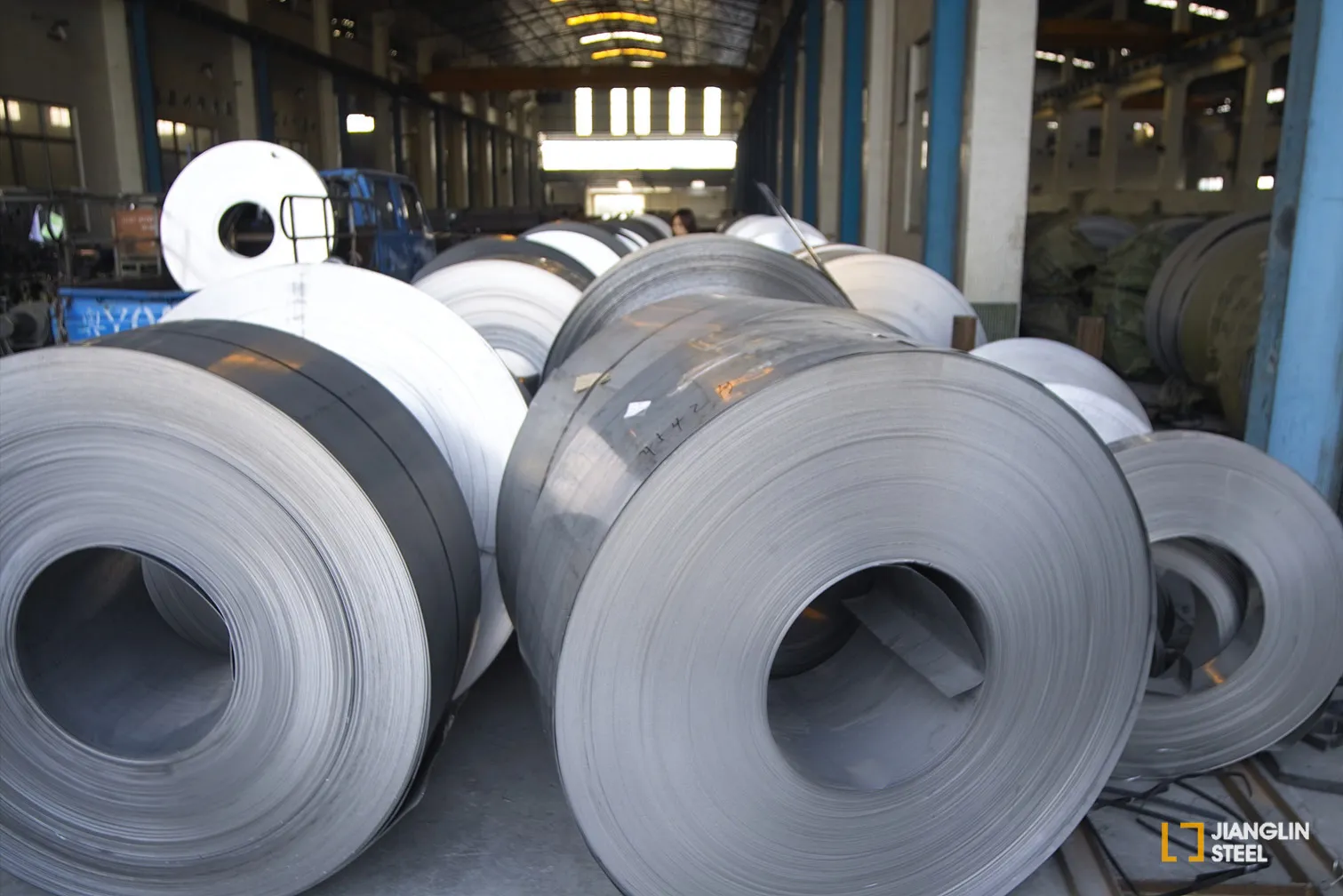
Use this stainless steel coil procurement guide to turn an application into a quote-ready specification. Its 14-point RFQ checklist covers product form, standard, grade, dimensions, finish, slitting, coil build, inspection, packing, quantity, and quotation terms. A request for "304 stainless coil" alone leaves too many production and acceptance details open.
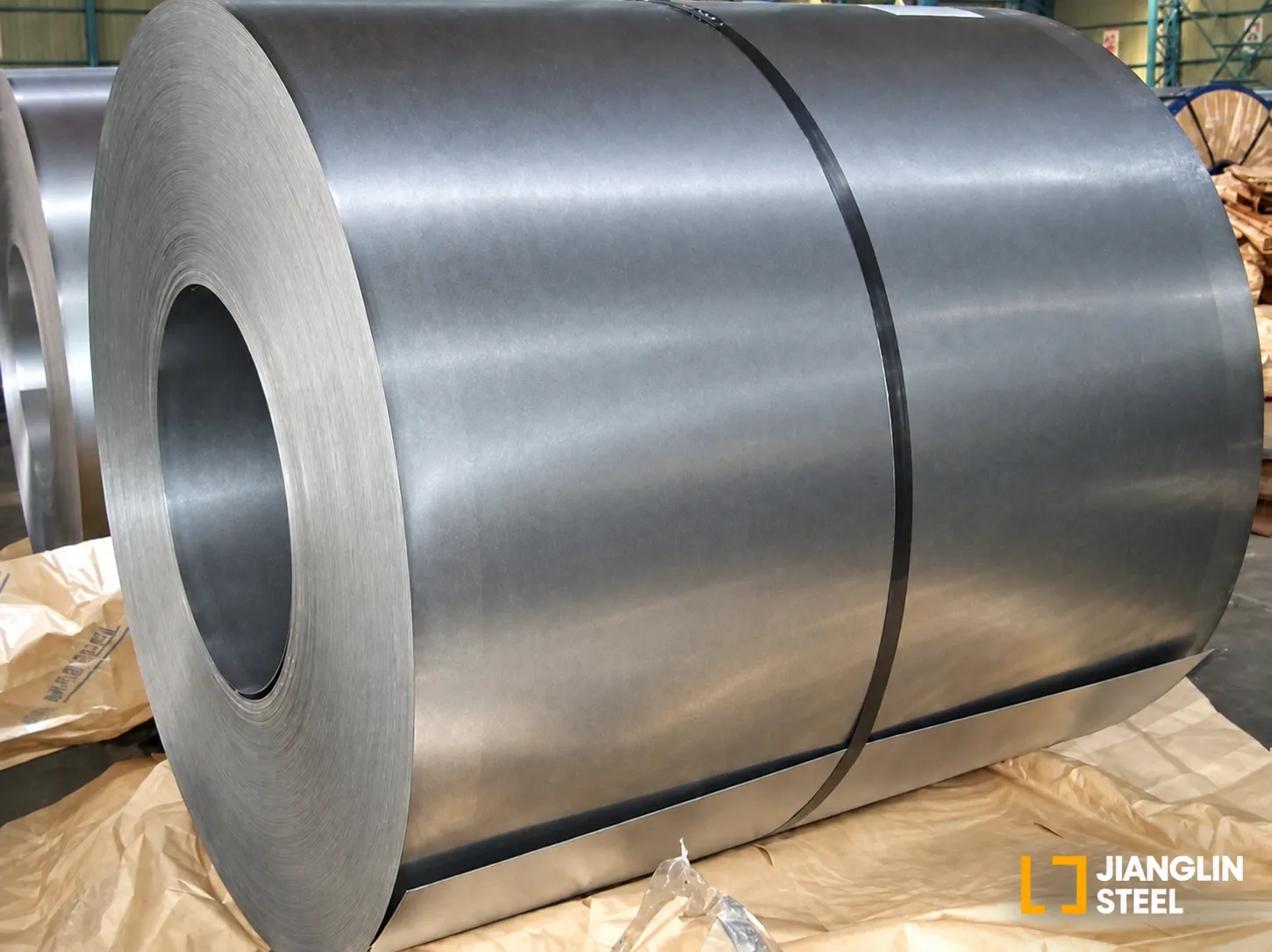
A quote-ready coil specification connects the intended application to the choices that affect forming, appearance, production-line fit, receiving inspection, and landed risk. Buyers who already know those requirements can review Jianglin’s stainless steel coil range before sending an inquiry.
Key takeaways
- Treat grade, standard, product form, dimensions, tolerance, and finish as one specification. A grade name on its own is not enough.
- Distinguish coil from slit strip and cut sheet before requesting prices because the edge, flatness, packaging, and downstream handling requirements can change.
- Define a surface finish with the governing standard and, for appearance-critical work, an approved physical sample.
- Include coil ID, maximum OD, maximum coil weight, winding direction, edge condition, and protective film when they affect the processing line.
- Put inspection, documentation, packing, and arrival acceptance requirements in the RFQ rather than negotiating them after production.
What stainless steel coil ranges can buyers request from Jianglin?
Jianglin’s current stainless steel coil reference covers 200-, 300-, and 400-series grades. Commonly requested coil grades include 430, 304, and 316; 304DDQ, 409, and 444 can also be quoted. Availability depends on the requested combination of grade, thickness, width, finish, processing route, quantity, and acceptance requirements.
| Supply field | Current Jianglin reference | What the buyer should still confirm |
|---|---|---|
| Grade families | 200, 300, and 400 series; common coil grades include 430, 304, and 316 | Exact grade designation, condition, governing standard, and application requirements |
| Additional grades | 304DDQ, 409, 444, and other grades by request | Availability for the required dimensions, finish, and quantity |
| Thickness | 0.4-50 mm is listed across the current stainless flat-product range | Whether the requested thickness is available in coil form rather than sheet or plate |
| Width | 1000, 1219, 1250, 1500, and 1800 mm are listed reference widths | Mill width or slit width, width tolerance, edge condition, and order quantity |
| Surface finish | No. 1, No. 2, 2B, BA, No. 4, hairline, 6K, and 8K; PVC protection is available | Protected side, film type, appearance range, grain direction, and approved sample where needed |
| Processing route | Hot-rolled and cold-rolled stainless flat products | Final form, annealing/descaling condition, finish route, and downstream operation |
| Documentation | Material test certificates are supplied with delivered material | Required standard and edition, traceability, supplementary tests, and third-party inspection |
These figures define Jianglin’s commercial reference range, not an automatic guarantee that every grade-size-finish combination is available. A quotation should confirm the exact combination and list any deviation before the purchase order is issued.
Which product form should buyers specify: coil, strip, sheet, or plate?
The first purchasing decision is the form in which the material must arrive. The terms coil, strip, sheet, and plate are related, but they are not interchangeable instructions. A wide master coil may be slit into narrow coils. The same flat product can also be cut to length and shipped as sheet. Each route creates different questions about edges, flatness, coil build, and packing.
Do not rely on a universal width or thickness cutoff to define these terms. Standards, markets, mills, and end users do not always use the same boundary. State the required form and dimensions, then identify the standard or drawing that controls the order.
| Product form | What the buyer should define | Common quotation risk |
|---|---|---|
| Wide coil | Grade, standard, thickness, width, finish, ID, OD or weight limit, and packing | The coil does not fit the decoiler or exceeds handling limits |
| Slit coil or strip | Final width, width tolerance, edge condition, burr expectation, winding, and coil build | The strip feeds poorly, scratches parts, or does not match the tool |
| Sheet | Thickness, width, length, flatness or shape requirement, finish, and film | The delivered sheet meets nominal size but not the fabrication or appearance requirement |
| Plate | Grade, dimensions, tolerance basis, surface condition, and any cutting or testing requirement | A sheet requirement is applied to plate, or the wrong tolerance table is used |
For narrow strip, Jianglin’s stainless steel strip guide goes deeper into grade, size, application, and sourcing questions. This article stays at the coil-specification level.
How should buyers choose the standard and grade?
A workable specification identifies both the material grade and the document that governs it. For ASTM procurement, A240/A240M-26 covers chromium, chromium-nickel, and chromium-manganese-nickel stainless steel plate, sheet, and strip for pressure-vessel and general applications. A480/A480M-25b provides general requirements for flat-rolled stainless and heat-resisting plate, sheet, and strip used with the applicable product specification.
That relationship matters. A240 is not a substitute for every dimensional, finish, ordering, or acceptance detail. A480 does not choose the grade or application for the buyer. The purchase order must bring the product specification, general requirements, and project-specific requirements together. Jianglin’s guides to specifying ASTM A240 material and using ASTM A240 with ASTM A480 explain that division in more depth.
Select the grade against the service conditions and fabrication route.
| Selection question | What to tell the supplier or material reviewer |
|---|---|
| Corrosion environment | Moisture, chlorides, cleaning chemicals, process media, deposits, exposure cycle, and temperature |
| Forming | Bend radius, drawing severity, roll forming, stamping, and the direction in which properties matter |
| Welding | Welding process, section thickness, post-weld treatment, and corrosion exposure at the joint |
| Appearance | Visible side, finish, grain direction, gloss or roughness requirement when specified, and sample approval |
| Strength or hardness | Required condition, applicable property limits, and test direction or method |
Type 304 is a common starting point for general service. Type 316 contains molybdenum and may be the better candidate where chloride-bearing moisture or a more aggressive industrial environment raises the risk of localized corrosion. The International Molybdenum Association explains how molybdenum-bearing grades improve resistance to localized corrosion in chloride environments. This is a screening rule, not a universal material decision. Temperature, concentration, wet-dry cycling, crevices, deposits, fabrication, and cleaning practice can change the result.
Low-carbon grades such as 304L and 316L may be specified when welding and corrosion conditions make sensitization control relevant. Do not add an L suffix automatically or treat it as a guarantee of weld quality. The drawing, welding procedure, product standard, and corrosion review should agree.
Select hot-rolled or cold-rolled coil by the next operation
The processing route affects surface, thickness range, shape, and what the buyer can reasonably request. Hot-rolled, annealed, and descaled material commonly has a duller, rougher surface and is often selected for further processing or applications where a decorative face is not the main requirement. Cold-rolled coil is the normal starting point for finishes such as 2B and BA and is often chosen when surface consistency and close control matter.
These are purchasing tendencies, not universal capability statements. The actual tolerance and finish must come from the named standard, order, and supplier confirmation.
Choose the route around the next operation:
- Deep drawing or stamping requires the grade, condition, surface, thickness variation, and lubrication plan to work together.
- Roll forming and tube production depend on width control, camber, edge condition, coil build, and stable feeding.
- Visible panels and appliance parts need a controlled viewing surface, grain direction where applicable, and protection through fabrication.
- Parts that will be polished, ground, or coated need a suitable starting surface and a clear defect allowance.
Which stainless steel finish should the purchase order specify?
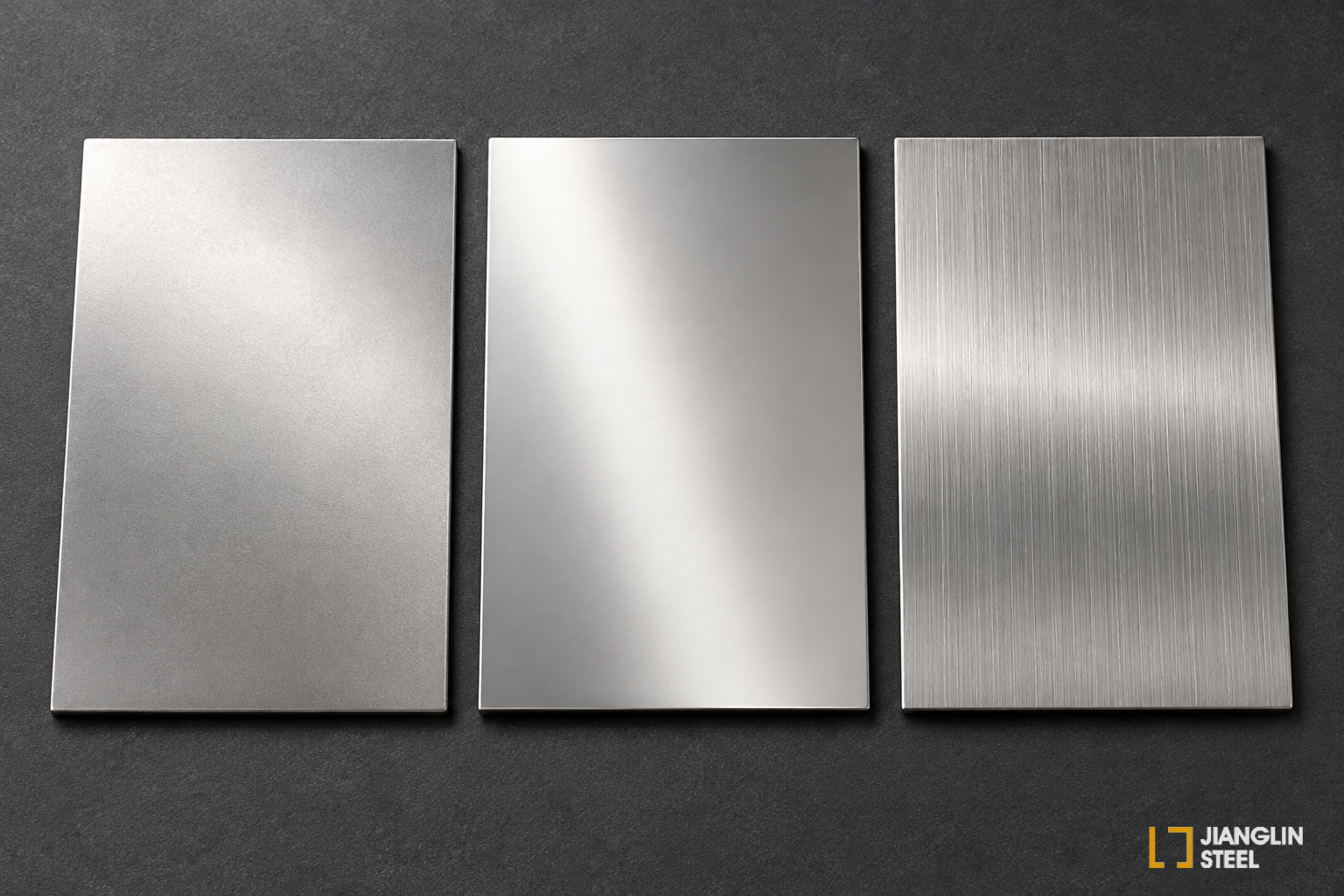
Finish names describe processing routes and general appearance. They do not settle every visual or measurable requirement. Worldstainless describes No. 1 as a comparatively rough, dull hot-rolled finish after heat treatment and descaling. It describes 2B as a cold-rolled, heat-treated, descaled, and skin-passed finish; BA, also called 2R in EN terminology, is produced by bright annealing after cold rolling and is smoother and brighter than 2B. No. 4 is a mechanically brushed or polished finish.
| Finish | Suitable purchasing description | What still needs to be agreed |
|---|---|---|
| No. 1 | Hot-rolled, heat-treated, and descaled surface | Permitted scale marks, roughness if critical, visible side, and further processing |
| 2B | General-purpose cold-rolled mill finish | Surface acceptance, flatness or shape needs, protective film, and intended fabrication |
| BA / 2R | Bright-annealed cold-rolled finish | Reflectivity or gloss expectation, handling marks, film, and sample approval |
| No. 4 / brushed | Mechanically finished surface with visible directional grain | Abrasive specification, grain direction, roughness or appearance range, sample, and protected side |
| Hairline or other trade finish | Commercial appearance term | Exact process, master sample, grain direction, color/texture range, and inspection lighting |
For an appearance-critical order, use an approved sample that represents the permitted range rather than a single perfect square of metal. Record the viewing side, lighting, observation distance, grain direction, film type, and when the film must be removed. A finish sample should not silently replace the material standard, dimensions, or corrosion requirements.
Which dimensions and tolerances belong in the RFQ?
Every dimensional field needs a nominal value, a permitted variation, and a measurement basis. A request for "1.0 mm coil" is incomplete if the buyer has not said whether the order follows an ASTM, EN, JIS, or project-specific tolerance and whether a tighter requirement is needed for the process.
ASTM A480/A480M uses separate inch-pound and SI systems. The current standard warns that the two systems are not exact equivalents and should not be mixed. A buyer should therefore keep the order, drawing, inspection plan, and quotation in one unit system unless the contract provides a controlled conversion.
Define at least these fields:
| Field | RFQ instruction |
|---|---|
| Thickness | Nominal thickness, tolerance standard or explicit tolerance, and any location or method required for acceptance |
| Width | Nominal coil or slit width, tolerance, and whether the value applies to mill or slit edge |
| Shape | Camber, flatness, edge wave, center buckle, or other requirements only when relevant and measurable under the named standard |
| Length | Not normally a coil purchasing field, but required for cut-to-length sheet |
| Units | Use one system consistently and name the M designation when the contract requires SI ASTM provisions |
Use Jianglin’s ASTM A480 tolerance guide for the general framework. Do not copy a tolerance from that guide into a new order until the product form, thickness range, width, grade group, and applicable edition match the intended material.
What slitting, edge, and coil-build details keep the coil running?
A coil can meet chemistry and thickness requirements and still create trouble on the line. Slitting introduces final-width control, slit-edge geometry, burr, camber, winding tension, telescoping risk, and surface-handling questions. The RFQ should state the output that matters to the process rather than simply asking for "slit coil."
Include the final slit widths and their tolerances, the number of coils or lanes, edge condition, burr direction or limit when functionally relevant, and whether edge conditioning or deburring is required. If the strip feeds into a progressive die, roll former, tube mill, or precision assembly, give the supplier enough information to review the operating risk.
The coil build belongs in the same conversation:
- inside diameter and any core requirement;
- maximum outside diameter;
- minimum, target, and maximum coil weight where handling or production continuity depends on them;
- winding direction and which side faces inward or outward;
- permitted telescoping or sidewall condition where it affects loading;
- protective interleaving or film when the surface can be damaged;
- equipment limits for mandrel, payoff, crane, C-hook, or forklift handling.
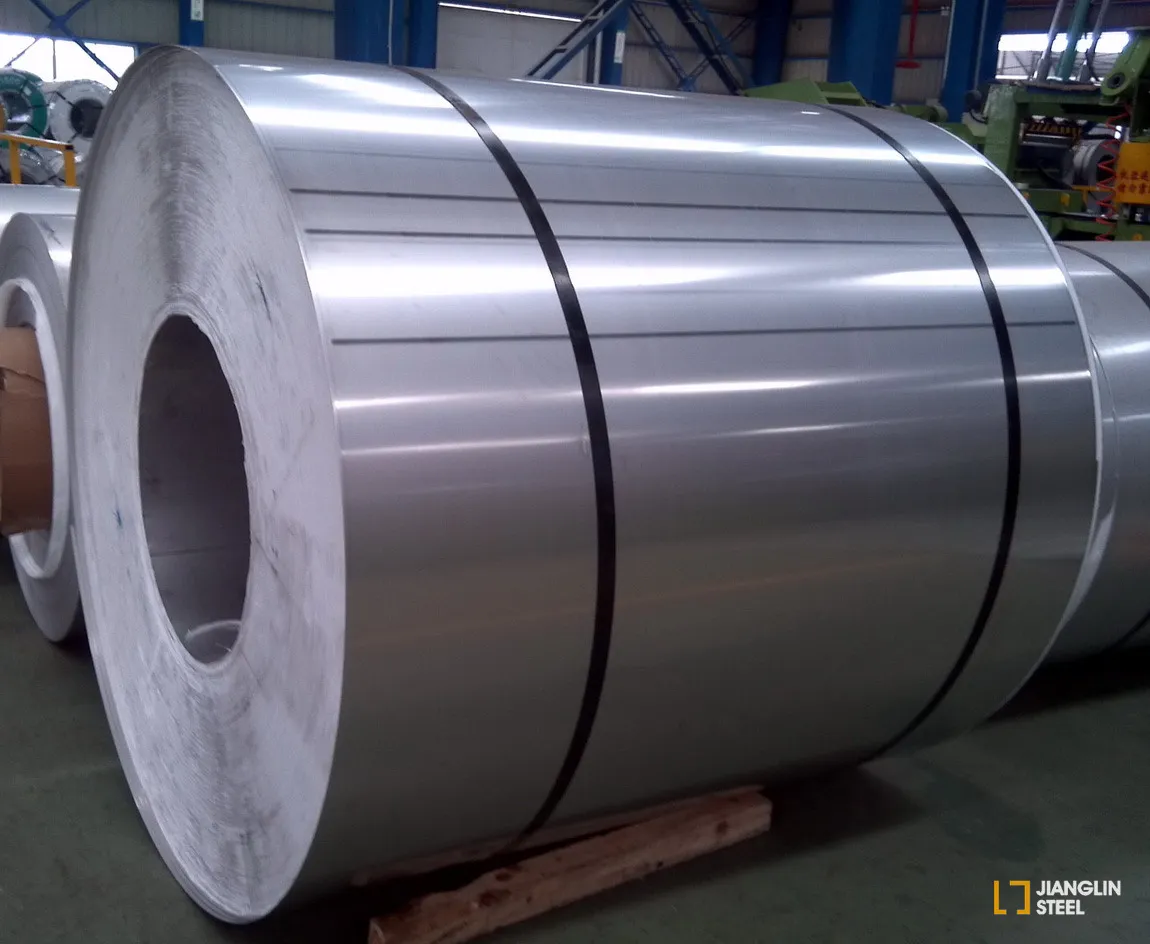
Jianglin’s existing articles on coil ID and OD and burr and deburring cover two of these controls in more detail.
Which inspection records and documents belong in the order?
Inspection should answer the requirements in the purchase order. Asking for "full inspection" creates less certainty than naming the characteristics, method, sampling plan, records, and acceptance limits.
A practical coil inspection plan may include:
- material identity, grade, heat or lot traceability, and certificate review;
- thickness and width measurements tied to the applicable tolerance basis;
- surface and finish inspection under agreed viewing conditions;
- slit edge, burr, camber, and coil-build checks when relevant;
- coil ID, OD or weight, and identification marks;
- packing condition and loading evidence;
- additional tests only when the product standard, application, or contract requires them.
The mill test certificate should match the ordered material and traceability identifiers. Check the grade, heat number, applicable specification and edition where stated, chemical results, required mechanical results, product dimensions, and any supplementary requirements. Jianglin’s mill test certificate guide provides a field-by-field review workflow.
Do not request tests by habit. An unnecessary test can add cost or delay without reducing the actual project risk. Conversely, a critical requirement that appears only in an email after production may be impossible to verify retrospectively.
Which packing and delivery details should the RFQ state?
Coil packing has to survive the agreed transport and handling route without trapping moisture, damaging the surface, collapsing the bore, or making unloading unsafe. The correct arrangement depends on coil size, orientation, shipping method, destination, and the customer’s equipment.
The RFQ should state whether the coil travels eye-to-sky or eye-to-wall, how it will be unloaded, and whether a pallet, skid, protective wrapping, edge protection, desiccant, or special marking is required. Confirm the gross-weight and dimension limits that apply to the destination and lifting equipment. For slit coils, prevent contact between vulnerable edges and strapping or hard packing components.
Receiving inspection should record the packaging condition before removal, the coil identification, visible moisture or impact evidence, and any deformation or telescoping. Photograph damage before moving the coil when a transport claim may follow. The stainless steel strip packing guide gives a more detailed packing checklist.
Use this stainless steel coil procurement guide as a 14-point RFQ checklist
A comparable quotation starts with comparable inputs. Send the same completed specification to every supplier and require each quotation to list exceptions.
| RFQ field | What to state |
|---|---|
| Application | Part or process, service environment, forming, welding, and appearance needs |
| Product form | Wide coil, slit coil/strip, or cut-to-length sheet |
| Standard | ASTM, EN, JIS, or project specification, including edition when contractually required |
| Grade and condition | Exact designation and any condition, hardness, or property requirement |
| Thickness | Nominal value, unit, and tolerance basis |
| Width | Nominal value, unit, tolerance, and edge basis |
| Finish | No. 1, 2B, BA/2R, No. 4, or approved commercial finish with sample controls |
| Surface protection | Protected side, film or interleaving requirement, marking restrictions, and removal conditions |
| Slitting and edge | Final widths, edge condition, burr requirement, camber if relevant, and winding direction |
| Coil build | ID, maximum OD, target or maximum weight, core, and sidewall/telescoping requirement |
| Inspection and documents | MTC, traceability, dimensional/surface records, sampling, witness or third-party requirements |
| Packing and logistics | Orientation, wrapping, skid/pallet, lifting limits, marks, destination, incoterm, and delivery date |
| Quantity | Total mass, number of coils, acceptable split, trial quantity if approved, and repeat-order outlook |
| Quotation response | Required deviations list, lead time, validity, price basis, tooling or processing charge, and document cost |
Jianglin’s general article on writing a clear stainless steel RFQ can help procurement teams standardize the request across other product forms.
How should buyers compare stainless steel coil quotations?
A lower unit price may reflect a wider thickness tolerance, a different finish route, heavier coils, fewer documents, simpler packing, or exclusions that move work back to the buyer. Normalize the quotations before making a commercial comparison.
Check whether each supplier quoted the same grade and standard edition, dimensions and tolerance basis, finish, edge treatment, coil build, testing, documents, packing, quantity split, incoterm, and delivery window. List every deviation next to the price. If a requirement is unclear, resolve it before the purchase order rather than expecting the inspection team to settle it at arrival.
Frequently asked questions
Is stainless steel coil the same as stainless steel strip?
Not always. Strip often refers to narrower flat-rolled material or material slit from a wider coil, but usage varies by standard and market. State the final width, thickness, edge, coil build, and governing document instead of relying on the name alone.
Is ASTM A240 enough for a stainless steel coil order?
Usually not by itself. ASTM A240/A240M covers material requirements for stainless plate, sheet, and strip. ASTM A480/A480M supplies general flat-product requirements for applicable specifications, while the purchase order adds the dimensions, tolerances, finish, inspection, packing, and project-specific requirements. The contract should name the editions it requires.
Should I choose 2B or BA finish?
Choose 2B when a general-purpose cold-rolled finish suits the process and appearance. Consider BA/2R when a smoother, brighter surface is required. For visible parts, specify the acceptance range, protected side, handling requirements, and approved sample rather than relying on the finish name alone.
What information does a slitting supplier need?
Provide the parent material specification, final slit widths and tolerances, edge and burr requirements, camber requirement when relevant, finish and protected side, coil ID, OD or weight limits, winding direction, quantity, inspection, and packing. Add details about the feeding or forming process when they affect feasibility.
How can buyers reduce disputes over surface defects?
Define the viewing side, finish, inspection conditions, permitted defect range, protective film, handling requirements, and approved reference sample before production. Record the same acceptance criteria in the purchase order and receiving inspection plan.
What should buyers confirm before requesting the final price?
A useful stainless steel coil quotation should convert into a purchase order without reopening the technical discussion. Send the application and the complete material, dimensional, processing, inspection, packing, and delivery requirements together. Once those fields are ready, use Jianglin’s stainless steel coil page to start the inquiry.
Sources
- ASTM International, A240/A240M-26 Standard Specification for Chromium and Chromium-Nickel Stainless Steel Plate, Sheet, and Strip for Pressure Vessels and for General Applications.
- ASTM International, A480/A480M-25b Standard Specification for General Requirements for Flat-Rolled Stainless and Heat-Resisting Steel Plate, Sheet, and Strip.
- worldstainless, Surface treatment.
- International Molybdenum Association, Frequently asked questions about molybdenum-grade stainless steels.