Skip to content
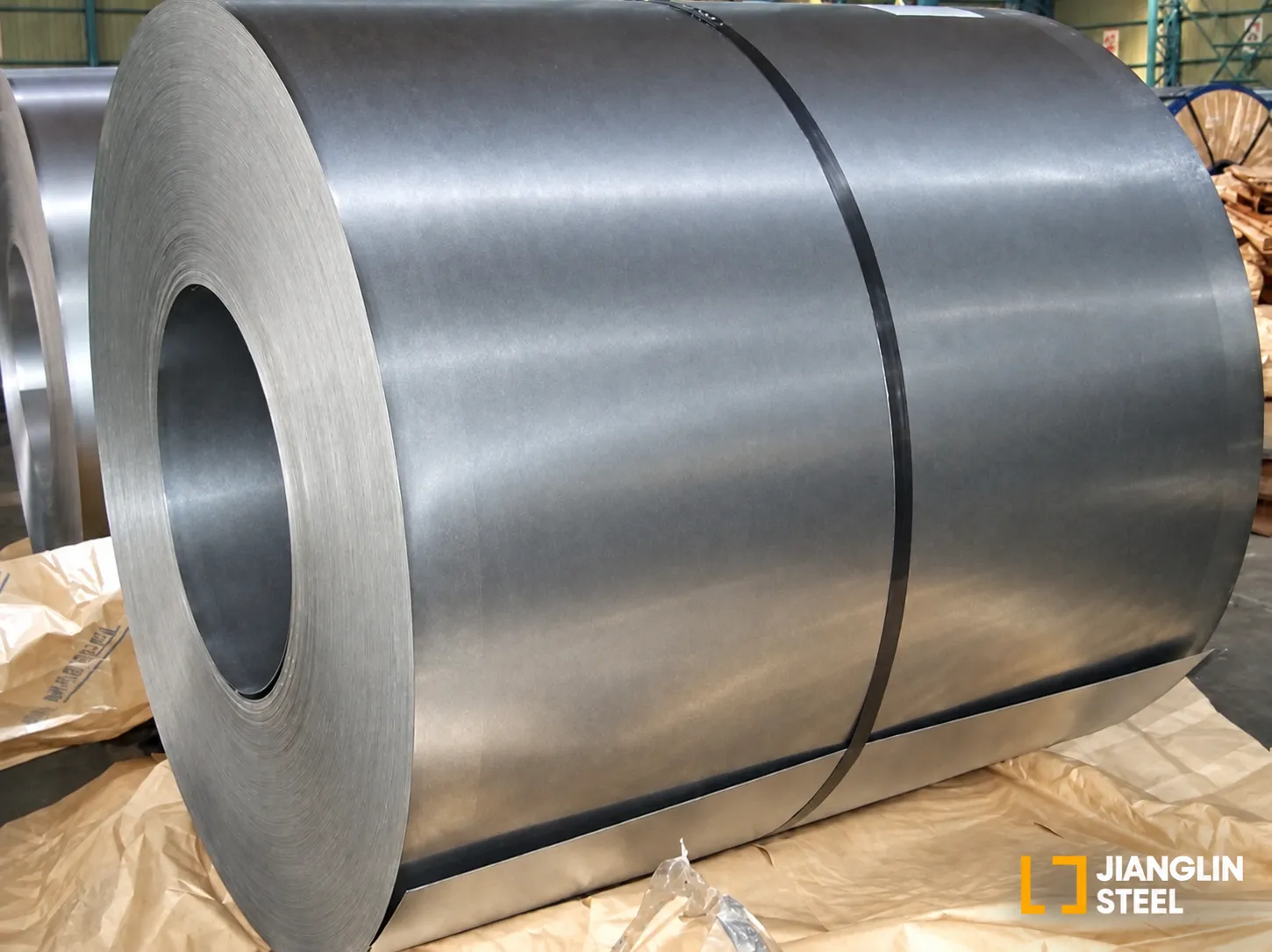
Stainless steel strip is a flat rolled sheet with narrow thickness and is widely used in automotive, construction, and medical industries. Different stainless-steel grades are used for different applications; among them, there are 301 stainless steel strips. 301 stainless steel strip is known for its great corrosion resistance, high strength, and good flexibility. It contains 17% chromium and 7% nickel, making it perfect for industries like automotive, aerospace, and healthcare. This steel can be easily shaped into different forms, especially after heating it to make it softer. It is used in things like springs, structural parts, and surgical tools. This article will explore properties, manufacturing processes, applications, advantages, market trends, comparison with other grades, and how to choose the right 301 stainless steel strips.

Properties of 301 Stainless Steel Strip
301 stainless steel is an austenitic stainless steel that contains 17% Cr, 7% Ni. This steel has high tensile strength and ductility, which makes it easy to manufacture the flat, thin strip. Composition and key properties are discussed below:
Composition:
Table-1: Composition of 301 stainless steel
Element | Percentage (%) |
Chromium (Cr) | 17% |
Nickel (Ni) | 7% |
Carbon (C) | ≤ 0.15% |
Manganese (Mn) | ≤ 2.0% |
Silicon (Si) | ≤ 1.0% |
Sulfur (S) | ≤ 0.03% |
Key properties:
- It can be easily drawn, a cold work that leads to high tensile strength.
- It has good ductility.
- It has good corrosion resistance as compared to ferritic and martensitic steels due to carbides retained after cooling from higher temperatures.
- The presence of magnetic materials like Ni, Cr, and cold working leads to becoming slightly magnetic.
- Suitable for moderate temperatures up to 870°C.
Manufacturing Process of 301 Stainless Steel Strips
The following are the key steps to manufacturing the 301 stainless steel strips:
1) Melting and Casting: The First main materials with alloying elements are melted into the electric arc furnace and then shaped into a slab by casting.
2) Hot Rolling: The cast slab is heated above recrystallization temperature and is passed through the rolling process to reduce thickness and to achieve more uniform grains.
3) Cold Rolling: The size of the strip is further reduced by cold rolling and achieves more mechanical strength as compared to hot rolling.
4) Annealing: It is done to achieve the ductility/soften the strip after achieving the hardness from cold rolling and hot rolling.
5) Pickling: A Different chemical treatment process is used to remove the scaling and oxidation from the material.
6) Slitting and Finishing: The second last step is to cut (slitting) and finish according to the requirements of the customer.
7) Quality: This is the last step in the manufacturing process. The dimensional, mechanical, and compositional properties of this stainless-steel strip are checked according to different standards.
Applications of 301 Stainless Steel Strips
Due to its properties, it is used in the following applications:
1) It is used in structural components of aircraft and the automotive industry due to its high work-hardening rate.
2) It can be used in the medical industry as surgical equipment.
3) It can be used as a spring due to its high tensile strength.
4) Conveyer belt, washer, and gasket can be made from this steel in industrial applications.
5) It can be used in architectural applications for roofing and designing.
Advantages of Using 301 Stainless Steel Strips
Corrosion resistance: It offers more corrosion resistance as compared to ferritic and martensitic stainless steel.
Load bearing: The cold and hot rolling make him a good candidate to use in structural applications (load bearing).
Ductility: The 301 stainless steel strips can be easily drawn into complex shapes due to the ductility achieved after the annealing process.
Durability: It can be used for applications where durability and fatigue resistance are required because cold rolling increases its mechanical strength.
Cost-effective: It is more cost-effective compared to 316 stainless steel.
Differences Between 301 and Other Stainless-Steel Grades
Every grade has its own key properties. Due to their different properties, it is used in different conditions/applications. The following is a comparison of different grades of austenitic stainless steel with 301 stainless steel.
Table-2 shows the comparisons of 301 stainless steel with other grades of stainless steel.
Property | 301 Stainless steels | 316 Stainless Steel | |
Type | Austenitic stainless steel | Austenitic stainless steel | Austenitic stainless steel |
Nickel Content | 6–8% | 8–10% | 10–14% |
Chloride/Corrosion Resistance | Good | Excellent | Superior |
Strength | Highest (when cold-worked) | Moderate
| Moderate
|
Cost | Lower | Moderate | Higher |
How to Choose the Right 301 Stainless Steel Strip
The following steps should be followed while choosing the right stainless strip:
1)Choose the right heat treatment condition, i.e., annealed, half hard, or full hard, according to the application.
2) Choose the right dimensions (thickness, width, length) according to the application.
3) The surface quality is like bright, custom polished according to requirements.
4) The 301 stainless steel strips should be tested according to different standards like ASTM A240, AMS 5517, or EN 1.4310 standards.
Market Trends for 301 Stainless Steel Strips
Due to the revolution of industries in Asia Pacific, China and India, their demand is increasing day by day in the electric vehicle batteries, wearables, and recycling materials industries.
Future Outlook for 301 Stainless Steel Strips
Due to the increase in its usage in different industrial applications, its demand is expected to rise in different countries. Its demand can be further increased by changing alloy composition, enhancing surface treatment technologies enhancement and enhancing recyclability.
Conclusion
301 stainless steel strip offers excellent corrosion resistance, good tensile strength, and ductility that make it suitable for use in automotive, aircraft components, and medical equipment. Due to annealing after cold rolling, complex shapes can be made easily through this. By analyzing the key difference between different grades of properties, the right grade can be selected for the right application. Due to an increase in usage of this material and technological innovation, its demand is expected to increase. Contact us to get more support.
FAQs
What are the main benefits of 301 stainless steel strip over other grades?
Due to high work hardening, it is ideal to use it in structural, fatigue applications. It has good formability and is more cost-effective than 316 stainless steel.
Can 301 stainless steel strips be used for high-temperature applications?
Yes, it can be used below 800°F (427°C). For temperatures higher than this, other steel grades like 310 stainless steel should be used.
How do you maintain 301 stainless steel strips to ensure longevity?
By cleaning regularly, avoiding contact with a corrosive environment, passivation treatment leads to ensure the longevity of 301 stainless steel strip.