Skip to content
Stainless steel sheet procurement can look simple when the buyer only writes a grade and a size. In real orders, that is rarely enough. A supplier still needs to know which ASTM standard controls the material, which tolerance applies, what surface finish is required, and what certificate must be supplied with the shipment.
For buyers of stainless steel sheet, incomplete ASTM wording can lead to the wrong grade, the wrong finish, loose dimensional expectations, or certificates that do not match the project requirement. The safest approach is to write the purchase specification so the material, dimensions, inspection, and documentation are all clear before production starts.
This guide explains how to specify ASTM standards for stainless steel sheet procurement, especially how ASTM A240 and ASTM A480 work together in RFQs and purchase orders.
Quick Answer: What ASTM Standards Should Buyers Specify?
For most stainless steel sheet orders, buyers should specify the grade, ASTM A240 for material requirements, ASTM A480 for general flat-rolled requirements, the ordered dimensions, surface finish, edge condition, inspection requirement, and MTC requirement. If the order only says “304 stainless steel sheet,” the supplier may not have enough information to quote or produce the sheet correctly.
| Item | Recommended RFQ wording | Why it matters |
|---|---|---|
| Grade | 304L, 316L, 430, or project grade | Defines corrosion resistance and material performance |
| Material standard | ASTM A240 | Controls grade chemistry and mechanical properties |
| General requirements | ASTM A480 | Supports tolerance, finish, inspection, marking, and delivery rules |
| Certificate | MTC EN 10204 3.1, if required | Supports traceability and incoming inspection |
Why ASTM Standards Matter in Stainless Steel Sheet Orders
ASTM standards give both buyer and supplier a shared technical reference. They help define what the material should be, how the sheet should be supplied, and how compliance should be checked before delivery.
Avoiding wrong grade supply
Stainless steel sheet grades such as 304, 304L, 316, 316L, 430, and 410 have different chemical compositions and service conditions. ASTM wording helps the supplier understand the exact material family and grade requirement. Buyers comparing common austenitic grades can also review Jianglin guides on 304 vs 304L stainless steel and 316 vs 316L stainless steel.
The grade should also match the application. A food equipment project, a chemical tank, a decorative panel, and a general fabrication part may all need different corrosion resistance, weldability, or finish expectations. ASTM standards make the requirement easier to verify through production records and material test certificates.
Reducing tolerance disputes
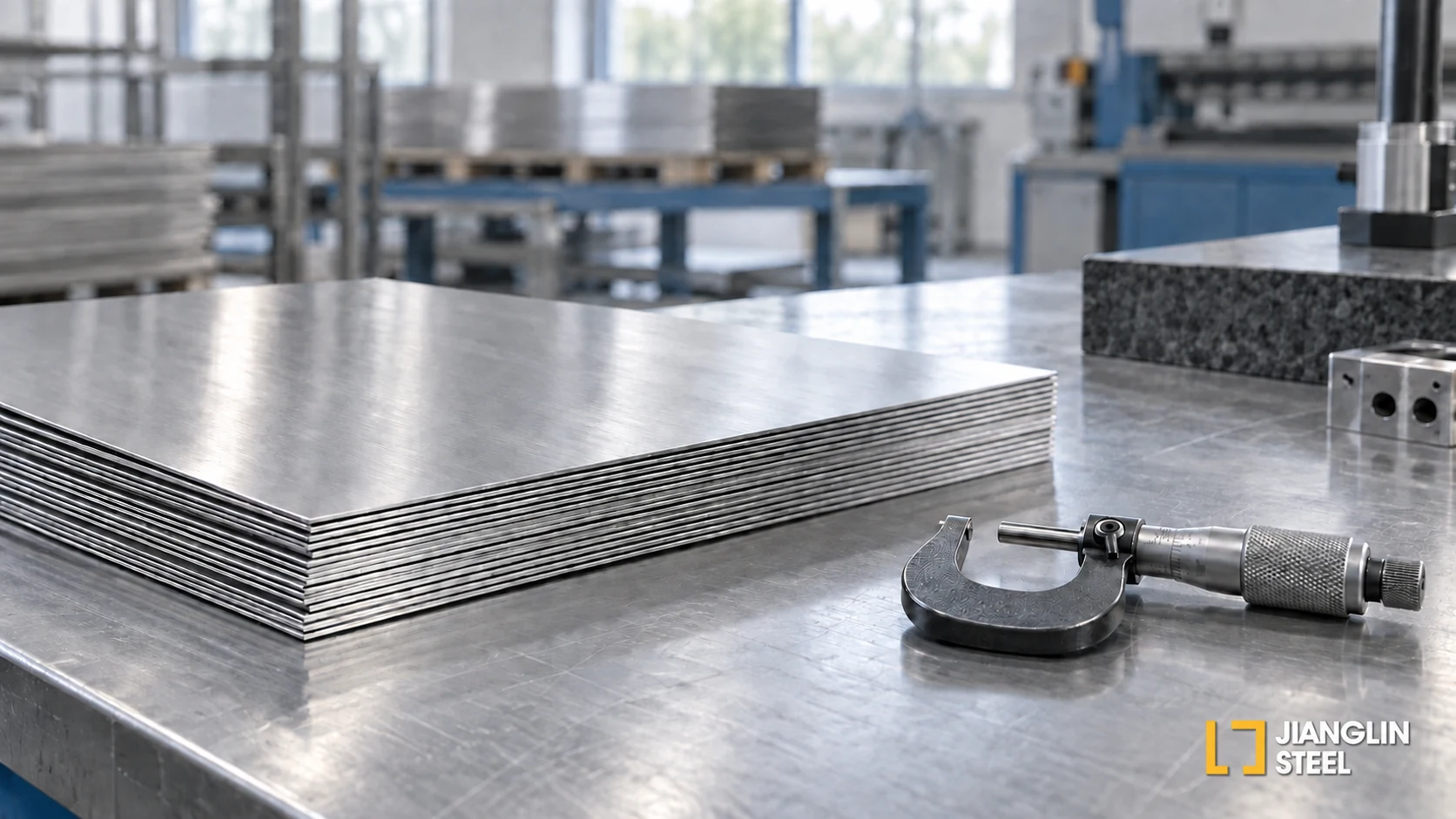
Tolerance is one of the most common sources of procurement disputes. A sheet may be close to the nominal thickness, width, or length, but still create problems during cutting, forming, welding, or assembly if the allowed variation is not clear. ASTM A480 is often used with flat-rolled stainless steel sheet to support dimensional tolerance, flatness, surface, marking, and delivery requirements.
Improving inspection and acceptance
Clear ASTM wording helps inspection teams check the delivered sheet against objective requirements. Instead of judging quality by a general description, the buyer can compare the material certificate, dimensions, surface finish, and packaging against the RFQ. This reduces avoidable arguments at shipment, receiving inspection, or project installation.

Key ASTM Standards Used for Stainless Steel Sheet
ASTM A240 for material requirements
ASTM A240 is the main material specification buyers commonly use for chromium and chromium-nickel stainless steel plate, sheet, and strip. It controls grade-related requirements such as chemical composition, mechanical properties, and heat-treatment condition. For a detailed explanation, see Jianglin’s guide to ASTM A240 stainless steel sheet and plate.
In an RFQ, ASTM A240 helps answer the question: what stainless steel material is required? It does not, by itself, fully describe every delivery detail. That is why buyers often need ASTM A480 and project-specific notes in the same purchase document.
ASTM A480 for general flat-rolled requirements
ASTM A480 is the general requirements standard for flat-rolled stainless and heat-resisting steel plate, sheet, and strip. It supports the practical supply side of the order, including dimensional tolerances, permitted variations, finish, inspection, marking, packaging, and other delivery-related requirements. Jianglin’s ASTM A480 general requirements guide explains this role in more detail.
Other standards buyers may mention
Depending on the project, buyers may also refer to standards such as ASTM A262 for intergranular corrosion testing, ASTM A370 for mechanical testing methods, or ASTM A923 for harmful phase detection in duplex stainless steels. For certificates, buyers may request an MTC according to EN 10204 3.1 or 3.2 when project traceability requires it.
| ASTM standard | Main purpose | How buyers use it |
|---|---|---|
| ASTM A240 | Material requirements | Specify stainless steel grade, chemistry, mechanical properties, and heat treatment |
| ASTM A480 | General flat-rolled requirements | Specify tolerance, finish, flatness, inspection, marking, and packaging expectations |
| ASTM A262 | Corrosion testing | Use when intergranular corrosion testing is required |
| ASTM A370 | Mechanical testing methods | Use when tensile, hardness, or other mechanical test methods need reference |
What Buyers Should Include in a Stainless Steel Sheet RFQ
A clear stainless steel RFQ should give the supplier enough information to quote the same material that the buyer expects to receive. A short note such as “304 sheet” is not enough for a serious order. Buyers can use Jianglin’s stainless steel RFQ guide as a broader checklist, but the sheet-specific items below are the most important.

Grade and standard
Write the grade and standard together. For example: “304L stainless steel sheet, ASTM A240 / ASTM A480.” If dual certification is required, such as 304/304L or 316/316L, state that clearly rather than assuming the supplier will provide it automatically.
Thickness, width, and length
State the nominal size and the required tolerance basis. For example: “1.0 mm × 1219 mm × 2438 mm, thickness tolerance as per ASTM A480.” If the sheet will be laser cut, formed, or assembled into close-fitting parts, tell the supplier before production so the tolerance expectation is not discovered too late.
Surface finish
Surface finish should be written in the RFQ, not left to assumption. Common options include 2B, BA, No.4, brushed, hairline, mirror, or No.1 for hot-rolled material. For buyer-facing finish selection, Jianglin’s stainless steel surface treatment guide can help compare common finish types.
Edge condition
Edge condition affects handling, cutting, fabrication, and installation. Common terms include mill edge, slit edge, cut edge, or deburred edge. If the sheet will be used for visible panels or precision fabrication, edge condition should be discussed before ordering.
Certificate requirements
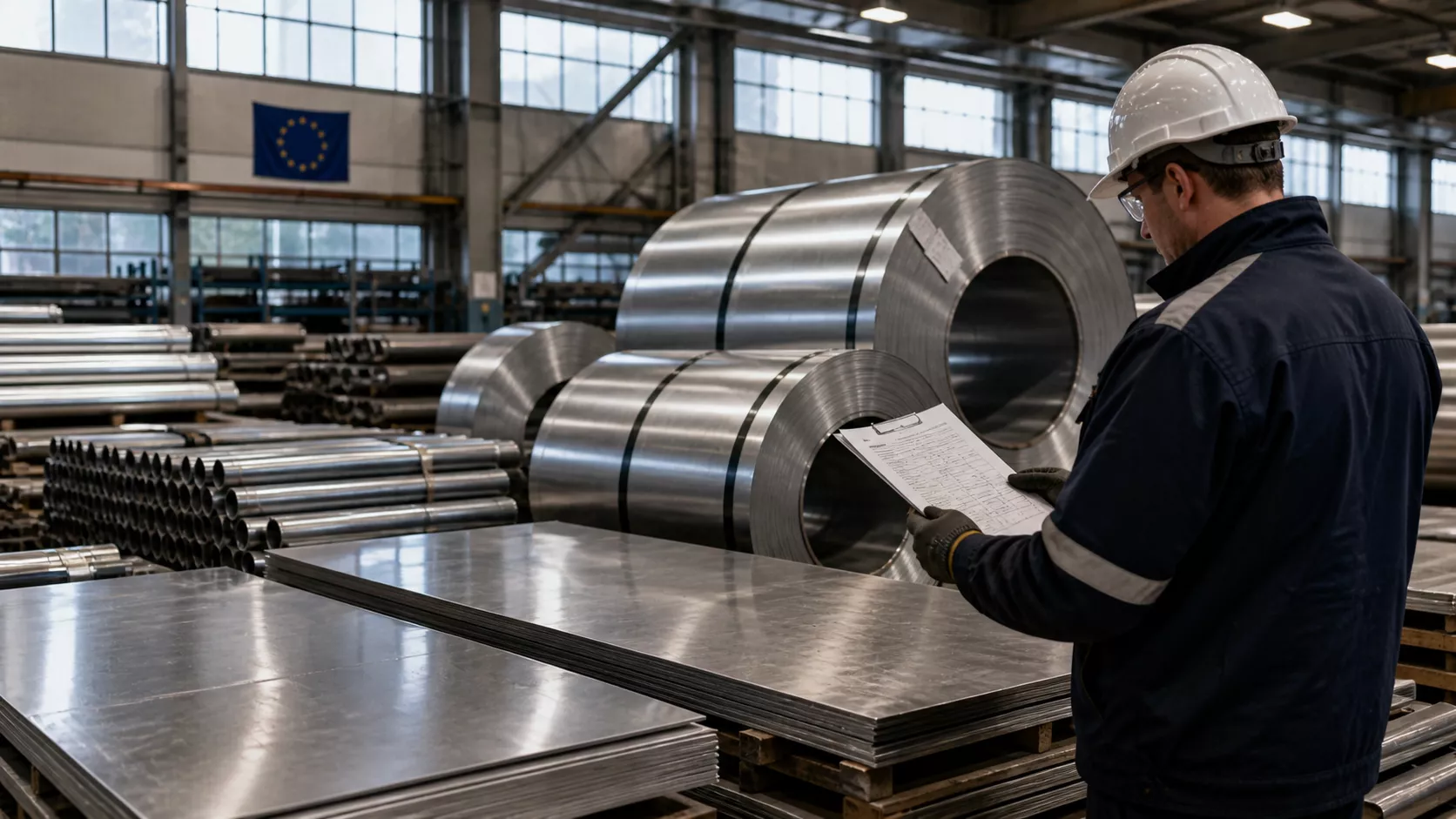
Material certificates are important for quality control and traceability. At minimum, the MTC should match the grade, heat number, chemical composition, mechanical properties, standard reference, size, and delivered material. Buyers can review Jianglin’s guide on how to read a stainless steel mill test certificate before confirming a shipment.
| RFQ element | What to write |
|---|---|
| Grade and standard | 304L stainless steel sheet, ASTM A240 / ASTM A480 |
| Dimensions | Thickness × width × length, with tolerance basis |
| Surface finish | 2B, BA, No.4, brushed, mirror, or project finish |
| Edge condition | Mill edge, slit edge, cut edge, or deburred edge |
| Certificate | MTC EN 10204 3.1 or equivalent, if required |
| Packing | Sheet protection, film, pallet, crate, or seaworthy packing |
Common Specification Mistakes
Only writing “304 stainless steel sheet”
This is one of the most common mistakes. The phrase confirms the general grade family, but it does not define the ASTM standard, thickness tolerance, finish, edge condition, certificate type, packing, or inspection requirement. Two suppliers may quote different products while both believing they answered the RFQ correctly.
Missing tolerance requirements
Nominal thickness and actual thickness are not always identical. Buyers should confirm whether standard tolerance is acceptable or whether the project needs a tighter range. This is especially important for cut-to-size sheets, components, equipment covers, and parts that will be formed or welded.
Not confirming finish before production
2B, BA, No.4, brushed, and mirror finishes are not interchangeable. A wrong finish may require re-polishing, rework, replacement, or shipment delay. If protective film, PVC, or a specific visible surface requirement is needed, include it in the RFQ.
Treating ASTM A240 and ASTM A480 as alternatives
ASTM A240 and ASTM A480 are not competing choices. For many stainless steel sheet orders, they should work together. ASTM A240 defines the material grade and performance, while ASTM A480 supports tolerance, flatness, surface, inspection, and delivery requirements.
Stainless Steel Sheet RFQ Example
A practical RFQ can be written like this:
- Material: stainless steel sheet
- Standard: ASTM A240 / ASTM A480
- Grade: 304L or 316L as required
- Size: 1.0 mm × 1219 mm × 2438 mm
- Finish: 2B or No.4 with protective film, if required
- Edge: slit edge or cut edge, as required
- Tolerance: as per ASTM A480 or project-specific tolerance
- Certificate: MTC EN 10204 3.1 required
- Packing: seaworthy packing suitable for sheet protection
This format gives the supplier enough information to quote accurately and gives the buyer a clearer basis for inspection after delivery. If the sheet will also need cutting, bending, machining, or welded assembly, Jianglin can support custom stainless steel fabrication after material selection.

FAQ
Is ASTM A240 enough for stainless steel sheet procurement?
Not always. ASTM A240 helps define the material grade, chemistry, mechanical properties, and heat treatment. Buyers often also need ASTM A480 and project-specific notes for tolerance, finish, inspection, marking, and delivery details.
What is the difference between ASTM A240 and ASTM A480?
ASTM A240 is mainly a material specification. ASTM A480 is a general requirements specification for flat-rolled stainless products. A clear sheet RFQ often uses both.
Should the RFQ mention surface finish?
Yes. The RFQ should state the required finish, such as 2B, BA, No.4, brushed, mirror, or No.1. Finish affects appearance, fabrication, cleaning, and customer acceptance.
What should buyers check on the MTC?
Buyers should check grade, heat number, chemical composition, mechanical properties, standard reference, size, and certificate type. The MTC should match the purchase order and the delivered sheet.
Conclusion
ASTM standards help stainless steel sheet buyers describe material, tolerance, inspection, and delivery requirements more clearly. ASTM A240 helps define the material itself, while ASTM A480 helps define many of the flat-rolled delivery and tolerance requirements.
A complete stainless steel sheet RFQ should include the grade, ASTM standards, dimensions, tolerance, surface finish, edge condition, certificate requirement, packing, and any special fabrication or inspection needs. Clear specifications reduce quotation confusion, production delay, inspection disputes, and quality risk.
If you are sourcing stainless steel sheet for an industrial, decorative, chemical, food equipment, or fabrication project, send Jianglin your grade, size, finish, tolerance, and certificate requirements. Our team can help review the specification before production. Request a Quote.